
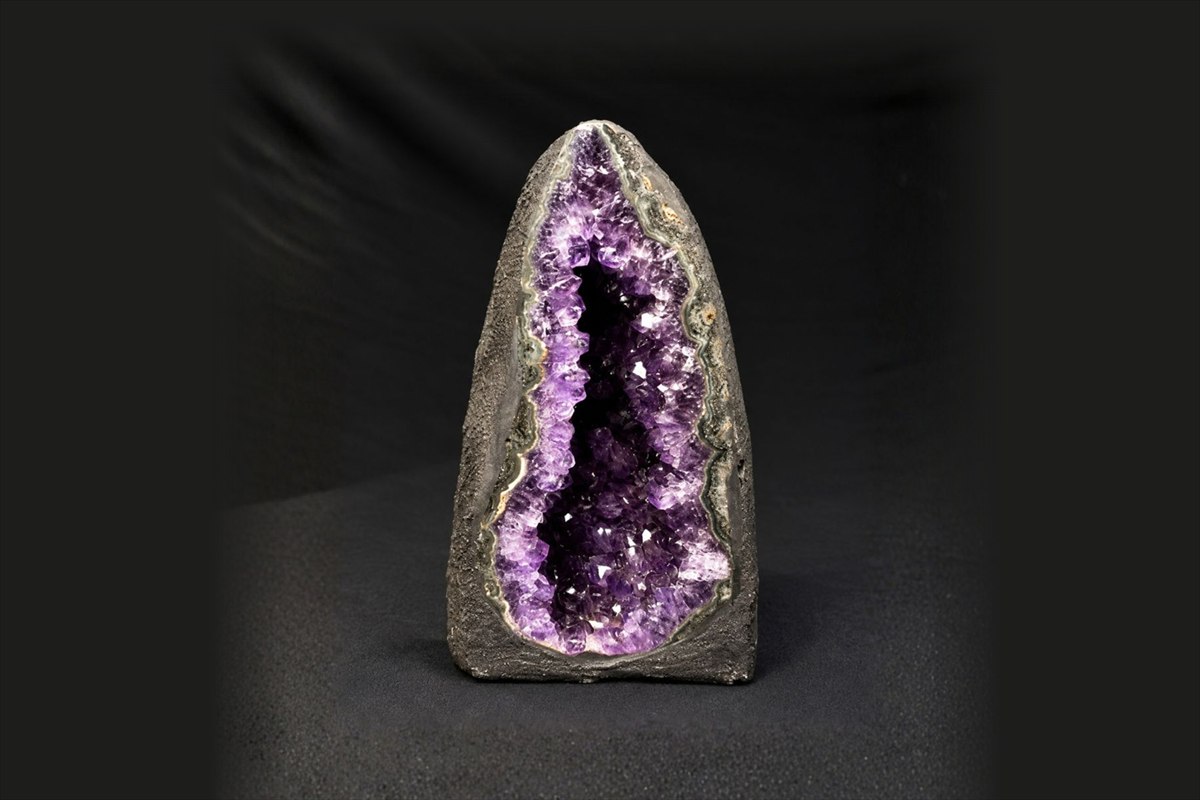
Quick answer: There is no single best wholesale crystal supplier, because wholesale crystal suppliers specialise by origin, by material and by order size. Three things determine the best supplier for you: which material you need, how much of it you buy at a time, and whether you can handle an import.
What does exist, however, is a reliable way to evaluate one. This article sets out the six types of wholesale crystal supplier, a weighted scorecard you can apply to any of them, the red flags that predict a bad relationship, and how to run a low-cost supplier trial before you commit real capital. We deliberately do not publish a ranked list of companies: any such list published by a supplier is marketing, not research.
Why No Honest Ranking of Wholesale Crystal Suppliers Names One Company
Three structural reasons, all of which you can verify yourself:
Suppliers specialise by origin. Crystal species are geographically concentrated. A company buying at origin in Brazil is genuinely competitive in amethyst, agate, quartz and tourmaline, but it is a reseller in Madagascan labradorite, at a reseller’s price. The reverse is also true. So “best” without naming a material is meaningless.
Suppliers specialise by order size. A supplier structured around container-scale bulk and a supplier structured around individually photographed unique pieces have different cost bases, different minimums and different staff. Neither is better, because they serve different buyers.
The thing that matters most cannot be seen before you buy. Consistency between reorders is the single strongest predictor of whether a supplier relationship works, but it is invisible on a first order. As a result, any “best supplier” list assembled without multi-order history is guessing at the most important variable.
So the useful question is not “who is best” but “how do I tell, quickly and cheaply, whether this one is right for me”. That one, however, is answerable.
The Six Types of Wholesale Crystal Suppliers
| Type | Best at | Weak at | Right for |
|---|---|---|---|
| Origin exporter (in the producing country) | Selection, unit price, unique pieces, material from their own region | Speed; small orders; material from other countries | Established buyers with sell-through data and volume |
| Domestic importer / distributor | Speed, small minimums, no customs, dollar pricing | Exclusivity; unique pieces; unit price | Replenishing proven SKUs; first-time buyers |
| Wholesale marketplace | Low friction, low minimums, buyer protection | Differentiation: every competitor sees the same catalog | Testing a category before committing |
| Trade show dealer | Hands-on inspection; finding suppliers | Availability: runs on a calendar, not your schedule | Annual buying trips and supplier discovery |
| Live seller | Claiming specific one-of-a-kind pieces remotely; discovery | Precise replenishment: you buy what is on the table | Online and live retailers; designers seeking a specific piece |
| Dropshipper | Zero inventory risk | Margin, control, quality assurance, differentiation | Testing demand with no capital: rarely a durable model in this category |
Note what this table implies: a mature buyer usually has two or three of these running at once, not one. In other words, choosing “the best supplier” as a single decision is itself the mistake.
A Scorecard for Wholesale Crystal Suppliers
First, score each candidate 1 to 5 on these nine criteria. The weights also reflect what actually breaks supplier relationships, which is not price.
| Criterion | Weight | Score 5 looks like | Score 1 looks like |
|---|---|---|---|
| Reorder consistency | High | A reference buyer confirms order five matched order one | No repeat buyers they will let you contact |
| Origin transparency | High | Names the region and district; says whether they buy at mine, cutting center or from another exporter | “Sourced in Brazil” and nothing further |
| Treatment disclosure | High | Volunteers which lots are treated before being asked | Vague or defensive when asked |
| Communication | High | Named contact, your business hours, replies within a day, in English | Days of silence mid-order |
| Grading discipline | Medium | Has its own grading language and applies it consistently | Everything is “AAA” or “premium” |
| Packing | Medium | Describes materials and method unprompted; crates large pieces | Packing treated as an afterthought |
| Logistics competence | Medium | Quotes air and ocean on stated terms (FOB / CIF / DDP); provides broker documentation | “You figure out the shipping” |
| Catalog breadth | Medium | Can fill several price tiers from one order | One category, one price point |
| Unit price | Low | Competitive at comparable terms and comparable grade | Cheapest, which in this category is usually a grading difference, not a discount |
The scorecard weights price low on purpose. In a category where grading is subjective and freight is heavy, the cheapest quote is almost always cheapest for a reason you will discover on arrival. Score the other eight first, then use price to choose between suppliers that already scored well.
Red Flags in Wholesale Crystal Suppliers
- Stock photography. If the images are not of their inventory, you do not know what their inventory looks like.
- Colour that cannot exist. Over-saturated, over-edited images in this category are not a stylistic choice; they are the primary way sellers mislead buyers.
- No scale reference, ever. Size is the hardest thing to judge remotely, but also the easiest thing to communicate honestly.
- Refusal to film a specific piece. After all, a one-minute daylight video is trivial for anyone holding the stone.
- “Certified” claims that name no certifying body. There is no general certification scheme for decorative mineral specimens. Gemstone laboratory reports exist for cut gems; a “certificate of authenticity” issued by the seller is a piece of paper the seller wrote.
- Healing or medical claims in a B2B catalog. Aside from being unsupported, it signals a supplier who has not thought about the compliance exposure they are passing to you. See Do I Need a License to Sell Crystals?
- Pressure on a one-of-a-kind piece. Scarcity is real in this trade, which is exactly why it is the easiest lever to fake.
- Wire transfer only, no invoice, no company details. Legitimate exporters issue commercial invoices, because US customs requires them.
How to Run a Supplier Trial
You can qualify a supplier for a fraction of what a bad first order costs. Four steps:
- The video test. Ask for a short video of one specific piece, in ordinary daylight, with something of known size beside it. Real inventory produces this within a day. Consequently, this single request eliminates most unsuitable suppliers.
- The eight questions. Region of origin; term (FOB/CIF/DDP); MOQ basis; packing and breakage responsibility; treatment status; realistic transit time; documentation for your broker; whether a reference buyer will speak to you. Answered without hedging means an operation that exports routinely.
- A deliberately small first order, shipped by air. Undersized on purpose, and air-freighted even if ocean is cheaper: you are buying a short feedback loop, not inventory. Photograph the crate before unpacking, then each layer.
- Score the second order, not the first. Anyone can perform once. Then compare order two against order one on grade, size consistency, packing and lead time. That comparison is the real evaluation.
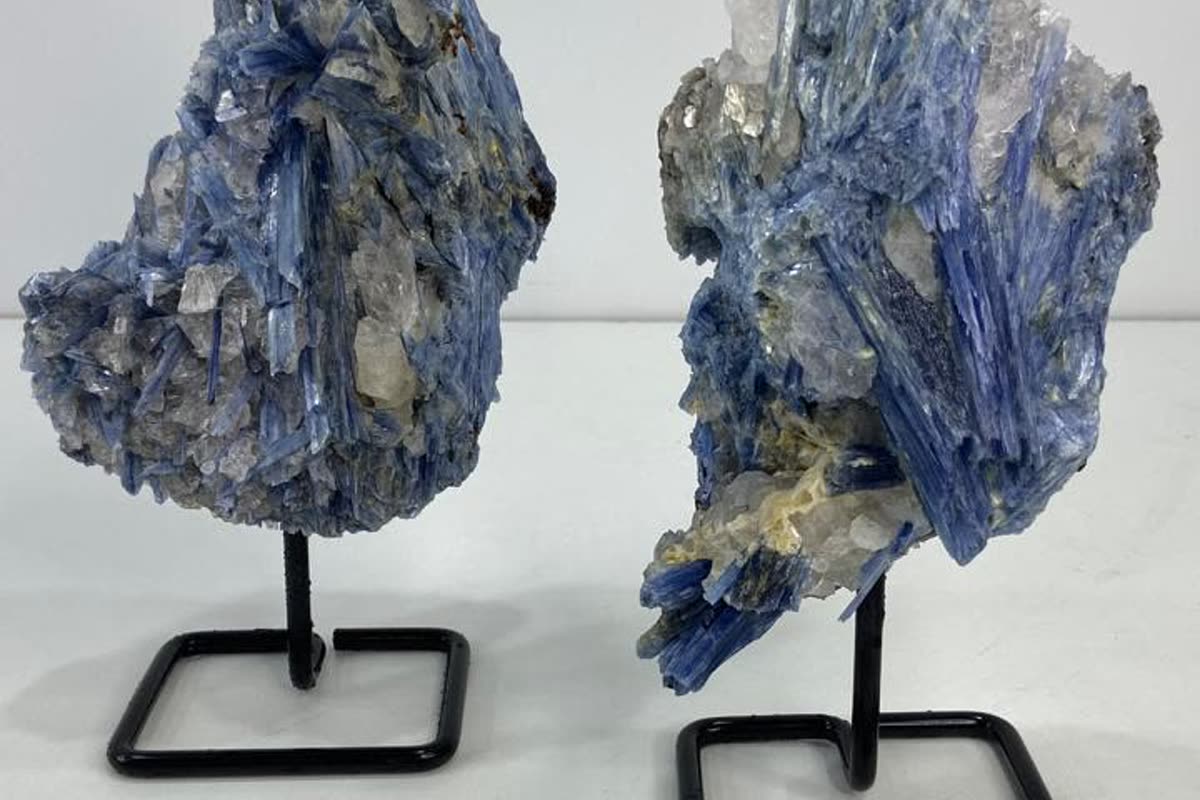
Where to Find Wholesale Crystal Suppliers Worth Evaluating
- Gem and mineral trade shows. The Tucson Gem, Mineral & Fossil Showcase in Arizona (dozens of concurrent shows from late January into mid-February each year) is where most US buyers find the suppliers they then order from all year. The Denver Gem & Mineral Show runs in September, the Munich Show in Germany in late October.
- Other retailers. Retailers outside your trade area are usually willing to name suppliers, because you are not competing with them. In fact, this is the highest-quality source of supplier information that exists.
- Origin trading centers. For Brazilian material, Teófilo Otoni in Minas Gerais is the main colored-stone trading center, and Soledade in Rio Grande do Sul is the agate and amethyst processing hub.
- Live selling broadcasts. Watching a supplier handle material on camera for an hour tells you more about their grading standards than a catalog does.
When to Switch Suppliers
Not on a single bad shipment, because every supplier has one. Switch when you see a pattern:
- Grade drifts downward across consecutive orders while the price holds
- Lead times stretch without warning in advance
- Communication degrades after you become a recurring account: the classic signal
- Breakage rises and the response is to dispute rather than to improve packing
- They can no longer supply your core SKU reliably
Keep a qualified second supplier for your core category even when you do not need one. The cost is a small trial order, whereas the alternative is discovering you have no options during a stockout.
Where CS Minerals Fits
CS Minerals is the first type in the table: a Brazilian origin supplier, selling crystals, minerals and natural stones from Brazilian producing regions to wholesale and professional buyers in the United States, through direct orders and live selling.
Which means it is worth evaluating for Brazilian material (amethyst, quartz, agate, tourmaline, beryls and Brazilian decorative stone) and is not the right channel for Madagascan, Indian or Moroccan material, or for a buyer who needs domestic next-day replenishment. We would rather say that than claim to be best at everything, because a buyer who orders the wrong thing from us does not order twice.
So apply the scorecard above to us the same way you would to anyone else. Related reading: Brazilian Crystal Wholesale Supplier, How to Buy Crystals Wholesale and What Is the Best Website to Buy Crystals?
Scoring Several Wholesale Crystal Suppliers at Once
The scorecard is most useful when it is filled in for two or three suppliers in the same week, with the same questions asked in the same order. On the other hand, judged alone, almost any supplier looks acceptable.
Best Wholesale Crystal Suppliers: Frequently Asked Questions
Which crystal company is best?
No single company is best for every buyer, because suppliers specialise by origin, by material and by order size. The right supplier for you depends on which material you need, how much you buy at a time, and whether you can handle an import. Evaluate candidates on reorder consistency, origin transparency, treatment disclosure and communication, not on price first.
How do I verify a wholesale crystal supplier is legitimate?
Ask for a short video of one specific piece filmed in ordinary daylight with a scale reference, ask which region the material came from, ask whether any treatment has been applied, and ask for a reference buyer who has ordered more than once. Legitimate exporters also issue commercial invoices, because customs requires them.
Are there certifications for wholesale crystals?
There is no general certification scheme for decorative mineral specimens. Independent laboratory reports exist for cut gemstones, and those are meaningful. However, a “certificate of authenticity” issued by the seller itself carries no independent weight: treat treatment disclosure and origin information as the substantive assurances instead.
Should I use one supplier or several?
Most established retailers run two or three deliberately: an origin supplier for the core category where margin matters, a domestic distributor for fast replenishment so a stockout never waits on ocean freight, and a discovery channel such as a trade show or live selling. In contrast, a single supplier forces a compromise on either price, speed or differentiation.
What is the biggest mistake buyers make when choosing a supplier?
Weighting unit price first. In a category where grading is subjective and freight is heavy, the cheapest quote usually reflects a grade difference rather than a discount, and the cost surfaces on arrival as unsellable material. Reorder consistency and treatment disclosure predict the outcome of the relationship far better than price does.
Does CS Minerals provide references from other buyers?
You can request buyer references through the wholesale program. We treat that as a reasonable commercial question, and so should any supplier you evaluate.
How long should a supplier trial take before I commit?
Two orders, placed far enough apart to see whether the second matches the first. The first order tells you about presentation and packing. The second, however, tells you about consistency, which is the thing that actually decides whether you can build a shelf around a supplier. In short, judging on a single shipment tells you almost nothing.
Request Wholesale Access
Evaluating Brazilian suppliers? Request wholesale access to CS Minerals and put us through the scorecard above.
About CS Minerals
CS Minerals is a Brazilian supplier of crystals, minerals and natural stones serving wholesale buyers, retailers and professional buyers in the United States. The company combines Brazilian sourcing, product curation, live selling and international logistics to connect buyers with Brazilian stones and minerals.
Written by the CS Minerals Wholesale Team · Last updated
General commercial information. Trade show dates change: confirm with the organizer before travelling.
Comments
3 responses to “Who Are the Best Wholesale Crystal Suppliers?”
[…] reading: Who Are the Best Wholesale Crystal Suppliers?, Where Can I Buy Crystals Wholesale? and How to Sell Crystals […]
[…] If a supplier answers all eight without hedging, you are dealing with an operation that exports routinely. For the fuller version of this evaluation, see Who Are the Best Wholesale Crystal Suppliers? […]
[…] a full scorecard for evaluating individual companies, we already published one in our guide to the checklist for vetting individual vendors. This article focuses on the channel decision […]