Author: CS Minerals

  • Crystal Wholesale Europe: How European Retailers Source Natural Crystals

    Crystal Wholesale Europe: How European Retailers Source Natural Crystals

    Crystal wholesale Europe works through three main channels: EU-based distributors who import and resell, mineral and gem shows such as Munich and Sainte-Marie-aux-Mines, and direct imports from producing countries like Brazil. Because the EU is a single market, a retailer only needs to clear customs once, with an EORI number and the right TARIC code, and the stones can then circulate freely across all member states. As a result, choosing between a distributor and buying at the source comes down to volume, speed and how close you want to be to the origin of your stock.

    By the CS Minerals Wholesale Team · Last updated

    In addition, Europe has a long history with Brazilian stones. The German town of Idar-Oberstein built much of its gem-cutting fame on agate shipped from southern Brazil, and that link between European craftsmanship and Brazilian material still shapes crystal wholesale in Europe today. This guide therefore explains how European retailers source natural crystals now, what the customs rules look like, which shows are worth knowing, and how to decide when a distributor is the smart choice and when going direct pays off.

    Idar-Oberstein and Brazilian Agate: A Historic Connection

    You cannot talk about crystal wholesale in Europe without mentioning Idar-Oberstein, in the German state of Rhineland-Palatinate. For centuries the town cut and polished agate from local deposits. However, when those deposits ran low in the nineteenth century, people from the region who had emigrated to Brazil found rich agate deposits in Rio Grande do Sul, and Brazilian rough began to flow back to Idar-Oberstein’s workshops.

    That trade helped make the town a world centre for gem cutting, and it also tied the agate country of southern Brazil to European markets for generations. Soledade, today widely known as Brazil’s agate capital, sits in the same region. So for European buyers, it is a useful story: the agate slices, bookends and geodes in your shop may well come from the same area that supplied the historic German cutters. To learn more about the Brazilian side of the story, read our overview of the countries famous for crystals.

    The Main Channels for Crystal Wholesale Europe Buyers

    Wholesale distributors based in Europe

    Distributors in Germany, the Netherlands, Belgium, France, Spain and elsewhere import large volumes and resell to shops. They offer fast delivery within the EU, invoices in euros and no customs paperwork for you. However, the trade-off is price, since you pay their import costs and margin, and a selection limited to what they bought. Origin information can also be thin after the goods pass through several hands.

    Mineral and crystal shows in Europe

    Europe has some of the best-known mineral shows in the world. They are ideal for hand-picking specimens, meeting dealers and seeing trends. On the other hand, they cost time and money to attend, and the best pieces sell early.

    Direct from the source

    Buying from a supplier in a producing country puts you closest to the material. For example, with Brazilian amethyst, agate, citrine, quartz and geodes, that means buying from Rio Grande do Sul or Minas Gerais. Then you clear customs once at your EU entry point and then have EU goods. For a broader look at choosing channels, see our guide to where to buy crystals wholesale.

    Crystal Wholesale in Europe: Which Mineral Shows to Know

    Shows are not only for collectors. In fact, many retailers use them once or twice a year to discover suppliers and unusual material. Still, always check the organiser’s official website for current dates, trade days and entry rules.

    Munich Show (Mineralientage München)

    Held in Munich in the autumn, the Munich Show is one of the largest mineral, gem and fossil shows in Europe. It attracts dealers from around the world, including many selling Brazilian material, and has areas aimed at trade buyers as well as the public.

    Sainte-Marie-aux-Mines

    In Alsace, eastern France, the Sainte-Marie-aux-Mines show takes over a small mining town each summer. It is known for its mix of specimens, gems, fossils and decorative stone, with a strong trade presence and dealers from many countries.

    Show buying vs ordering direct

    • Shows: touch the stones, negotiate face to face, meet many dealers at once; but travel costs, limited days and early sell-outs.
    • Direct orders: wider selection at origin and better prices per piece; but longer lead times and customs paperwork.
    • Live video buying: many source suppliers now broadcast live sessions from their warehouses, which gives some of the show experience without the travel.
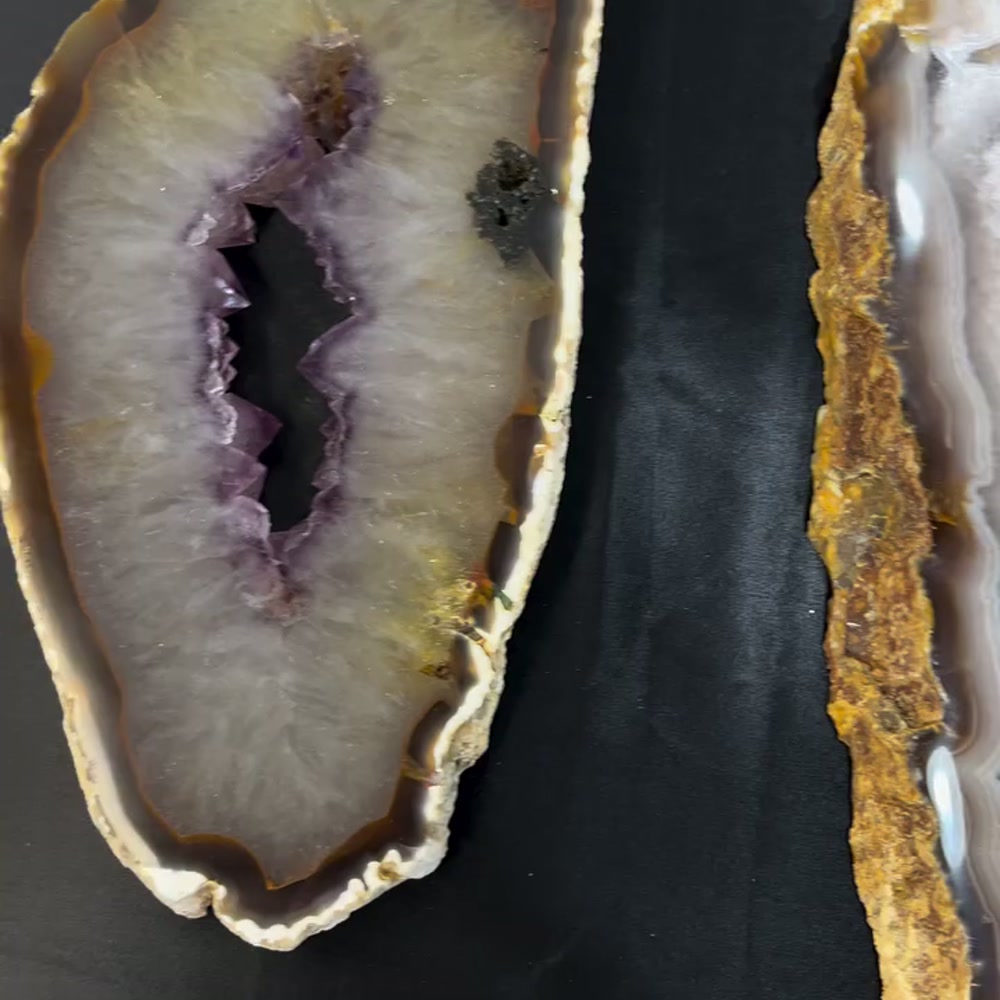
    Large agate slab with an open druzy centre and a gold plated edge, a heavy decor piece for crystal wholesale in Europe

    Importing Crystal Wholesale Orders into Europe: How Customs Works

    The EU has a common customs system, so the basics are the same in every member state. However, the details below are orientation only, so confirm current rules with your national customs authority or a customs broker.

    EORI number

    Every business importing goods from outside the EU needs an EORI number. You get it from the customs authority of the member state where you are established, and it is valid across the EU.

    TARIC classification

    Each product on the import declaration needs a commodity code from TARIC, the EU’s integrated tariff database. The code determines the duty rate and whether any special measures apply. Also, rough stone, worked stone, carvings and jewellery may use different codes. If you import the same items regularly, a Binding Tariff Information decision gives you legal certainty. Finally, we do not publish duty rates here, as they depend on classification and can change.

    Import VAT

    Import VAT is charged at the rate of the member state where the goods are released for free circulation. Standard rates vary between countries, for example 21% in the Netherlands at the time of writing, so check the current rate in your country. In addition, several member states offer ways to account for import VAT on the VAT return instead of paying at the border; ask your broker or accountant what is available where you import.

    Low-value consignments

    The EU removed the former €150 customs duty exemption for low-value consignments in July 2026 and introduced a temporary flat duty on qualifying items. Most wholesale crystal orders are above that level, but check the current rules if you import small parcels.

    Documents and packaging

    • Commercial invoice with a precise description, quantities, values, currency and country of origin.
    • Packing list with weights per box or crate.
    • Air waybill or bill of lading.
    • Wooden crates marked to the ISPM 15 standard, which EU plant health rules require for wood packaging from outside the EU.

    Why the Single Market Matters for Crystal Wholesale in Europe

    The single market is the biggest structural advantage European buyers have, because it turns one import into access to every member state.

    Clear once, sell everywhere

    Once goods are released for free circulation in one member state, they can move to any other without further customs formalities. For example, a German shop that imports through Hamburg can send stock to a partner in Austria, and an Italian online seller can ship to customers in Spain, without new declarations.

    Selling to other EU businesses

    Sales to VAT-registered businesses in other member states are generally intra-community supplies, invoiced at 0% VAT with the buyer’s VAT number, and the buyer accounts for VAT locally. For this reason, verify VAT numbers in the VIES system.

    Selling online to EU consumers

    Above the EU-wide distance selling threshold, you charge the VAT rate of the customer’s country and can report those sales through the One Stop Shop (OSS) in your home country. As always, your accountant can confirm the details.

    As a result, this structure means a small retailer can become a regional distributor by importing once and reselling across borders, something that is far harder in fragmented markets.

    Crystal Wholesale Europe: EU Distributor vs Direct from Origin

    FactorEU distributorMineral showDirect from origin (e.g. Brazil)
    Customs for youNoneNone within the EUOnce, at EU entry
    Delivery speedFast, daysImmediate if you carry itLonger; plan ahead
    Price per pieceIncludes distributor marginVaries; negotiableUsually lowest before import costs
    SelectionWhat they stockedWide, only on show daysWidest for that origin
    TraceabilityOften limitedDepends on the dealerClosest to origin
    Extra costsShipping within the EUTravel, hotel, timeFreight, broker, duty, import VAT
    Best forSmall top-ups, mixed stockHand-picked specimens, networkingCore lines, heavy decor pieces, resale

    When a wholesale distributor in Europe makes sense

    If you are new, order small quantities or need stock quickly, an EU distributor is often the better option. You avoid customs, test demand with low risk and get goods in days. That is why it is a sensible way to enter crystal wholesale in Europe.

    When going direct pays off

    Once you know your best sellers and order regularly, buying at the source usually improves margins, especially for heavy pieces such as geodes, cathedrals and agate bookends where distributors charge a premium for freight they already paid. It also gives you better origin information for labels and storytelling. Before deciding, compare landed cost per piece for both options, including freight, broker fees, duty and any import VAT you cannot recover.

    Responsible Crystal Selling Across Europe

    EU consumer protection law prohibits misleading commercial practices, and each country adds its own advertising rules. Therefore, a few principles keep you safe everywhere:

    • Do not claim that crystals cure, treat or prevent health conditions. Describe metaphysical meanings as traditions, for example “amethyst is traditionally associated with calm”.
    • Disclose treatments. Much citrine is heat-treated amethyst, many bright agates are dyed, and aura quartz is coated.
    • Label origin accurately. Brazilian amethyst is Brazilian; moldavite is Czech; labradorite is often from Madagascar. Suppliers may consolidate stones from several countries in one shipment, so ask.
    • Translate labels properly for each market you sell in.

    How to Vet a Wholesale Supplier Outside Europe

    Ask for live video

    A video call or live selling session from the warehouse lets you see actual pieces, check colour and damage and also ask questions on the spot.

    Ask the right questions

    Which stones are from the supplier’s own country and which are bought in? Which are treated? How are heavy pieces packed? What are the payment terms and who arranges freight?

    Start with a test order

    A modest first order shows you packing, communication, invoice quality and clearance at your EU entry point. Then scale up once it runs smoothly. Our guide on how to buy crystals wholesale covers the ordering process in more detail.

    Frequently Asked Questions

    Yes, any business importing goods from outside the EU needs an EORI number. You get it from customs in the member state where your business is established. It is valid across the whole EU.

    TARIC is the EU’s integrated tariff database, which gives the commodity code for each product. The code determines the duty rate and any measures that apply. Rough stones, worked stones, carvings and jewellery can have different codes, so classify each product correctly.

    Yes. Once cleared in one member state, the goods circulate freely within the single market without further customs formalities. Sales to VAT-registered businesses in other EU countries are generally invoiced at 0% VAT as intra-community supplies.

    More Questions

    Idar-Oberstein in Germany was a historic agate-cutting centre. When local deposits ran low in the nineteenth century, emigrants from the region found agate in Rio Grande do Sul, Brazil, and shipped rough back to Germany for cutting. The link helped make the town famous and tied southern Brazil to the European gem trade.

    The Munich Show in Germany and the Sainte-Marie-aux-Mines show in France are two of the best known, with many international dealers and trade buyers. Dates and trade access change, so check the official websites before planning a trip.

    For small, occasional orders a distributor is often cheaper once you count freight and broker fees. For regular or larger orders, especially heavy pieces, buying direct usually gives a lower landed cost per piece. Calculate both before deciding.

    Buy Crystal Wholesale Direct from Brazil’s Agate Capital

    CS Minerals is a Brazilian wholesaler of crystals, minerals and natural stone based in Soledade, Rio Grande do Sul, known as Brazil’s agate capital. With 25 years in the trade, we ship wholesale orders worldwide, including crystal wholesale to Europe, with a minimum order of US$100. You can see real pieces during our live selling sessions from the warehouse, Monday to Friday, 8am to midnight Brazilian time, on Instagram @csminerals. Learn how the process works on our how to order wholesale crystals page, or explore the crystal catalog.
    Read Also

  • Crystal Wholesale Australia: Sourcing Brazilian Crystals for Australian Retailers

    Crystal Wholesale Australia: Sourcing Brazilian Crystals for Australian Retailers

    Crystal wholesale Australia buyers who want Brazilian amethyst, agate, quartz and geodes can buy from a local wholesaler or import directly from Brazil. Direct import means clearing the goods with the Australian Border Force, paying 10% GST (at the time of writing) and any duty, and meeting Australia’s strict biosecurity rules: stones must be clean and free of soil, and wooden crates must be ISPM 15 treated and marked. With planning for the long transit, it also gives Australian shops access to a far wider range of Brazilian material.

    By the CS Minerals Wholesale Team · Last updated

    Australia is a special case among crystal markets. It sits a long way from Brazil, so freight costs and transit times weigh more heavily than for buyers in Europe or North America. In addition, it has some of the toughest biosecurity controls in the world, so a dirty geode can mean inspection fees or delays. At the same time, Australia has its own famous stones, such as opal and mookaite, which pair well with imported Brazilian material. This guide to crystal wholesale in Australia covers all of it.

    Where Shops Find Crystal Wholesale Stock in Australia

    Importers bring in most crystals on Australian shelves, even though the country has a proud mining heritage. As a result, shops typically source through three channels.

    Local wholesale suppliers in Australia

    Local wholesalers import in bulk, clear customs and biosecurity, and resell in Australian dollars with domestic shipping. They are ideal for small, frequent orders and for mixed stock. However, the price includes their freight, clearance costs and margin, and origin details are sometimes vague.

    Crystal markets, expos and fairs in Australia

    Mind, body and spirit expos and gem and mineral shows around the country let you buy face to face. They are good for discovering new material and meeting suppliers, though travel adds cost and selection depends on who is exhibiting. So check the organiser’s website for current dates.

    Direct import from producing countries

    Buying straight from Brazil removes at least one layer of margin and puts you close to the source of amethyst, citrine, agate, clear quartz and large geodes. In return, you take on the import process yourself or through a customs broker. For more on the country’s output, see our guide to crystals found in Brazil.

    How Crystal Wholesale Australia Buyers Import from Brazil

    The steps below are orientation only. Always check current requirements with the Australian Border Force (ABF), the Department of Agriculture, Fisheries and Forestry and a licensed customs broker.

    Register your business

    You will need an ABN and, if your turnover requires it, GST registration. Customs brokers and couriers will ask for your ABN when clearing goods in your business name.

    Low-value and high-value crystal shipments into Australia

    Australia treats low-value and higher-value imports differently. Goods above a set value threshold generally need a formal Full Import Declaration, while lower-value consignments use a simpler process. The ABF publishes the threshold and its conditions, so check the current figure before sizing your order. Most wholesale crystal shipments, especially those with geodes or cathedrals, will be above it.

    Tariff classification

    Each product needs a classification under the Australian customs tariff, which determines the duty rate. Rough stone, worked stone, carvings and jewellery can fall under different headings. For this reason, your customs broker will classify the goods. We do not quote duty rates here, because they depend on classification and can change.

    Documents to expect

    • A commercial invoice with a clear description (for example “natural amethyst geode, polished face, decorative”), quantities, values, currency and country of origin.
    • A packing list with contents and weight of each box or crate.
    • The air waybill or bill of lading.
    • A packing declaration or treatment certificate for wood packaging where required.

    Biosecurity: The Rule That Catches Crystal Wholesale Importers in Australia

    This is where Australia differs most from other markets. Biosecurity officers do not care about the crystal itself. Instead, they look for anything that could carry pests or disease into the country.

    Stones must be clean

    Rough specimens, clusters and geodes can carry soil, clay, plant material or insects in their cavities and on their bases. Soil is a key biosecurity concern. As a result, officers may hold dirty material for inspection, clean it at your expense, treat it or, in some cases, export or destroy it. Ask your supplier to wash rough and cluster material thoroughly before packing, and to avoid packing with straw, hay or other plant fibres.

    Wooden crates must be ISPM 15 compliant

    Heavy geodes and cathedrals often travel in wooden crates. For these crates, Australia requires solid wood packaging to meet the international ISPM 15 standard, which means the timber has gone through heat treatment or fumigation and carries the official stamp. Non-compliant timber can trigger inspection, treatment or rejection. The rules for plywood and other manufactured wood products differ, so ask your supplier what material they use.

    Check BICON before you order

    The Department of Agriculture, Fisheries and Forestry publishes import conditions in its BICON database. Search for the goods you are importing and read the current requirements. If you are unsure, your customs broker can advise, and it is far cheaper to ask before shipping than after the crate is sitting in a depot.

    What to ask your supplier

    • Are rough pieces, clusters and geodes washed and free of soil before packing?
    • What packing materials do you use inside the boxes?
    • Are wooden crates ISPM 15 treated and stamped?
    • Can you include a packing declaration if my broker needs one?
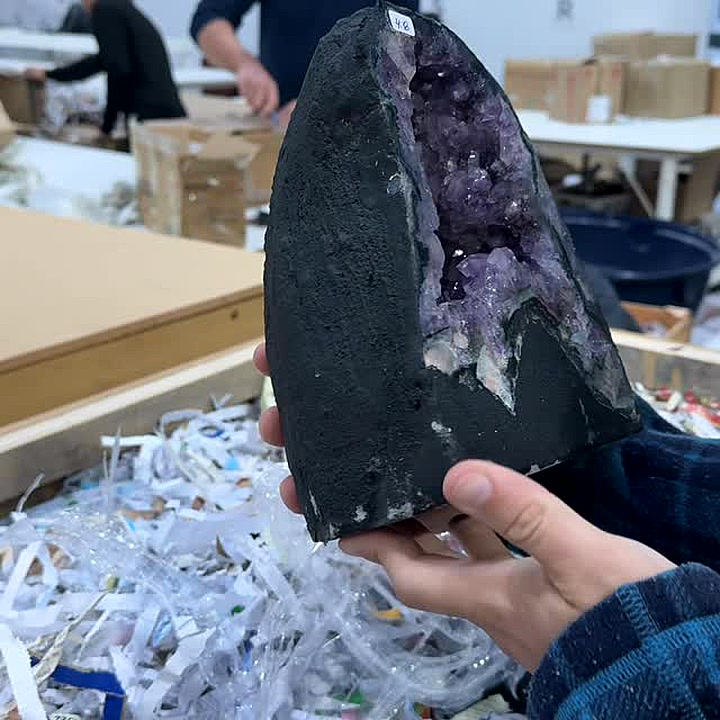
    Hands holding an amethyst cathedral over shredded packing paper while the CS Minerals team packs crystal wholesale orders for buyers in Australia and worldwide

    GST and Landed Cost for Australian Importers

    At the time of writing, GST is 10% on most imported goods; check current rates with the ABF and the ATO. On imports, GST generally covers the customs value plus duty, international transport and insurance, so it applies to more than the invoice price alone.

    Reclaiming GST

    If your business is registered for GST, you can usually claim the GST paid on imports as a credit on your Business Activity Statement. Some approved businesses can use the Deferred GST scheme, which moves the payment to the BAS instead of paying at the border. Ask your accountant whether it suits you.

    Build a landed cost sheet

    Because freight to Australia is a larger share of the total, landed cost is the only fair way to compare crystal wholesale offers in Australia with direct quotes from Brazil. Include:

    1. Supplier invoice, converted from US$ to AUD at your bank’s actual rate.
    2. International freight and insurance, by air or sea.
    3. Customs broker fees and any ABF or biosecurity charges.
    4. Duty according to your broker’s classification.
    5. GST, if you cannot claim it back.
    6. Local delivery from the port or airport to your shop.
    7. International payment fees.

    Then divide the total by the number of sellable pieces and compare that figure with a local wholesale price for the same grade and size. Our guide on how to price crystals to sell turns landed cost into a retail price.

    Crystal Wholesale Australia: Local Wholesaler vs Direct from Brazil

    FactorAustralian wholesalerDirect from Brazil
    Delivery timeDays, within AustraliaLong international transit; plan well ahead
    Customs and biosecurityHandled by the wholesalerHandled by you or your broker
    Price per pieceIncludes importer costs and marginUsually lower before import costs
    Freight impactHidden in the priceVisible and significant, especially for heavy pieces
    Selection of Brazilian materialWhat they chose to stockWidest choice at origin
    TraceabilityOften limitedClose to origin
    Best forTop-ups, testing new linesCore Brazilian stock, statement pieces, seasonal orders

    Many Australian retailers combine the two: one or two larger direct orders per year, timed well ahead of the busy season, and local wholesale top-ups in between.

    How Long Does Crystal Shipping from Brazil to Australia Take?

    Long enough that you must plan for it. Transit time depends on the freight mode, routing, customs and biosecurity clearance, and how busy the ports are. Air freight is faster but expensive for heavy items. On the other hand, sea freight is cheaper per kilo but takes considerably longer and adds port handling time. For this reason, ask your supplier for current lead times for production, packing and shipment rather than relying on a general figure.

    Timing crystal orders around the retail calendar in Australia

    Remember that the Southern Hemisphere calendar is shared with Brazil, but retail peaks are Australian. So if you want stock for Christmas trading, Mother’s Day in May or a big winter market, work backwards from that date and allow a comfortable buffer for clearance. Ordering late is the most common and most expensive mistake.

    Opal and Mookaite: Pairing Local Stones with Brazilian Crystals

    Australia has something most crystal markets lack: world-famous local stones. Therefore, using them alongside imported material gives your shop a distinct identity.

    • Opal is Australia’s national gemstone, and the country has a reputation as a leading source of precious opal. It sits naturally in a higher price tier and suits jewellery and small collector pieces.
    • Mookaite is a colourful jasper from Western Australia, popular in tumbled stones, palm stones and carvings. Shops abroad often sell it too, so Australian shops have a natural story to tell.
    • Brazilian amethyst, agate and quartz fill the volume and decor end of the shelf: geodes, cathedrals, clusters, slices and points.

    A display that pairs a Brazilian amethyst cathedral with a tray of Australian mookaite tells customers you know your stones and where they come from. Always label origin honestly: mookaite is Australian, amethyst from Rio Grande do Sul is Brazilian. For more on the Brazilian side, read our guide to wholesale crystals by type.

    Selling Crystal Stock in Australia Without Misleading Claims

    The Australian Competition and Consumer Commission (ACCC) enforces the Australian Consumer Law, which prohibits misleading or deceptive conduct. For crystal sellers, that means two things.

    No health claims as fact

    Do not state that crystals cure, treat or prevent health conditions. Present beliefs as traditions, for example “in crystal lore, people traditionally link citrine with abundance”, and keep the focus on mineral facts, origin and the object itself.

    Disclose treatments

    Much citrine on the market started as amethyst and then went through heat treatment. Similarly, producers often dye brightly coloured agate, and they coat aura quartz. Label these stones clearly. Honest labels protect you legally and build the kind of trust that brings customers back.

    Frequently Asked Questions

    Yes, GST applies to most imported goods and is 10% at the time of writing. It is usually calculated on the customs value plus duty, freight and insurance. GST-registered businesses can generally claim it back as a credit on their BAS.

    Stones must be clean and free of soil, plant material and insects, and solid wooden crates must be ISPM 15 treated and marked. Dirty goods or non-compliant timber can be held for inspection, treatment or rejection. Check the BICON database for current conditions before ordering.

    For higher-value shipments that require a Full Import Declaration, most businesses use a licensed customs broker. Couriers often handle clearance for smaller parcels. A broker also helps with classification and biosecurity questions.

    More Questions

    It depends on whether goods travel by air or sea, the routing and clearance times. Sea freight is cheaper for heavy pieces but much slower. Ask your supplier for current lead times and plan orders well ahead of your peak season.

    Often yes per piece, especially for larger orders, but freight to Australia is significant. Compare the landed cost per piece, including freight, broker fees, duty and GST, against local wholesale prices. Very small orders are often better bought locally.

    No. Mookaite is a jasper from Western Australia. Brazilian suppliers may include it in a consolidated shipment, but it should always be labelled as Australian in origin.

    Order Brazilian Crystal Wholesale Stock for Your Shop in Australia

    CS Minerals is a Brazilian wholesaler of crystals, minerals and natural stone based in Soledade, Rio Grande do Sul, known as Brazil’s agate capital. With 25 years in the trade, we ship wholesale orders worldwide, including crystal wholesale orders to Australia, with a minimum order of US$100. Watch real pieces on our live selling sessions, streamed from the warehouse Monday to Friday, 8am to midnight Brazilian time, on Instagram @csminerals. See how to place an order on our how to order wholesale crystals page, or browse the wholesale collection.

    Read Also

  • Crystal Wholesale Netherlands: Importing Brazilian Crystals into the Dutch Market

    Crystal Wholesale Netherlands: Importing Brazilian Crystals into the Dutch Market

    Crystal wholesale Netherlands buyers can import Brazilian crystals directly by registering for an EORI number with Dutch Customs (Douane), declaring the goods on arrival at Schiphol or the port of Rotterdam, and paying import VAT (21% at the time of writing) plus any customs duty. Once cleared, the stones are in free circulation in the EU, so you can resell them to shops across the single market without further customs checks. As a result, the Netherlands is one of the most practical entry points for Brazilian crystals into Europe.

    By the CS Minerals Wholesale Team · Last updated

    Why does this matter? Dutch retailers have long relied on German and Belgian distributors for their crystal stock, paying an extra margin for goods that often arrived through Dutch ports in the first place. Importing directly, however, puts you closer to the source, gives you more choice of Brazilian material and can turn your business into a small distributor for other European shops. This guide therefore explains the customs steps, the VAT options, the EU resale rules and what makes the Dutch market different.

    Why Crystal Wholesale in the Netherlands Works as a Gateway to Europe

    The Netherlands punches far above its size in European trade. For a crystal business, three advantages stand out.

    Rotterdam and Schiphol as entry points for crystal wholesale

    Rotterdam is the largest seaport in Europe and handles a huge share of the continent’s container traffic. Schiphol is one of Europe’s main air cargo hubs. For example, heavy decor pieces such as amethyst geodes and cathedrals can come by sea in crates, while smaller urgent orders of tumbled stones and points travel by air. In addition, experienced customs brokers at both hubs deal with EU import declarations every day.

    A VAT system built for importers

    The Dutch Article 23 permit (a licence to shift import VAT to your VAT return) is one of the reasons many international companies route goods through the Netherlands. In practice, it can remove the cash flow burden of paying VAT at the border. We explain it in more detail below.

    Access to the whole EU

    Goods cleared in the Netherlands can move freely to Germany, Belgium, France and every other EU country. So for a Dutch shop that also sells online, or a small wholesaler supplying market traders across Benelux, that single clearance opens a market of hundreds of millions of people. In short, crystal wholesale buyers in the Netherlands reach the whole EU from one port of entry.

    How to Import a Crystal Wholesale Order into the Netherlands, Step by Step

    Treat the steps below as orientation. Also, always confirm current requirements with Douane (Dutch Customs), the Belastingdienst or a licensed customs broker.

    1. Register your business and get an EORI number

    Your business should be registered with the KVK (Chamber of Commerce) and for VAT. To import from outside the EU, you also need an EORI number, which Dutch businesses request from Douane. Moreover, an EORI from any EU country is valid across the EU.

    2. Classify the goods with TARIC

    Every product in an EU import declaration needs a commodity code from the EU’s integrated tariff, TARIC. The code determines the duty rate and any measures that apply. For example, rough stones, worked stones, carved ornaments and jewellery may all fall under different codes. Look them up in the TARIC database, ask your broker, or request a Binding Tariff Information decision if you import the same products regularly. We do not quote duty rates here because they depend on the code and change over time.

    3. Choose a customs broker or courier for your crystal wholesale shipment

    Express couriers usually clear parcels for you and bill VAT, duty and a handling fee. For crates and pallets arriving at Rotterdam or Schiphol, a customs broker (douane-expediteur) files the declaration and can advise on classification and valuation.

    4. Prepare the documents for a wholesale crystal order

    • Commercial invoice with a clear description (“natural amethyst geode, polished, decorative”), quantities, values, currency and country of origin.
    • Packing list with weight per box or crate.
    • Air waybill or bill of lading.
    • Wooden crates marked to the ISPM 15 standard for treated wood packaging, which EU plant health rules require for wood packaging from outside the EU.

    5. Pay or defer VAT and duty

    You pay duty on clearance. You either pay import VAT on clearance too or, with an Article 23 permit, report it on your VAT return instead.

    Sorted trays of tumbled Brazilian stones on a table at the CS Minerals warehouse, a hand lifting one tray, ready for crystal wholesale Netherlands orders

    VAT on Imported Crystals: 21% and the Article 23 Permit

    The standard Dutch VAT rate is 21% at the time of writing; check the Belastingdienst for current rates. Customs calculates import VAT on the customs value of the goods plus duty and transport costs up to the EU border.

    Paying VAT at the border

    Without special arrangements, your courier or broker pays the import VAT and charges it to you. If you are VAT registered you can reclaim it later on your return, but the money is tied up in the meantime. For a crate of geodes, then, that can be a meaningful amount.

    Deferring with Article 23

    With an Article 23 permit (verleggingsvergunning), import VAT is not paid at the border. You declare it on your periodic VAT return and, if you are entitled to deduct it, deduct it on the same return. As a result, no cash leaves your account for VAT at import. In addition, many customs brokers can use their own permit on your behalf. Ask your broker or accountant whether this applies to your business.

    The end of the €150 duty exemption

    Until July 2026, low-value consignments under €150 could enter the EU without customs duty. The EU has removed that exemption and introduced a temporary flat duty on qualifying low-value items. Most crystal wholesale orders to the Netherlands are above that value anyway. However, if you import small parcels, check the current rules with Douane or your broker.

    Crystal Wholesale Netherlands Buyers: Reselling Across the EU

    This is where a Dutch importer has a real edge. Once your goods clear customs, they are EU goods.

    Selling wholesale crystal stock to shops in other EU countries

    Sales to VAT-registered businesses in other EU countries are generally intra-community supplies: you invoice them at 0% VAT with the buyer’s VAT number on the invoice, and the buyer accounts for VAT in their own country. For this reason, always check your customer’s VAT number in the EU’s VIES system and report the sales correctly.

    Selling online to consumers across the EU

    If your webshop sells to consumers in other EU countries above the EU-wide distance selling threshold, you charge the VAT rate of the customer’s country. The One Stop Shop (OSS) lets you report all of those sales in one Dutch return. Your accountant, in turn, can confirm the threshold and set this up.

    No second customs clearance

    Because the goods already entered the EU in the Netherlands, a box sent from Utrecht to Munich crosses no customs border. Therefore, that is a strong argument for importing directly rather than buying from a distributor who imported the same stones through Rotterdam.

    Crystal Wholesale Netherlands: Distributor or Direct Import?

    FactorBuy from an EU distributorImport direct from Brazil
    Customs paperworkNone for youYou or your broker handle the declaration
    VATDutch VAT or intra-EU invoiceImport VAT, deferrable with Article 23
    Delivery speedFast, daysLonger; plan ahead
    Price per pieceIncludes distributor marginUsually lower before import costs
    Choice of Brazilian materialWhat the distributor stockedWide selection at origin
    TraceabilityOften limitedCloser to origin
    Best forSmall, frequent top-upsCore lines, heavy pieces, resale across the EU

    For an overview of how channels compare in general, see our guide on where to buy crystals wholesale.

    Work out the landed cost of a crystal wholesale order in euros

    Before choosing, convert both options into landed cost per piece. For a direct import, add the supplier invoice converted from US dollars at your bank’s real rate, international freight and insurance, broker fees, any duty, import VAT if you cannot defer or deduct it, and transport from Rotterdam or Schiphol to your shop. Finally, divide by the number of sellable pieces.

    Then compare that figure with the distributor’s price for the same size and grade. Heavy decor pieces usually show the biggest saving at the source, because distributors add margin on top of the freight they already paid. Very small orders of tumbled stones may not justify the fixed costs of an international shipment, which is why many Dutch shops combine both routes. For most crystal wholesale buyers in the Netherlands, a sensible rhythm is one larger direct order per season for core lines, with distributor top-ups in between.

    What Sells in the Crystal Market of the Netherlands?

    Dutch shoppers are practical and price aware, and they appreciate honest product information. A few patterns are worth knowing when you plan your first import.

    • Interior decor is a strong driver. Clean, minimalist Dutch interiors suit a single statement geode, an agate slice on a stand or a pair of amethyst bookends.
    • Weekly markets and fairs remain an important sales channel for many small traders, so compact, sturdy stock such as tumbled stones, points and small clusters moves quickly.
    • Webshops selling to the Netherlands and Belgium are common, and bilingual Dutch and English product pages are normal.
    • Spiritual and wellbeing shops sell the classic assortment of amethyst, rose quartz, clear quartz and citrine.

    Our article on wholesale crystals by type helps you plan the mix of materials for a first order.

    Describe crystals honestly

    The Dutch Advertising Code (Nederlandse Reclame Code) and EU consumer protection law govern Dutch advertising, and both prohibit misleading claims. So do not present crystals as treating or curing health conditions. Describe metaphysical meanings as traditions, for example “rose quartz is traditionally associated with love”, and always disclose treatments such as heated citrine, dyed agate or coated aura quartz.

    How to Vet a Brazilian Crystal Supplier from the Netherlands

    See real pieces on live video

    Ask for a video call or join a live selling session from the supplier’s warehouse. After all, seeing actual pieces on camera removes most of the guesswork about colour, size and damage.

    Ask where each stone comes from

    A good supplier will tell you which stones are Brazilian and which were bought from other countries to consolidate your order. Because of this, that detail matters for your labels and for customers who ask.

    Agree the terms in writing

    Confirm payment method, shipping terms, lead time and how transit damage is handled. Ask whether you or the supplier arranges freight to Rotterdam or Schiphol and who pays at which point. Then start with a test order before scaling up.

    Frequently Asked Questions

    Yes. Any business importing goods from outside the EU needs an EORI number, which Dutch companies request from Douane. The number is valid across all EU member states.

    Crystals are normally subject to the standard Dutch VAT rate, which is 21% at the time of writing. Import VAT is calculated on the customs value plus duty and transport costs. Check current rates with the Belastingdienst.

    It is a Dutch arrangement that lets an importer report import VAT on the VAT return instead of paying it at the border. If the VAT is deductible, it is declared and deducted on the same return, so there is no cash outlay at import. Many customs brokers can apply it on your behalf.

    More Questions

    Yes. Once cleared in the Netherlands, the goods are in free circulation in the EU and move without further customs formalities. Sales to VAT-registered businesses in other EU countries are usually invoiced at 0% VAT as intra-community supplies.

    It depends on weight and urgency. Heavy geodes and cathedrals in crates are often more economical by sea to Rotterdam, while smaller and time-sensitive orders usually travel by air to Schiphol. Your supplier and broker can compare both.

    It depends on the TARIC commodity code of each product, and rates can change. Look the codes up in the TARIC database or ask your customs broker before ordering. The EU has also removed the former €150 duty exemption for low-value consignments.

    Source Wholesale Crystal Stock Direct for the Netherlands

    If you are planning crystal wholesale for the Netherlands, CS Minerals is a Brazilian wholesaler of crystals, minerals and natural stone, based in Soledade, Rio Grande do Sul, the town known as Brazil’s agate capital. With 25 years in the trade, we ship wholesale orders worldwide, including to the Netherlands and the rest of Europe, from a minimum order of US$100. You can see actual pieces during our live selling sessions from the warehouse, Monday to Friday, 8am to midnight Brazilian time, on Instagram @csminerals. See the ordering steps on our how to order wholesale crystals page.

    Read Also

  • Crystal Wholesale UK: How British Shops Import Crystals from Brazil

    Crystal Wholesale UK: How British Shops Import Crystals from Brazil

    Crystal wholesale UK buyers have two main routes: buy from a British wholesaler who has already imported the stock, or import directly from a producing country such as Brazil. Importing yourself means registering for a GB EORI number, classifying your goods with the right commodity code, paying import VAT (20% at the time of writing) and any duty, usually through a customs agent or courier. Done right, it gives British shops wider choice and better margins on core stones like amethyst, agate and quartz.

    By the CS Minerals Wholesale Team · Last updated

    This matters more since Brexit. Stock that used to arrive from EU distributors without customs checks now crosses a border like any other import, so many UK retailers have asked themselves whether it still makes sense to buy through a middleman in Europe. As a result, crystal wholesale in the UK now involves the same customs steps whichever route you pick. This guide covers the practical side: the paperwork, how VAT works for a VAT-registered shop, what the ASA expects when you describe crystals, and how to decide which route fits your business.

    Where Do UK Crystal Shops Buy Their Stock?

    Very few crystals sold in Britain were mined there. Almost everything on UK shelves came from abroad, and Brazil is one of the largest sources of amethyst, agate, citrine, clear quartz and geodes. So the real question for crystal wholesale in the UK is simply how many hands the stone passes through before it reaches your shop.

    UK crystal wholesalers and importers

    British wholesalers buy in bulk, clear customs and sell to retailers in pounds, often with next-day delivery. They are also convenient for small top-ups and for mixed orders that include tumble stones, jewellery and shop supplies. However, you pay for that convenience in price, and origin information can be thin.

    EU distributors

    Before 2021 many UK shops bought from Dutch, German or Belgian distributors. After Brexit, those orders became imports into Great Britain, with customs declarations and VAT on arrival. Some shops still buy this way. However, you may now be paying two sets of margins and handling customs anyway.

    Direct crystal wholesale from the source

    Buying directly from a supplier in Brazil cuts out at least one layer. You become the importer, but the paperwork is roughly the same as buying from an EU distributor now is. For many British buyers, that realisation is what tips the balance. For a wider look at sourcing channels, read our guide to where to buy Brazilian crystals wholesale.

    Crystal Wholesale UK Routes Compared

    The table below shows how the three common routes stack up for a typical independent shop buying crystal wholesale in the UK.

    FactorUK wholesalerEU distributorDirect from Brazil
    Customs paperwork for youNoneYes, import into GBYes, import into GB
    Import VATIncluded in UK VAT invoicePaid on importPaid on import
    Delivery speedFastestMediumSlowest; plan ahead
    Price per pieceHighestMiddleUsually lowest before import costs
    Selection of Brazilian materialLimitedModerateWidest
    Origin informationOften vagueVariesClosest to origin
    Best forQuick refills, small ordersMixed European and global stockCore Brazilian lines, statement pieces

    In practice, plenty of shops use two routes at once: direct import for the heavy, high-volume Brazilian lines and a UK wholesaler for emergencies.

    What Do You Need for Crystal Wholesale Imports into the UK?

    The steps below are general orientation. For that reason, always check the current guidance on GOV.UK and HMRC, because rules and procedures do change.

    A GB EORI number

    Any business importing goods into Great Britain needs an EORI number starting with GB. You apply online through GOV.UK and it is free. Without it, your courier or customs agent cannot clear the goods in your business name. If you trade into Northern Ireland, check whether you also need an XI EORI.

    The right commodity code

    Every product in an import declaration needs a commodity code from the UK Trade Tariff. The code decides the duty rate and whether any controls apply. Crystals can fall under different headings depending on whether they are rough stone, worked stone, carved ornaments or set in jewellery. Use the online Trade Tariff lookup tool, ask your customs agent, or request an Advance Tariff Ruling from HMRC for a binding answer if you import the same items regularly. We deliberately do not quote duty rates here, because they depend on the code and can change.

    A customs agent or courier broker

    Most small importers do not file declarations themselves. Express couriers usually act as your customs agent for parcels and charge a handling fee plus VAT and duty. In addition, for larger or palletised shipments, a freight forwarder or customs broker can handle the declaration and advise on classification. Ask for their fees in advance so you can build them into your landed cost.

    Commercial documents

    • A commercial invoice with a clear description (“polished natural amethyst cluster, decorative”), quantities, values, currency and country of origin (Brazil).
    • A packing list with weights per box or crate.
    • The air waybill or bill of lading.
    • Wooden crates marked to the ISPM 15 standard for treated wood packaging.

    How Does Import VAT Work on Crystal Wholesale Orders into the UK?

    Import VAT is often the biggest single cost at the border, so it is worth understanding properly. At the time of writing the standard UK VAT rate is 20%, and it is charged on the value of the goods plus certain costs such as freight, insurance and any duty. Check the current rate on GOV.UK.

    If you are VAT registered

    VAT-registered businesses can usually use postponed VAT accounting. Instead of paying import VAT upfront at the border, you declare it on your VAT return and reclaim it on the same return, so in practice it becomes a cash flow neutral entry. Then tell your courier or agent that you want to use it, and give them your VAT number along with your EORI. Finally, your accountant can confirm how it applies to your business.

    If you are not VAT registered

    Smaller shops below the VAT registration threshold pay import VAT as a real cost, normally collected by the courier before delivery. That means your landed cost is higher, and you should price accordingly. For example, it is one reason some very small sellers still prefer a UK wholesaler, whose price already includes VAT that they cannot reclaim either way.

    Low-value consignments

    The UK has special VAT rules for low-value consignments sent to consumers. Wholesale shipments to a business are usually treated differently, and the details depend on value and who the buyer is. So ask your agent which treatment applies to your order rather than relying on a figure you read online.

    Polished Brazilian agate slices in warm brown and amber tones, a popular line for crystal wholesale UK buyers

    Calculating Your Crystal Wholesale Landed Cost in Pounds

    A quote in US dollars from Brazil and a price list in pounds from a UK wholesaler cannot be compared directly. Convert everything into landed cost per piece, which includes:

    1. Supplier invoice in US$, converted at your bank’s actual rate.
    2. International freight and insurance.
    3. Customs agent or courier handling fees.
    4. Any customs duty on your commodity code.
    5. Import VAT, if you cannot reclaim it.
    6. Delivery from the airport or port to your shop.
    7. Bank or card fees on the international payment.

    First, divide the total by the number of sellable pieces. Then compare it with the UK wholesale price for the same size and grade. Heavy items such as geodes, cathedrals and agate bookends usually show the biggest difference in favour of buying at the source, while tiny orders of tumble stones may not justify the fixed costs. Our article on how to price crystals to sell shows how to turn that landed cost into a shelf price.

    ASA Rules: How to Describe Crystal Wholesale Stock in the UK

    Importing well is only half the job. How you describe your stock matters just as much, and the UK is strict. The Advertising Standards Authority (ASA) enforces the CAP Code, which covers websites, social media posts, product listings and in-store signage used for marketing.

    No health or healing claims

    The ASA has repeatedly ruled against crystal sellers who claimed or implied that stones treat, cure or prevent medical conditions, relieve anxiety or improve sleep. Unless you hold robust scientific evidence, which crystal healing does not have, those claims are likely to breach the Code. In addition, that applies to phrases in product titles, hashtags and captions as much as to formal adverts.

    What you can say

    • Describe the mineral facts: name, origin, size, weight, colour, natural or treated.
    • Describe traditions and beliefs clearly as such, for example “amethyst is traditionally associated with calm in crystal lore”.
    • Describe the object’s use: a decorative geode, a bookend, a gift.
    • Avoid words like “heals”, “cures”, “treats” or “therapy” attached to specific conditions.

    Honest treatment disclosure

    Treatments must be disclosed. Much citrine on the market is heat-treated amethyst, many brightly coloured agates are dyed, and aura quartz is coated. Labelling these honestly is both a legal duty under consumer protection law and good business, because customers who feel misled do not come back.

    How to Choose a Crystal Wholesale UK Supplier Abroad

    Buying from Brazil without seeing the warehouse can feel risky. However, these checks keep crystal wholesale from a UK shop to a supplier abroad manageable.

    Watch the crystal wholesale stock live

    Ask for a live video or join a live selling session where real pieces are shown on camera, not catalogue photos. You can check colour, damage and size before committing, and ask questions in real time.

    Ask about origin and treatments

    A trustworthy supplier will tell you which stones are Brazilian and which were consolidated from other countries, and whether any piece has been heated, dyed or repaired. As a result, you get exactly the information you need for accurate labels.

    Get the terms in writing

    Confirm the payment method, shipping terms, expected lead time and how damage in transit is handled. In particular, ask whether the price includes delivery to your door and whether VAT and duty will be collected on arrival. Because terms vary, never assume.

    Start small, then scale

    A first order at a modest value tests the whole chain, from packing to customs clearance to how the stones look in your shop lighting. Once one shipment runs smoothly, the second is much easier.

    Frequently Asked Questions

    Yes, a business importing goods into Great Britain needs a GB EORI number. It is free and you apply on GOV.UK. Your courier or customs agent will ask for it before clearing your shipment.

    Import VAT is charged at the standard rate, which is 20% at the time of writing, on the value of the goods plus freight and certain other costs. VAT-registered businesses can usually use postponed VAT accounting and reclaim it on their VAT return. Check the current rate and rules on GOV.UK.

    It depends on the product: rough stones, worked stones, carved ornaments and jewellery can fall under different headings. Use the UK Trade Tariff lookup, ask your customs agent, or request an Advance Tariff Ruling from HMRC for certainty. The code also determines any duty due.

    More Questions

    Often it is on a per-piece basis, especially for heavy items like geodes and cathedrals. For very small orders, fixed costs such as freight minimums and handling fees can cancel out the saving. Work out the landed cost per piece before deciding.

    Not as a factual claim. The ASA has ruled against sellers who claimed crystals treat or relieve health conditions. You can describe beliefs as traditions, for example “traditionally associated with”, and focus on the mineral facts.

    Yes. Goods from EU distributors are now imports into Great Britain, with customs declarations and import VAT, just like goods from Brazil. That has led many UK shops to compare EU suppliers with buying directly from producing countries.

    Crystal Wholesale for UK Shops, Straight from Soledade

    CS Minerals is a Brazilian wholesaler of crystals, minerals and natural stone based in Soledade, Rio Grande do Sul, known as Brazil’s agate capital. We have 25 years of experience in the trade, ship wholesale orders worldwide including to the UK, and start at a minimum order of US$100. You can see real pieces before you buy on our live sales, streamed from the warehouse Monday to Friday, 8am to midnight Brazilian time, on Instagram @csminerals. Read how the process works on our how to order wholesale crystals page.

    Read Also

  • Crystal Wholesale Suppliers in the USA: Domestic Distributors vs Buying at the Source

    Crystal Wholesale Suppliers in the USA: Domestic Distributors vs Buying at the Source

    Crystal wholesale suppliers in the USA fall into three groups: domestic distributors who hold stock in American warehouses, dealers you meet at gem and mineral shows, and producers at the source who ship to you directly. Domestic distributors win on speed and simplicity. Buying at the source, for example from Brazil, usually wins on selection, price per piece and traceability, as long as you are ready to handle a US import.

    By the CS Minerals Wholesale Team · Last updated

    The choice matters because it shapes your margins, your inventory risk and how much paperwork lands on your desk. A shop that reorders tumbled stones every two weeks has different needs from a store that wants twenty amethyst cathedrals for a holiday window. This guide walks through each channel honestly, explains the US import steps that most blogs skip, and gives you a simple way to decide.

    What Types of Crystal Wholesale Suppliers Exist in the USA?

    Before comparing, it helps to know who actually sits in the supply chain. Most crystals sold in American shops were mined abroad. Brazil, Madagascar, Mexico, Morocco, Uruguay and several other countries produce the bulk of the material, and US businesses either import it themselves or buy from someone who did.

    Domestic distributors and wholesale warehouses

    These companies import in large volume, break the lots down and resell to retailers from a US warehouse. You order online or by phone, pay in dollars and get your box in days. The trade-off is that you pay for their import costs, storage, staff and margin. You also see only what they chose to buy, and the stone’s origin can be vague after passing through two or three hands.

    Crystal wholesale suppliers at US gem shows

    Shows such as the Tucson season in Arizona or the Denver show in September bring hundreds of wholesale dealers into one place, many of them importers or even producers. You can touch the material, negotiate and carry pieces home. Travel, hotel and time away from your store add real cost, and popular shows sell out of the best lots early. Always check the official show dates before planning a trip.

    Crystal wholesale suppliers at the source

    These are companies based in producing regions that sell directly to retailers abroad. For Brazilian material, that often means Rio Grande do Sul for amethyst and agate, or Minas Gerais for quartz and many other minerals. You skip at least one layer of margin and get closer to the people who handle the stone after it leaves the mine. In exchange, you become the importer of record, or you pay someone to act as your customs broker.

    If you want a full scorecard for evaluating individual companies, we already published one in our guide to the checklist for vetting individual vendors. This article focuses on the channel decision itself.

    Crystal Wholesale Suppliers USA: Distributors vs the Source, Side by Side

    No channel is better in every case. The table below summarizes the trade-offs most US retailers run into when comparing crystal wholesale suppliers in the USA with direct import.

    FactorUS domestic distributorGem show dealerDirect from the source (e.g. Brazil)
    Speed of deliveryFastest, often daysImmediate if you carry it homeSlower; international freight plus customs
    Price per pieceHighest, includes importer marginVaries widely; negotiableUsually lowest per piece before import costs
    SelectionLimited to what they stockedWide, but only during show datesWidest for that origin’s materials
    TraceabilityOften vagueDepends on the dealerClosest to origin
    PaperworkNone for youNone, unless shipped internationallyYou or your broker handle the US entry
    Minimum orderOften lowOften per lotVaries; some sources start around US$100
    Best forFast refills, small testsHand-picking, networkingCore inventory, statement pieces, better margins

    Many successful shops mix channels. They buy their core volume at the source, top up fast movers from a domestic distributor and use shows to find unusual pieces. Thinking in terms of a portfolio, not a single supplier, protects you when one channel has a gap.

    When Do Domestic Crystal Wholesale Suppliers in the USA Make More Sense?

    Paying a bit more to a US warehouse is often the smart move. It is not a failure of sourcing; it is a way to buy time and reduce risk.

    • You are just starting out and do not yet know which stones your customers buy. Small, frequent orders let you learn without tying up cash.
    • You need stock this week for an event, a market stall or a restock before a holiday weekend.
    • Your order is very small and the fixed costs of an international shipment (freight minimums, broker fees) would eat the savings.
    • You want mixed goods such as jewelry findings, display stands and packaging in the same box as your crystals.
    • You have no time for paperwork and prefer a single invoice in dollars from a US company.

    The weak points are margin and origin. When three companies each add their markup, a tumbled amethyst that cost cents at the source can reach your shelf at a price that leaves little room for your own margin. And if a customer asks where a piece came from, “our distributor in Texas” is not a very satisfying answer.

    When Does Buying Crystals Directly from Brazil Make More Sense?

    Direct import starts to pay off once your volume is steady and your best sellers are materials that come from one country. Brazil is a natural candidate because it produces a huge share of the world’s amethyst, agate, citrine (much of it heat-treated amethyst, which should be labeled as such), clear quartz and geodes.

    Better price per piece

    Buying close to the mine removes at least one layer of margin. Even after freight, broker fees and any duties, many retailers find the landed cost per piece lower than a domestic wholesale price, especially for heavy decor items like geodes and cathedrals where US distributors charge a premium.

    Wider and deeper selection

    A supplier in a producing region sees far more material than any single US warehouse stocks. You can ask for a specific color grade of amethyst, a matched pair of agate bookends or a cathedral of a certain height. For a sense of what the country produces, see our overview of crystals found in Brazil.

    Traceability and storytelling

    Customers increasingly ask where their stones come from. Being able to say “this amethyst came from southern Brazil, bought from a family business in Soledade” is a story that sells. It also helps you disclose treatments honestly, because you are closer to the people who know whether a piece was heated, dyed or polished.

    The honest downsides

    Direct import is slower. You need to plan ahead, pay before shipment in most cases and deal with the US entry process. Heavy pieces cost real money to ship. And if a box arrives with a problem, resolving it across borders takes more communication than returning a parcel to a warehouse in Ohio. Ask any source supplier for their current lead times, packing method and how they handle damage claims before you order.

    Packed and labelled boxes at the CS Minerals warehouse, ready for crystal wholesale suppliers in the USA

    How Does Importing Crystals into the USA Work?

    This is the part most “best supplier” lists skip. You do not need to be a customs expert, but you should understand the basic steps. Rules change, so treat this as orientation and confirm current requirements with US Customs and Border Protection (CBP) or a licensed customs broker.

    Importer of record and customs brokers

    Every commercial shipment entering the US has an importer of record, the party responsible for the entry, the declared value and any duties. For small retailers that is usually you. Most businesses hire a licensed customs broker to file the entry on their behalf. Couriers such as the big express carriers often act as broker for the shipments they carry and bill you the fees afterward.

    Informal vs formal entry

    CBP distinguishes between informal entries for lower-value shipments and formal entries for higher-value ones, which require more documentation and usually a customs bond. The value threshold between them and the exceptions are set by CBP, so check the current figure on cbp.gov or ask your broker before you size your order. Splitting one order into many small boxes to stay under a threshold is not a good idea and can create compliance problems.

    De minimis and duties

    For years, many low-value parcels entered the US duty free under the de minimis rule. That changed: CBP suspended the de minimis exemption, and in June 2026 it published rules making the suspension indefinite, so low-value commercial shipments now need an entry and may owe duty. Tariff treatment for Brazil-origin goods has also changed several times recently. Because of that, we do not publish duty percentages. Ask your broker to look up the current Harmonized Tariff Schedule (HTS) classification and rate for your specific products before you place a large order.

    Documents to expect from crystal wholesale suppliers

    • A commercial invoice with a clear description of the goods (for example “polished amethyst geode, natural stone, decorative”), quantity, unit value, total value and country of origin.
    • A packing list showing what is in each box or crate and its weight.
    • The air waybill or bill of lading from the carrier.
    • Any wood packaging should meet international phytosanitary standards (ISPM 15 heat treatment marks), which reputable exporters already use for crates.

    Clear, accurate descriptions speed up clearance. Vague terms like “stones” or “gift items” invite questions. For more on the business registration side of selling, see our article on whether you need a license to sell crystals.

    How to Compare Landed Cost Across Crystal Wholesale Suppliers

    Comparing a US price list with a Brazilian quote is meaningless until both are converted into landed cost per piece, meaning what each item really costs once it sits on your shelf. Build a simple spreadsheet with these lines:

    1. Product cost from the supplier invoice.
    2. International freight, which depends heavily on weight and on air vs sea.
    3. Insurance, if not included.
    4. Customs broker fees and any entry or processing fees.
    5. Duties and taxes according to your broker’s classification.
    6. Domestic delivery from the port or airport to your store.
    7. Payment costs such as wire fees or currency conversion.

    Divide the total by the number of sellable pieces and compare that number with the domestic wholesale price for the same quality. Run the math for two or three order sizes. Very often the answer is that small orders are cheaper from a US distributor, while larger or heavier orders are cheaper from the source. Our breakdown of how much crystals cost wholesale explains how price structures work by type and size.

    How to Vet Overseas Crystal Wholesale Suppliers from the USA

    Buying from another country means you cannot drive over and inspect the warehouse. You can still reduce risk with a few practical checks.

    See the stock in real time

    Ask for a video call or join a live selling session where the supplier shows actual pieces, not stock photos. Real-time video lets you check color, size, damage and polish before paying. It also tells you a lot about how the business is run.

    Ask direct questions about treatments

    A reliable supplier will tell you plainly whether citrine is natural or heat-treated amethyst, whether agate is dyed, and whether a piece has been repaired or glued. If the answers are evasive, move on.

    Start with a test order

    A modest first order shows you packing quality, communication speed, invoice accuracy and how the goods look compared with what you saw on camera. Scale up once the first shipment clears smoothly.

    Confirm terms with crystal wholesale suppliers in writing

    Before paying, get in writing the payment method, the shipping terms (who pays freight and when risk passes to you), the expected lead time and what happens if something arrives broken. Terms vary a lot between suppliers, so never assume.

    Choosing Crystal Wholesale Suppliers in the USA: A Practical Strategy

    If you are still unsure, this three-step approach works for most independent retailers comparing crystal wholesale suppliers in the USA with overseas sources.

    • Months 1 to 3: buy small from a domestic distributor to learn what sells. Track units sold per stone and per size.
    • Months 3 to 6: place a test order at the source for your top five sellers plus one or two statement pieces. Compare landed cost and sell-through.
    • After 6 months: move your steady core volume to the source, keep the distributor for emergency refills and use shows to discover new material.

    This way you never bet the whole shop on one channel, and every decision is based on your own sales data rather than a supplier’s sales pitch.

    Frequently Asked Questions

    They fall into three groups: domestic distributors with US warehouses, dealers selling at gem and mineral shows, and overseas producers who ship directly to US retailers. Most of the material in all three groups was mined abroad. The right choice depends on your volume, deadline and how much import paperwork you are willing to handle.

    Often yes on price per piece, but not always on landed cost. Once you add freight, broker fees and any duties, small orders can end up more expensive than buying domestically. Larger and heavier orders, such as geodes and cathedrals, usually show the biggest savings at the source.

    It is not legally required for every shipment, but most small businesses use one because the entry rules are detailed. Express couriers often act as broker for the parcels they deliver. For larger or formal entries, a licensed customs broker saves time and reduces the risk of errors.

    More Questions

    That depends on the product’s HTS classification and on current trade measures, which have changed several times recently. The US also suspended the de minimis exemption, so low-value commercial shipments are no longer automatically duty free. Ask your customs broker or check CBP for the current rate before ordering.

    Expect a commercial invoice, a packing list and the carrier’s air waybill or bill of lading. The invoice should describe the goods clearly, state their value and list the country of origin. Wooden crates should carry ISPM 15 treatment marks.

    Ask for a live video showing the actual pieces, question them directly about treatments like heating and dyeing, and place a small test order first. Get payment, shipping and damage terms in writing. A supplier who is open about all of this is usually a safer partner.

    Buy Direct from Soledade: Crystal Wholesale for the USA

    CS Minerals is a Brazilian crystal and mineral wholesaler based in Soledade, Rio Grande do Sul, the town known as Brazil’s agate capital. With 25 years in the trade, we ship wholesale orders worldwide, including to the United States, with a minimum order of US$100. You can watch real pieces on our live selling sessions, broadcast from the warehouse Monday to Friday, 8am to midnight Brazilian time, on Instagram @csminerals. See the step-by-step process on our how to order wholesale crystals page, or browse the wholesale collection.

    Read Also

  • Wholesale Crystals by Type: A Guide for Retailers and Resellers

    Wholesale Crystals by Type: A Guide for Retailers and Resellers

    Wholesale crystals by type means choosing stones individually rather than relying only on assorted lots, giving you greater control over the varieties, sizes, styles and qualities that enter your inventory. CS Minerals supplies a broad and constantly evolving selection of natural crystals and minerals to retailers, designers, collectors and resellers in the United States and other international markets. Our inventory includes important Brazilian minerals such as amethyst, agate and quartz, alongside selected materials from other mineral-producing regions around the world. Because our inventory changes frequently, this guide highlights some of the minerals we work with, their origins and what buyers should consider before ordering.

    Origin matters when buying natural minerals. Not every stone we offer comes from Brazil, and we believe origin information should reflect the actual material whenever that information is available. Brazil remains at the heart of our business and gives us access to one of the world’s most important mineral industries, while selected materials from other countries allow us to offer an even broader variety to our customers. Products from different origins can be consolidated at our warehouse in Brazil, helping international buyers build diverse orders while simplifying the purchasing and shipping process.

    Wholesale Crystals by Type: Where Each Stone Comes From

    Crystals and minerals are geographically concentrated because they form under specific geological conditions, and those conditions are not evenly distributed around the world. Brazil is known for its remarkable geological diversity and produces an extensive range of minerals, including many varieties of quartz, amethyst, agate, tourmaline and other materials. However, no single country produces every mineral found in the international crystal market.

    Brazilian minerals form an important part of our selection, complemented by materials from other recognized mineral-producing regions around the world. This allows CS Minerals to offer customers a diverse and continually changing selection while respecting the actual origin of each material. Availability and origin may vary according to the specimen or lot, and products from different regions can be brought together through our operation in Brazil for international customers.

    GroupWhat it coversWhy it matters to your cost
    Brazilian coreAmethyst, agate, quartz varieties, tourmaline, kyanite, sodalite, lepidolite, hematite, amazonite, garnet, jaspers, kunziteBought at origin, so you skip the importer and distributor margins entirely
    Consolidated originsUruguayan amethyst, moldavite, mookaite, labradorite, tiger’s eye, rhodochrosite, pink amethyst, obsidian, zeolite, onyxPriced closer to market, but it travels in your existing shipment instead of triggering a second freight and a second customs entry

    The Brazilian Core: Wholesale Crystals by Type From Brazil

    These are the stones we buy at origin. Brazil is the world reference for most of them, and for agate and large amethyst formations it is the reference by a wide margin.

    Brazilian Amethyst

    Brazilian amethyst is one of the most iconic minerals from Rio Grande do Sul, where remarkable crystal formations developed within ancient basalt flows. It is available in many forms, including geodes, standing cathedrals, clusters, druzy pieces, polished points, towers and other decorative specimens. Colors can range from soft lilac to rich, deep purple, with each piece displaying its own natural characteristics. Size, color, crystal formation, quality and overall appearance can all influence the value of an individual specimen.

    Clear Quartz, Smoky Quartz and Citrine

    Brazil is internationally recognized for its remarkable quartz deposits, with important producing regions including Minas Gerais, Bahia and Goiás. Clear quartz can be found in a wide variety of natural formations and finished pieces, from individual points and clusters to polished and decorative specimens. Smoky quartz is another distinctive variety, appreciated for its natural tones ranging from light smoky shades to deeper, darker colors.

    Citrine is also an important member of the quartz family. Natural citrine occurs in Brazil and is valued for its characteristic yellow to golden coloration. Heat-treated material also exists in the international mineral market, which makes transparency about treatments especially important. At CS Minerals, the characteristics and relevant treatment information of the material are communicated according to the specific specimen or lot whenever applicable.

    Agate

    Brazilian agate is known worldwide for its distinctive natural patterns, colors and banded formations. It is an extremely versatile material and can be found in many forms, including slices, bookends, bowls, spheres, decorative pieces and jewelry components. Each specimen can display unique variations in color, translucency and pattern. Natural and enhanced agates are both present in the international market, so any relevant treatments should be clearly identified when applicable.

    Black and Pink Tourmaline

    Brazil is internationally recognized for its remarkable tourmaline deposits, particularly in regions such as Minas Gerais, Bahia and Rio Grande do Norte. Black tourmaline, mineralogically known as schorl, can be found in natural specimens, crystal formations and a variety of polished and decorative pieces. Pink tourmaline belongs to another distinctive part of the tourmaline family and is especially appreciated for its color, crystal quality and natural variations. As with other minerals, characteristics, origin and any relevant treatments should be considered according to the individual specimen or lot.

    Blue and Black Kyanite

    Brazilian kyanite is found in important mineral-producing regions such as Minas Gerais and Bahia. Blue kyanite is recognized for its distinctive bladed crystal formations and striking blue coloration, occurring as individual blades as well as specimens associated with matrix. Black kyanite is known for its characteristic fan-shaped crystal formations. Because kyanite has natural cleavage and can be relatively fragile, careful handling and professional packing are especially important when preparing specimens for international shipping.

    Sodalite, Lepidolite, Amazonite, Hematite and Garnet

    Brazil’s mineral diversity extends far beyond quartz, with important deposits producing a remarkable variety of natural materials. Bahia is known for blue sodalite, while Minas Gerais is internationally recognized for its mineral-rich pegmatites and deposits that produce materials such as lepidolite, amazonite and garnet. Hematite is also strongly associated with Minas Gerais, particularly the historic Iron Quadrangle region. These minerals demonstrate the extraordinary geological diversity of Brazil and the wide range of natural specimens available to the international mineral market.

    Red Jasper, Green Jasper and Kunzite

    Brazil produces beautiful varieties of jasper, including red and green material, which can be found in natural specimens as well as polished pieces, carvings and other decorative forms. Kunzite, a pink to lilac variety of spodumene, is another mineral associated with the pegmatites of Minas Gerais. It is also found in other important mineral-producing regions around the world, with color, clarity and crystal formation varying naturally according to each specimen.

    Consolidated Origins: Wholesale Crystals by Type From Other Countries

    Not every mineral in our selection originates in Brazil. Many stones are naturally associated with specific geological regions around the world, and their origin can vary according to the material and lot. At CS Minerals, selected minerals from international sources complement our Brazilian selection, allowing customers to explore a broader variety of natural stones through a single supplier.

    Uruguayan Amethyst

    Uruguayan amethyst is internationally recognized for material from the Artigas region in northern Uruguay, part of the extensive basaltic geological formations that also extend into southern Brazil. It is particularly appreciated for its rich purple coloration and compact crystal formations, although color, crystal size and overall appearance naturally vary from specimen to specimen. These distinctive characteristics make Uruguayan amethyst especially valued for geodes, clusters and other natural display pieces.

    Moldavite

    Moldavite is a natural glass belonging to the tektite group, formed as a result of a meteorite impact approximately 15 million years ago. It is most famously associated with the Czech Republic, particularly the regions of Bohemia and Moravia, with smaller occurrences documented elsewhere in Central Europe. Its distinctive green color, unusual surface textures and fascinating geological origin have made moldavite highly

    Mookaite, Tiger’s Eye and Tiger Jasper

    Mookaite is strongly associated with Western Australia, particularly the Mooka Creek region from which its name originates, and is known for its distinctive combinations of earthy red, yellow, cream and burgundy tones. Tiger’s eye is another internationally recognized material, with South Africa being one of its most important sources. “Tiger Jasper” is commonly used as a trade name rather than a strict mineralogical classification, and the material sold under this name can vary. For stones

    Labradorite, Rhodochrosite and Pink Amethyst

    Labradorite is found in several regions around the world, with Madagascar being an important source of material known for its striking flashes of color, while notable specimens are also associated with Canada and Finland. Rhodochrosite is strongly associated with Argentina, particularly the well-known banded material from the Capillitas mining district

    Selenite, Gypsum, Desert Rose and Orange Calcite

    Brazil has important gypsum deposits, including those found in the Araripe region of Pernambuco. Other forms and varieties commonly seen in the international mineral market, including selenite and desert rose formations, are associated with several mineral-producing regions around the world. Orange calcite is likewise found in different locations internationally, including well-known sources in Mexico. These materials are appreciated for their distinctive formations, soft natural tones and versatility in collections and decorative displays.

    Zeolite, Obsidian and Onyx

    Zeolites are found in several basaltic regions around the world, with India, particularly the Deccan Traps of Maharashtra, internationally recognized for producing remarkable specimens. Obsidian is a natural volcanic glass associated with specific volcanic environments and is sourced from several regions worldwide, including important deposits in Mexico and the United States. The name “onyx” is used commercially for different materials, including banded calcite and varieties of chalcedony. Because trade names can vary within the mineral market, clear descriptions and photographs of the actual material help buyers understand exactly what they are purchasing.

    All 34 Wholesale Crystals by Type and Their Real Origin

    Wholesale crystals by type from Brazil

    Our selection of Brazilian minerals changes frequently according to availability, with each new lot bringing different formations, sizes and characteristics. Examples of materials we may offer include:

    • Brazilian Amethyst — from Rio Grande do Sul, available in natural and decorative forms such as geodes, cathedrals, clusters, druzy formations and polished pieces.

    • Clear Quartz — sourced from important Brazilian producing regions, including Bahia and Minas Gerais, with natural points, clusters and a variety of polished forms.

    • Smoky Quartz — found in Brazil in natural crystal formations as well as polished and decorative pieces.

    • Citrine — including natural Brazilian material in a variety of crystal formations and finished pieces. Treatment information is identified when applicable.

    • Agate — particularly associated with Rio Grande do Sul and available in a wide variety of natural patterns and decorative forms.

    • Black Tourmaline — found in important Brazilian deposits and available as natural specimens, crystals on matrix and polished pieces.

    • Pink Tourmaline — associated with important Brazilian pegmatite regions and valued for its distinctive color and natural crystal formations.

    • Blue Kyanite — known for its characteristic bladed formations and striking blue coloration.

    • Black Kyanite — recognized for its distinctive dark, fan-shaped crystal formations.

    • Sodalite — appreciated for its rich blue coloration and naturally contrasting patterns.

    • Lepidolite — a lithium-rich mica known for its lilac, lavender and purple tones.

    • Amazonite — known for its distinctive blue-green to green coloration and natural pattern variations.

    • Hematite — an important iron mineral found in Brazil, particularly associated with the mineral-rich regions of Minas Gerais.

    • Garnet — found in several Brazilian geological environments and available in a variety of natural formations.

    • Red and Green Jasper — Brazilian materials appreciated for their natural colors, patterns and versatility in polished and decorative pieces.

    • Kunzite — a pink to lilac variety of spodumene associated with Brazil’s mineral-rich pegmatite regions.

    • Gypsum — found in important Brazilian deposits, including the Araripe region, with additional varieties available internationally depending on current inventory.

    Because natural mineral inventory changes continuously, specific varieties, forms, sizes and origins should always be confirmed according to current availability.

    Wholesale crystals by type from other origins

    • Our selection may also include minerals associated with important producing regions outside Brazil. Availability, origin and form can vary according to the specimen or lot. Examples may include:

      • Uruguayan Amethyst — particularly associated with the Artigas region of Uruguay and appreciated for its rich purple coloration and compact crystal formations.

      • Pink Amethyst — found in South America, including notable material from both Brazil and Argentina, with natural colors and formations varying from piece to piece.

      • Pyrite — found in several important mineral-producing regions worldwide, including Peru and Spain, and known for its distinctive metallic luster and crystal formations.

      • Fluorite — sourced from different regions around the world and available in a wide range of natural colors and crystal formations.

      • Selenite — internationally sourced material appreciated for its distinctive appearance and available in natural and decorative forms.

      • Desert Rose — a naturally occurring rosette-shaped formation associated with arid environments in several regions around the world.

      • Orange Calcite — known for its warm orange tones and available from different international mineral-producing regions.

      • Labradorite — notably associated with Madagascar and other producing regions, recognized for its distinctive flashes of iridescent color.

      • Zeolite — found in several basaltic regions worldwide, with India particularly recognized for remarkable natural specimens.

      • Black Obsidian — natural volcanic glass sourced from important volcanic regions, including Mexico and the United States.

      • Onyx — a commercial name that may refer to different materials, including varieties of chalcedony and banded calcite. The specific material should be identified according to the specimen or lot.

      • Tiger’s Eye — strongly associated with South Africa and recognized for its distinctive golden-brown coloration and optical effect.

      • Tiger Jasper — a commercial trade name that may be used for different materials, making photographs and individual descriptions particularly important.

      • Mookaite — strongly associated with Western Australia and recognized for its distinctive combinations of earthy colors and natural patterns.

      • Moldavite — a natural tektite most famously associated with the Czech Republic and valued for its distinctive green color and geological origin.

      • Rhodochrosite — notably associated with Argentina, including the well-known Capillitas region, and appreciated for its characteristic pink to red coloration and banded patterns.

      Because our inventory evolves continuously, international materials, origins, forms and availability may change. Customers can contact our team to see the specimens and varieties currently available.

    Which Type of Wholesale Crystals Should a New Store Order First?

    When building a wholesale crystal order, variety can be more valuable than simply trying to purchase one of every available mineral. A balanced selection allows retailers to offer different styles, sizes and types of specimens while adapting the inventory to their own customers and business model.

    For many retailers, a well-rounded selection may combine:

    • Accessible everyday pieces — smaller natural specimens, polished stones and other versatile items that are easy to incorporate into different retail displays.

    • Decorative minerals — clusters, freeforms, spheres, carvings, agate pieces and other visually distinctive products that add variety to a collection.

    • Premium specimens — minerals selected for exceptional color, crystal formation, clarity, origin or other distinctive natural characteristics.

    • Statement pieces — larger geodes, amethyst cathedrals, impressive mineral formations and unique decorative specimens that can become focal points within a store or showroom.

    There is no single ideal combination for every wholesale buyer. A crystal store, collector-focused business, interior design showroom and live seller may each require a very different product mix. The best approach is to select pieces according to your customers, available space, sales model and the type of collection you want to build.

    For minerals sold under commercial trade names or materials where origin and identification are particularly important, buyers should review photographs, descriptions and available information about the actual specimen or lot before ordering. Direct communication with the supplier can also help clarify these details when necessary.

    The Same Type of Wholesale Crystals Sells Six Different Ways

    Two specimens of the same mineral can have very different characteristics and values. Mineral type is only one part of the equation: size, color, clarity, formation, rarity, origin, condition, finishing and overall appearance can all influence an individual piece.

    Format also plays an important role. Natural rough material preserves the original characteristics of the stone, while polished pieces, carvings, towers, spheres and freeforms require different levels of cutting and finishing. Specimens on matrix are often appreciated for their natural crystal formation, while larger statement pieces are typically selected individually for their unique appearance and presence.

    Natural minerals are not standardized products. Even when similar shapes or sizes become available again, color, patterns, inclusions and crystal formations may differ from one piece to another. Particularly distinctive specimens may be completely unique, and once sold, an identical replacement may not be possible.

    Understanding these natural variations helps wholesale buyers build and replenish their inventory with realistic expectations. For a more detailed overview of the wholesale purchasing process, see our guide on how to buy crystals wholesale.

    What to Check Before Ordering Wholesale Crystals by Type

    Before placing a wholesale crystal order, asking the right questions can help you understand exactly what you are purchasing. The level of detail may vary depending on the mineral and specimen, but several points are worth considering:

    • Origin. Ask about the country or producing region when this information is available and relevant to the material.

    • Treatment. Confirm whether any relevant treatments, enhancements or alterations have been applied to the material.

    • Format and characteristics. Understand whether the piece is natural, polished, carved or otherwise finished, as well as the characteristics used to describe its quality.

    • The actual specimen. For unique specimens and statement pieces, current photographs or videos can provide a clearer understanding of color, formation, proportions and overall appearance.

    • Shipping terms. Understand what is included in the quotation and which shipping, customs or import responsibilities may apply to your order and destination.

    • Packing and handling. Some minerals and crystal formations are naturally more delicate than others, making appropriate packing and careful handling particularly important for international transportation.

    Clear communication before purchasing helps wholesale buyers understand the products, shipping process and characteristics of the specimens they are selecting.

    For more information about the factors that influence wholesale crystal pricing, see how much crystals cost wholesale.

    How to Order Wholesale Crystals by Type in One Shipment

    One of the advantages of working with a supplier that offers minerals from different origins is the ability to build a diverse inventory through a more streamlined purchasing process. Instead of managing separate purchases for every type of stone, wholesale buyers can select from Brazilian minerals alongside materials sourced from other important mineral-producing regions around the world.

    At CS Minerals, products selected for the same order can be prepared and consolidated through our operation in Brazil whenever possible. This can simplify communication, packing and international shipping while allowing retailers to build a varied collection through a single supplier.

    Because every order is different, the final packing and shipping arrangement depends on the products

    Because our inventory changes constantly, buyers can connect with our team to see current availability directly from our warehouse in Brazil. Through photos, videos, live presentations and video calls, customers can view actual specimens, compare different pieces and select the minerals that best fit their business without depending on a static catalog.

    To learn more about working with a Brazilian wholesale supplier, see our guide to buying directly from Brazil. For a deeper look at Brazil’s extraordinary mineral diversity and geological origins, explore what crystals are found in Brazil.

    Wholesale Crystals by Type: Frequently Asked Questions

    It means ordering named varieties in the formats and grades you choose, rather than buying pre made assorted lots. It gives you control over your price tiers and your product mix, and it is the normal way an established store buys once it knows what sells. Assorted lots, however, remain useful for testing a category or for live selling, where variety itself is the draw.

    No, and any supplier claiming otherwise is misinforming you. The Brazilian core covers amethyst, agate, the quartz varieties, tourmaline, kyanite, sodalite, lepidolite, amazonite, hematite, garnet, the jaspers and kunzite. Moldavite is Czech, mookaite is Australian, tiger’s eye is South African, labradorite is Madagascan, pink amethyst and rhodochrosite are Argentinian, and Uruguayan amethyst is Uruguayan.

    Most commercial citrine is amethyst that producers heat treat to shift its colour to yellow or orange. This is long standing, accepted practice across the trade, not a deception, but sellers must declare it, and it prices differently from natural material. Naturally occurring citrine exists and is less common. Always ask for treatment status in writing and pass it on to your own customers.

    Buy only from suppliers who state the Czech source, will photograph the exact piece, and accept returns. Moldavite comes from one region on earth, in the Vltava basin of Bohemia, so supply is genuinely limited and counterfeits made from green bottle glass are widespread. Prices far below the market are the clearest warning sign.

    Yes, and that is the main reason to use a consolidating supplier. We buy Brazilian material at origin and source the rest from the country that is the real reference for it. Then everything ships together in one crate or pallet under a single customs entry. You pay one freight bill rather than one per origin.

    There is no single industry minimum. Suppliers set minimums by order value, by weight or by piece count, and the basis depends on the category: tumbled and rough material usually carries weight based minimums, while specimens and statement pieces are frequently sold as single units. Ask any supplier which basis applies and whether it counts per variety or per total order.

    Request Wholesale Access

    CS Minerals supplies these 34 stones to retailers, online and live sellers, jewellery makers, designers and collectors across the United States, with origin and treatment stated per lot. Request wholesale access for current availability and pricing.

    Read Also

    This is a title

  • What Country Is Famous for Crystals?

    What Country Is Famous for Crystals?

    Quick answer: Brazil is the country most famous for crystals, and for a specific reason: it produces the broadest range of any single country, from bulk quartz and agate through fine tourmaline and beryl to amethyst cathedrals weighing hundreds of kilograms. No other country covers that span.

    But “famous for crystals” resolves differently per material. For example, Madagascar is the reference for labradorite and ocean jasper. Uruguay for the darkest amethyst. India for zeolites. Morocco for vanadinite. Mexico holds the most spectacular crystals ever found: the giant gypsum crystals of the Naica mine. And Namibia’s Tsumeb mine is arguably the most celebrated single mineral locality in the world. This article therefore maps who is the reference for what.

    Why Brazil Is the Country Most Famous for Crystals

    Brazil’s position is not about any single spectacular stone. Instead, it rests on breadth, and that breadth is geological.

    The country contains three distinct crystal-forming environments rather than one: ancient granitic pegmatites in the eastern states, which grew large gem crystals of tourmaline, beryl and topaz; hydrothermal veins depositing quartz; and the gas cavities of Cretaceous basalt flows across the south, which filled to become amethyst and agate geodes.

    The commercial result is that a single country supplies both faceting-grade gem rough and 300-kilogram decorative cathedrals. As a result, a buyer can fill an entire assortment (every price tier, every format) from one origin. That is also why Brazil is the answer most people reach for, and why it is the answer for a wholesale buyer specifically.

    Detail on what the country actually produces: What Crystals Are Commonly Found in Brazil?

    Three polished amethyst spheres with open crystal pockets, resting on black satin

    Which Country Is Famous for Which Crystals

    MaterialReference countryNotable region or locality
    Amethyst geodes and cathedralsBrazilAmetista do Sul / Alto Uruguai, Rio Grande do Sul
    Darkest-saturation amethystUruguayArtigas region: the same basalt formation as southern Brazil
    AgateBrazilSalto do Jacuí area, Rio Grande do Sul; cut in Soledade
    Rutilated quartzBrazilNovo Horizonte, Bahia
    Imperial topazBrazilOuro Preto district, Minas Gerais: the main world source
    Paraíba tourmalineBrazilSão José da Batalha, Paraíba (also found in Nigeria and Mozambique)
    Labradorite, ocean jasper, celestiteMadagascarAntsirabe region and the west coast
    Zeolite familyIndiaThe Deccan basalt quarries of Maharashtra
    VanadiniteMoroccoMibladen and Midelt
    Giant gypsum (selenite) crystalsMexicoNaica mine, Chihuahua
    Specimen pyritePeruHuanzala and other Andean mines
    FluoriteChinaYaogangxian and other Hunan mines
    Tourmaline, kunzite, aquamarine (Asian)Pakistan / AfghanistanSkardu and the Braldu valley; Afghan pegmatites
    Lapis lazuliAfghanistanSar-e-Sang, Badakhshan: worked for millennia
    Malachite, cobaltoan calciteDR CongoKatanga copper belt
    EmeraldColombiaMuzo, Chivor and Coscuez
    SapphireSri LankaRatnapura
    Rare secondary mineralsNamibiaTsumeb mine: see below
    Clear quartz (US domestic)United StatesThe Ouachita Mountains, Arkansas

    The World’s Most Famous Crystals and the Country Behind Each

    Four places are famous in their own right, independent of the countries that contain them: worth knowing because they come up constantly in the trade.

    Naica, Chihuahua, Mexico

    The Naica mine’s Cave of the Crystals contains gypsum (selenite) crystals reaching around eleven to twelve metres in length: among the largest natural crystals ever documented. They grew in mineral-saturated water at high temperature over a very long period. However, the chamber is effectively inaccessible without protective equipment because of the heat and humidity, and nothing from it circulates commercially: it is famous scientifically rather than as a source of goods.

    Tsumeb, Namibia

    A copper, lead and zinc deposit that produced an extraordinary mineralogical diversity: well over two hundred distinct mineral species, including a number for which it is the type locality. It is arguably the single most celebrated mineral locality among collectors, so Tsumeb provenance carries a genuine premium on specimens.

    Ametista do Sul, Rio Grande do Sul, Brazil

    The district that made Brazilian amethyst a global commodity. The geodes here formed in cavities within Cretaceous basalt, so the area produces both retail-scale material and the very large cathedrals that define the top of the decorative market.

    Sar-e-Sang, Badakhshan, Afghanistan

    The historic source of lapis lazuli, worked for thousands of years and the origin of the lapis used in the ancient Mediterranean world. In fact, few localities have that continuity of production.

    A Country Famous for Crystals Is Not Always the Largest Producer

    This distinction is worth making because the two get conflated, and buyers make sourcing decisions on the wrong one.

    A country can be famous because…Which is different from…
    It produced a legendary locality or specimenProducing commercial volume today
    It is the reference for one prized materialSupplying a broad range
    It has a long historical associationHaving active, accessible mines now
    Its material is visually distinctiveIts material being economically significant

    Naica is the clearest example: the most spectacular crystals on record, but commercially irrelevant. Conversely, China is a major producer of worked lapidary goods without holding much romantic reputation in the trade. For production figures, the USGS gemstone statistics are the most consistent public source.

    For a buyer, the useful question is never “which country is famous” but “which country is the reference for the material I need, and can I reach a supplier there”. That maps the sourcing decision properly: see Where Can I Buy Crystals Wholesale?

    Responsible Sourcing Across Origins

    Mineral supply chains differ enormously in transparency, and some origins carry documented concerns around labour conditions, informal and unsafe extraction, and conflict financing. That is not an argument against any origin. Instead, it is an argument for asking the same questions everywhere:

    • Can the supplier name the region or district a lot came from?
    • Can they provide legal origin and export documentation?
    • Do they buy at the mine, at a cutting center, or from another exporter?
    • For origins with known concerns, what diligence do they actually perform?

    A supplier who treats these as normal commercial questions is therefore one you can build on.

    Why the Country Famous for Crystals Is Also the Practical Choice

    Set aside reputation and the practical case is straightforward: breadth, scale and availability in one origin. A buyer sourcing from Brazil can cover volume material, mid-tier polished goods, premium specimens and statement pieces without adding suppliers. In addition, established trading centers at Teófilo Otoni for coloured stones and Soledade for agate and amethyst processing make that practical rather than theoretical.

    CS Minerals is a Brazilian origin supplier of crystals, minerals and natural stones, selling to wholesale and professional buyers in the United States. 

    Request wholesale access for current Brazilian availability.

    Related reading: What Crystals Are Commonly Found in Brazil?, What Is the Most Expensive Gemstone in Brazil? and Where Can I Buy Brazilian Crystals Wholesale?

    Which Country Is Famous for Crystals, and Which One to Actually Buy From

    Reputation and supply are two different questions, and a buyer who confuses them ends up chasing material that is not for sale. In fact, several of the most famous localities in the world are closed, exhausted, or produce only at collector volumes. Fame is a historical record, whereas supply is a commercial one.

    The Naica caves are not a source you can order from: authorities control access, and the chambers flooded again once pumping stopped. Tsumeb’s main workings closed in the 1990s, so Tsumeb material on the market today is old stock moving between collections. Sar-e-Sang lapis passes through a long chain before it reaches a Western buyer, which makes documented sourcing difficult.

    Brazil, however, sits in a different position. The districts that made the country famous are still producing at commercial scale, still cutting locally, and still shipping to retail buyers abroad. That is the practical reason a shop ends up sourcing Brazilian material even when the most photographed crystals in the world came from somewhere else.

    How to Check a Country of Origin Claim

    Origin gets repeated down a supply chain far more often than it gets verified. Before you accept a country on a label, separate three things that buyers frequently confuse:

    • Where it was mined. The actual geological source, which is the only claim that carries meaning.
    • Where it was cut or polished. Often a different country, because cutting follows labour cost and skill, not geology.
    • Where it shipped from. The least meaningful of the three, and the one most often presented as origin.

    So ask which of the three a supplier is describing, and ask for the answer in writing on the invoice. A seller buying close to the source can answer without hesitating. In contrast, a seller three steps down the chain usually cannot, because the record disappeared at the first consolidation.

    This matters commercially, not just academically. If you describe a stone to your customer as Brazilian and it turns out to be Madagascan material that transited through Brazil, the correction lands on you, not on the wholesaler who told you. Therefore, buying closer to origin is the only reliable way to keep an origin claim you can defend.

    What “authentic” should mean on a label

    The same logic applies to the word authentic. It means nothing on its own, because no one sells stones they describe as fake. Instead, what carries meaning is the pair of claims underneath it: the species is what the label says, and the treatment status is disclosed. A supplier who will put both in writing has answered the question that authentic only gestures at.

    In short, the practical conclusion for a buyer is simple. Fame tells you where to look first, while supply tells you where to order. When the two overlap, which is the case for Brazilian amethyst, agate and quartz, you get a story your customer already recognises attached to material you can actually reorder.

    Which Country Is Famous for Crystals? FAQs

    Brazil, primarily because it produces the broadest range of any single country: bulk quartz and agate, fine tourmaline and beryl, imperial topaz, and amethyst cathedrals weighing hundreds of kilograms. Other countries are the reference for specific materials: Madagascar for labradorite and ocean jasper, Uruguay for the darkest amethyst, India for zeolites, Morocco for vanadinite.

    The question only has an answer per material. Brazil for amethyst, agate, rutilated quartz and imperial topaz. Colombia for emerald. Sri Lanka for sapphire. Afghanistan for lapis lazuli. Madagascar for labradorite. So a supplier claiming to be strongest in everything is reselling material from origins it has no operational connection to.

    Commercial supply spreads across Brazil, Madagascar, India, China, Morocco, Pakistan, Afghanistan, Peru, Mexico, Uruguay, Zambia, the Democratic Republic of Congo and the United States, among others, with each dominating different materials. Brazil, however, supplies the widest range and much of the world’s decorative amethyst, agate and quartz.

    Two have the strongest claims. The Naica mine in Chihuahua, Mexico, contains gypsum crystals reaching around eleven to twelve metres: among the largest ever documented, though commercially irrelevant. The Tsumeb mine in Namibia produced well over two hundred mineral species, including several for which it is the type locality, and it is also the most celebrated locality among collectors.

    Brazil is among the leading producers of coloured gemstones and quartz and is the most significant single source of decorative amethyst, agate and large quartz formations. Whether it is “largest” depends on the material measured: other countries lead in materials Brazil does not produce in quantity, and production data by species is not consistently reported across the trade.

    Sometimes significantly. For most decorative material, origin matters mainly as quality information. For certain gems, however, the market prices origin directly: Brazilian-origin Paraíba tourmaline generally trades above visually similar Nigerian or Mozambican material, and Tsumeb provenance carries a premium on specimens. Where origin carries price, an independent laboratory report should establish it rather than a seller’s claim.

    About CS Minerals

    CS Minerals is a Brazilian supplier of crystals, minerals and natural stones serving wholesale buyers, retailers and professional buyers in the United States. The company combines Brazilian sourcing, product curation, live selling and international logistics to connect buyers with Brazilian stones and minerals.

    Written by the CS Minerals Wholesale Team · Last updated
    General reference information. Mineral localities and active production areas change over time, and production data by species is not consistently reported across the trade.

  • What Is Brazil’s National Gemstone?

    What Is Brazil’s National Gemstone?

    Quick answer: Brazil’s national gemstone does not officially exist. Unlike its national tree or national bird, which the law establishes, no Brazilian federal legislation names an official national gem or mineral.

    People nevertheless name two stones regularly, and both have real claims. Imperial topaz has the strongest: the Ouro Preto district in Minas Gerais is its main commercial source in the world, a concentration almost no other gem material has. Aquamarine is the other, on the strength of Brazil’s long association with the stone and its use in state gifts. If you need one answer, imperial topaz is the most defensible, but it is a reputational claim, not a legal one.

    The Direct Answer: Brazil’s National Gemstone Was Never Designated

    Brazil does designate national symbols by law. Its national symbols include the flag, the anthem, the coat of arms and the national seal. Separate legislation has also established other emblems. For example, Law 6.607 of 1978 designated pau-brasil (Paubrasilia echinata) the national tree. A 2002 decree then designated the sabiá-laranjeira (rufous-bellied thrush) the national bird.

    However, there is no equivalent instrument for a gemstone or mineral. Claims that a particular stone is “Brazil’s national gemstone” reflect popular association and marketing rather than any legal designation, which is worth knowing precisely because people repeat the claim so confidently.

    Why Imperial Topaz Has the Strongest Claim to Be Brazil’s National Gemstone

    Three reasons, and the first is unusual enough to carry the argument on its own:

    • Near-exclusive world source. The Ouro Preto district in Minas Gerais is imperial topaz’s main commercial source worldwide. Very few gem materials concentrate in a single district of a single country. That makes the stone identifiably Brazilian in a way that amethyst or aquamarine are not, since several countries produce both.
    • Historical identity. The stone belongs to the history of Ouro Preto and of mining in Minas Gerais, the region at the centre of Brazil’s colonial-era mineral wealth.
    • Name and status. “Imperial” topaz carries an association with the Brazilian imperial period, and the trade has long treated the stone as the country’s signature gem.

    If Brazil ever formally designated a single stone, this is the one with the clearest case.

    Why People Often Call Aquamarine Brazil’s National Gemstone

    Aquamarine’s claim is about visibility rather than exclusivity:

    • State gifts. Brazil has used aquamarine in significant diplomatic gifts. Most famously, the people of Brazil gave Queen Elizabeth II an aquamarine and diamond necklace and earrings around her 1953 coronation. The set became one of the best-known pieces associated with Brazilian gems.
    • The Dom Pedro. Cut from a crystal found at Pedra Azul in Minas Gerais and now held by the Smithsonian National Museum of Natural History, the Dom Pedro aquamarine is the largest cut aquamarine gem known, at roughly 10,363 carats.
    • Long production history. Brazil has been a leading source of aquamarine for generations, and the association is firm internationally.

    What weakens it as a “national” stone: a number of countries produce aquamarine, so it does not identify Brazil the way imperial topaz does.

    Other Candidates for Brazil’s National Gemstone

    StoneCase forCase against
    Imperial topazMain world source is a single Brazilian district; strong historical identityLess familiar to the general public than amethyst
    AquamarineUsed in famous state gifts; the Dom Pedro; long production historyProduced in several countries
    AmethystThe Brazilian stone most people can name; huge productionAlso produced in Uruguay, Zambia and elsewhere; abundant and inexpensive
    Paraíba tourmalineNamed after a Brazilian state; the country’s most expensive gemThe trade now applies the name to material from Nigeria and Mozambique too
    BrazilianiteLiterally named after Brazil; first described in 1945 from Minas GeraisA collector mineral with no commercial or public profile
    EmeraldSignificant Brazilian productionColombia dominates the stone’s identity internationally

    Brazilianite deserves a note. It is the one mineral that takes its name from the country. Mineralogists first described this sodium aluminium phosphate in 1945 from Minas Gerais. On the naming argument alone it would win, but it loses on every other count. Only collectors really know this specimen mineral, and it has no role in commerce or public recognition.

    Polished Brazilian amethyst points, the stone most often mistaken for Brazil's national gemstone

    Brazil’s Actual Official Emblems, for Contrast

    SymbolDesignation
    National flag, anthem, coat of arms, sealConstitutionally recognised national symbols
    National tree: pau-brasil (Paubrasilia echinata)Law 6.607 of 1978
    National bird: sabiá-laranjeira (rufous-bellied thrush)Designated by decree in 2002
    National gemstoneNone designated

    The pattern is informative: where Brazil has wanted a national emblem, it has legislated one. The absence of a gemstone designation is therefore a real absence. It is not an oversight for whoever asserts it most often to fill in.

    Why American Buyers Expect There to Be One

    There is a reason this question comes up so often from the United States, and it is not confusion: US states do designate official gems and minerals by statute. For example, Arkansas has diamond as its official state gem and quartz as its state mineral. California designated benitoite as its state gem and serpentine as its state rock. Arizona names turquoise, Oregon the sunstone, Maine tourmaline and Nevada the Virgin Valley black fire opal. In fact, most states have made some designation of a gem, mineral or rock.

    An American buyer therefore arrives with a reasonable expectation that a country as mineral-rich as Brazil would have done the same. However, it has not. The framework simply differs. Brazil legislates individual national emblems when it chooses to, such as a tree and a bird. It has never extended that to a gemstone, despite being one of the most important gem-producing countries in the world.

    So the honest answer to give a customer who asks is: no official designation exists, and if one did, the Ouro Preto district’s near-monopoly on imperial topaz gives that stone the strongest case.

    Why the Question Matters Commercially

    It matters more than it looks, in two directions.

    For buyers: if a supplier tells you a stone is “Brazil’s national gemstone”, that is a marketing claim, not a fact you can pass to your own customers. Reselling it puts an unverifiable statement in your product copy under your name.

    For sellers: the accurate version is better copy anyway. “The Ouro Preto district in Minas Gerais is the main commercial source of imperial topaz in the world” is specific, verifiable and genuinely impressive, and it survives a customer who checks. In contrast, a vague national claim does not.

    That principle also applies well beyond this question. In a trade where grading is subjective and sellers often assert origin rather than document it, the suppliers and retailers who state precisely what they can support are the ones who build accounts that reorder.

    Sourcing Brazilian Stone

    CS Minerals supplies Brazilian crystals, minerals and natural stones (amethyst, quartz, agate, tourmaline, beryls and decorative stone) to wholesale and professional buyers in the United States. Each lot states its origin region and treatment status.

    Request wholesale access for current availability.

    Related reading: What Crystals Are Commonly Found in Brazil?, What Is the Most Expensive Gemstone in Brazil? and What Country Is Famous for Crystals?

    How to Talk About Brazil’s National Gemstone Without Overclaiming

    Most of the trade repeats the claim that Brazil has a national gemstone, but the claim is wrong. That creates a small commercial problem for anyone writing product copy: the phrase sells, but using it plainly is inaccurate.

    The safe construction is to describe the association rather than assert a designation. “Imperial topaz comes from almost nowhere else, and Ouro Preto is its main commercial source worldwide” is accurate and carries more weight than “Brazil’s national gemstone” ever did. It gives the customer a fact they can check instead of a title they cannot.

    Three phrasings that stay accurate:

    • “Brazil’s best known gemstone export” for amethyst, which is defensible on trade volume.
    • “Named after Brazil” for brazilianite, which is literally true and rarely used.
    • “Mined almost exclusively in Minas Gerais” for imperial topaz, which is the strongest factual claim available.

    Why Brazil’s National Gemstone Comes Up in Wholesale Conversations

    Buyers ask about a national gemstone because they are looking for a story to attach to the display, not because they care about legislation. Understanding that changes the answer you give them.

    What actually sells a Brazilian stone at retail is provenance a customer can picture: the district, the geology, the reason it looks the way it does. A geode formed in a gas cavity in Cretaceous basalt is a better counter story than a title no government ever issued.

    For a supplier, the practical consequence is what you should be asking for. Request the producing district rather than the country, because the district is what carries the characteristics your customer will notice. Ametista do Sul amethyst, Ouro Preto topaz and Minas Gerais tourmaline behave differently at the counter. A supplier who cannot tell you the district is usually a step too far from the source to know.

    What to Put on a Label Instead

    Since no designation exists to cite, the label has to carry something a customer can verify. District, species and treatment status do more work than any national title would.

    For example, a line such as “Amethyst, Ametista do Sul, Rio Grande do Sul, untreated” tells a buyer where it formed, what it is, and whether anyone treated it. That is three checkable facts in eleven words, and it is the format that survives a customer searching for it afterwards.

    A buyer who asks for the national gemstone is usually asking a different question underneath: which Brazilian stone should I put at the centre of my display. Answer it that way, and the conversation goes somewhere useful: nobody has to defend a designation that no government ever made.

    Brazil’s National Gemstone: Frequently Asked Questions

    Brazil has no officially designated national gemstone. No federal legislation names an official national gem or mineral, unlike the national tree (pau-brasil, by Law 6.607 of 1978) or the national bird (the sabiá-laranjeira, designated by decree in 2002). Imperial topaz has the strongest reputational claim, because the Ouro Preto district in Minas Gerais is its main commercial source worldwide.

    No. Amethyst is the Brazilian stone most people can name, and Brazil is a major producer. However, it is not an official designation, and Uruguay, Zambia and other countries also produce amethyst. Its abundance is exactly why it does not identify Brazil the way imperial topaz does.

    Because the Ouro Preto district in Minas Gerais is its main commercial source in the world: an unusual degree of concentration for a gem material. The stone also belongs to the mining history of Minas Gerais and to Brazil’s imperial period, from which the name derives.

    Brazilianite, a sodium aluminium phosphate first described in 1945 from Minas Gerais and named for the country. Collectors prize it, but it has no commercial or public profile, which is why nobody proposes it as a national stone despite having the best claim on the naming argument alone.

    Aquamarine. The people of Brazil presented an aquamarine and diamond necklace and matching earrings around her 1953 coronation, and the set became one of the best-known pieces associated with Brazilian gems. It is a large part of why people often name aquamarine as a Brazilian national stone.

    No. Brazil designates national symbols by legislation (as it did for the national tree and national bird) and no such instrument exists for a gemstone or mineral. Any claim that a particular stone holds that status is reputational rather than legal.

    About CS Minerals

    CS Minerals is a Brazilian supplier of crystals, minerals and natural stones serving wholesale buyers, retailers and professional buyers in the United States. The company combines Brazilian sourcing, product curation, live selling and international logistics to connect buyers with Brazilian stones and minerals.

    Written by the CS Minerals Wholesale Team · Last updated
    General reference information. We cite legislative designations as of the date of publication; readers verifying a legal designation should consult the current Brazilian statute directly.

  • What Is the Most Expensive Gemstone in Brazil?

    What Is the Most Expensive Gemstone in Brazil?

    Quick answer: The most expensive gemstone in Brazil is Paraíba tourmaline. It is a copper-bearing elbaite tourmaline with a distinctive neon blue-to-green colour, first found in the 1980s at São José da Batalha in the state of Paraíba. The trade also widely regards it as among the most expensive gemstones per carat in the world, and in top qualities it can exceed fine ruby, emerald and sapphire.

    Behind it, three other Brazilian materials command exceptional prices: fine alexandrite, the colour-change chrysoberyl; imperial topaz, whose main commercial source in the world is a single district in Minas Gerais; and top-colour emerald and aquamarine. Several orders of magnitude in price separate all four from ordinary Brazilian crystal.

    Paraíba Tourmaline: the Most Expensive Gemstone in Brazil

    What it is

    Chemically it is elbaite, a lithium tourmaline, coloured by copper, which is unusual, because copper is not a normal colouring element in tourmaline. As a result, that composition produces a saturated, almost electric blue-to-green that has no close equivalent among other gemstones, and which reads as luminous even in modest light.

    Where it came from

    The material was first found in the 1980s at São José da Batalha, in the Brazilian state of Paraíba, from pegmatite deposits. The find was small in scale, and miners worked the deposits intensively, which is a central part of the price story: the original Brazilian source was never large.

    Why it is the most expensive gemstone in Brazil

    • Colour with no substitute. Buyers who want that specific neon blue-green therefore have no alternative material to switch to.
    • Very limited supply. The Brazilian deposits are small, and fine material in larger sizes is especially rare.
    • Size scarcity compounds. As with most gems, price per carat rises steeply with size, and in this material clean stones above a few carats are exceptional.
    • Established collector and high-jewelry demand. The top of the jewelry market has adopted the stone, which supports the price.

    The naming nuance that matters commercially

    After the Brazilian discovery, copper-bearing tourmaline was also found in Nigeria and Mozambique. Consequently, the trade came to use “Paraíba” as a designation for the material type (cuprian elbaite in that colour range) rather than strictly for the geographic origin. African material can be visually similar, although it generally trades below Brazilian-origin stones of comparable appearance.

    Practical consequence for a buyer: for stones of significant value, origin determination matters and belongs in an independent laboratory report, not in a seller’s assurance. This is one of the few areas in the crystal and gem trade where laboratory documentation genuinely changes the price. For background on the species itself, see the GIA guide to tourmaline.

    Alexandrite: Another Expensive Gemstone From Brazil

    Colour-change chrysoberyl: it appears green or bluish-green in daylight and then shifts toward red or purplish-red under incandescent light. The strength and cleanliness of that change is what sets the price, alongside the usual clarity and size factors.

    Brazilian alexandrite, notably from the Hematita area of Minas Gerais, built a strong international reputation. Fine material, however, is extremely rare in any size, and top stones sit comfortably in the same price bracket as the best coloured gems in the world.

    Imperial Topaz: An Expensive Gemstone With One Main Source in Brazil

    Imperial topaz ranges from golden yellow through orange to a reddish-pink, with the pinkish and reddish tones commanding the highest prices. Its claim to a top position is structural rather than purely aesthetic: the Ouro Preto district in Minas Gerais is its main commercial source in the world. In fact, very few gem materials are that concentrated in a single district, and that concentration is a large part of the premium.

    It is also the Brazilian stone with the strongest historical identity, tied to Ouro Preto and to the mining history of Minas Gerais.

    Emerald and Aquamarine

    Brazil produces both in commercial quantity, but at ordinary grades neither is expensive. At the top of the range, however, they are a different proposition: top-colour emerald with good clarity, and large clean aquamarine in intense blue, are scarce at any origin and priced accordingly.

    Brazil has a strong aquamarine reputation. The Dom Pedro aquamarine (cut from a crystal found at Pedra Azul in Minas Gerais and now in the Smithsonian National Museum of Natural History) is the largest cut aquamarine gem known, at roughly 10,363 carats.

    How the Most Expensive Gemstone in Brazil Compares: Relative Ranking

    MaterialPositionWhat drives the priceMain Brazilian source
    Paraíba tourmalineHighestUnique copper-derived colour; very small original depositsParaíba (São José da Batalha)
    Fine alexandriteVery highStrength of colour change; extreme rarity in fine qualityMinas Gerais (Hematita), Bahia, Espírito Santo
    Imperial topazHighSingle dominant world source; reddish-pink tones rarestMinas Gerais (Ouro Preto district)
    Top-colour emeraldHighColour and clarity at the top gradesMinas Gerais, Goiás, Bahia
    Fine large aquamarineModerate to highIntensity of blue plus clean material in large sizesMinas Gerais, Espírito Santo
    Fine specimen mineralsVariable, can be very highSize, condition, aesthetics and documented localityVarious

    We do not publish per-carat figures here deliberately. Prices in this bracket vary enormously with quality, size, treatment and market conditions, so a fixed number in an article becomes misinformation within months. Instead, for a specific stone, the reference points that matter are a current independent laboratory report and recent comparable sales.

    What Determines Price Within a Species

    Across all of the above, the same variables apply in roughly the same order:

    1. Colour: saturation, hue and evenness. Usually the dominant factor.
    2. Clarity: eye-clean material commands a large premium in gem-quality stones.
    3. Size: price per carat rises steeply, because large clean crystals are disproportionately rare.
    4. Cut quality: for faceted stones, proportions and finish.
    5. Treatment: untreated material commands a premium; sellers must disclose treatments.
    6. Origin, where it is trade-significant: as with Paraíba tourmaline, and verified by laboratory report rather than by claim.

    “Most Expensive” Is Not the Same as “Most Valuable to a Business”

    This distinction is worth stating plainly, because the search question and the commercial question have different answers.

    Paraíba tourmaline is the most expensive Brazilian gemstone per carat. It is also, for almost every retailer, the wrong thing to build a business on: supply is scarce, capital per unit is high, the buyer pool is small and specialised, and authentication carries real cost and risk.

    The materials that actually generate revenue for Brazilian stone businesses are the abundant ones (amethyst, quartz varieties, agate and decorative worked stone) because they turn, they can be reordered, and they serve buyers who exist in volume. In short, value in a retail business comes from turn rate and margin, not from the price ceiling of the category.

    That reasoning is worked through in Are Crystals Worth Any Money?

    Sourcing Brazilian Material

    CS Minerals supplies Brazilian crystals, minerals and natural stones (amethyst, quartz, agate, tourmaline, beryls and decorative stone) to wholesale and professional buyers in the United States, with treatment status disclosed per lot.

    Request wholesale access for current availability.

    Related reading: What Crystals Are Commonly Found in Brazil?, What Is Brazil’s National Gemstone? and What Country Is Famous for Crystals?

    Most Expensive Gemstone in Brazil: Frequently Asked Questions

    Paraíba tourmaline: a copper-bearing elbaite with a distinctive neon blue-to-green colour, first found in the 1980s at São José da Batalha in the state of Paraíba. The trade widely regards it as among the most expensive gemstones per carat in the world, and in top qualities it can exceed fine ruby, emerald and sapphire.

    Four reasons work together. First, its copper-derived neon colour has no substitute among other gemstones. Second, the original Brazilian deposits were small. Third, clean stones above a few carats are exceptionally rare. Finally, the material has established demand in high jewelry and among collectors. In other words, scarcity and non-substitutability reinforce each other.

    No. After the Brazilian discovery, copper-bearing tourmaline was also found in Nigeria and Mozambique, and the trade came to use “Paraíba” for the material type rather than strictly for the origin. African material can look similar and generally trades below Brazilian-origin stones of comparable appearance, which is why origin determination for valuable stones belongs in an independent laboratory report rather than in a seller’s assurance.

    Fine alexandrite, the colour-change chrysoberyl, with Brazilian material from the Hematita area of Minas Gerais holding a strong reputation. Imperial topaz then follows, with an unusual claim: the Ouro Preto district in Minas Gerais is its main commercial source worldwide. Top-colour emerald and large fine aquamarine are also in the high bracket.

    It varies widely with colour, clarity, size and cut: reddish-pink tones are the rarest and command the highest prices, while pale yellow material is far more accessible. Because prices in this bracket move with quality and market conditions, the meaningful reference for a specific stone is a current laboratory report and recent comparable sales, not a published figure.

    Not the most expensive one. Amethyst, quartz varieties, agate and decorative worked stone generate retail revenue because they can be reordered, they turn, and they serve buyers who exist in volume. In contrast, Paraíba tourmaline has the highest price ceiling and the smallest, most specialised buyer pool: a different business entirely.

    About CS Minerals

    CS Minerals is a Brazilian supplier of crystals, minerals and natural stones serving wholesale buyers, retailers and professional buyers in the United States. The company combines Brazilian sourcing, product curation, live selling and international logistics to connect buyers with Brazilian stones and minerals.

    Written by the CS Minerals Wholesale Team · Last updated
    General reference information, not a valuation or appraisal. Gemstone prices vary with quality, size, treatment and market conditions. For a specific stone, rely on an independent laboratory report and recent comparable sales.

  • What Crystals Are Commonly Found in Brazil?

    What Crystals Are Commonly Found in Brazil?

    Quick answer: The crystals most commonly found in Brazil are quartz and its varieties (clear quartz, amethyst, smoky, rose and rutilated quartz), agate and chalcedony, tourmaline, the beryl family (aquamarine, emerald, morganite, heliodor) and topaz, including the imperial topaz whose main commercial source in the world is the Ouro Preto district in Minas Gerais.

    Brazil produces this range because it contains three distinct geological environments rather than one: ancient granitic pegmatites in the eastern states, hydrothermal quartz veins, and the gas cavities of Cretaceous basalt flows in the south that host amethyst and agate geodes. Each produces a different family of material, which is why a single country supplies both faceting-grade gem rough and amethyst cathedrals weighing hundreds of kilograms.

    Why So Many Different Crystals Are Found in Brazil

    Brazil covers roughly 8.5 million square kilometers, built largely on ancient Precambrian cratons and overlaid in places by much younger volcanic rock. Three settings account for nearly all commercially traded Brazilian crystal:

    Geological settingHow it formsWhat it producesWhere
    Granitic pegmatitesCoarse-grained intrusive bodies cooling slowly, allowing very large, well-formed crystals to growTourmaline, beryl, topaz, spodumene, gem-quality quartzMinas Gerais, Espírito Santo, Bahia, Paraíba, Rio Grande do Norte
    Hydrothermal quartz veinsMineral-rich hot fluids depositing silica in fracturesClear, smoky and rutilated quartzBahia, Minas Gerais, Goiás
    Basalt vesiclesCretaceous lava flows cooled with gas cavities trapped inside; the cavities later filled with silica-bearing fluidsAmethyst and agate geodes, cathedrals, druze platesRio Grande do Sul, Santa Catarina, Paraná (the Paraná Basin)

    The practical consequence: pegmatite material and geode material come from different states, different mining operations and different price logics. In other words, they are effectively two industries inside one country.

    Quartz: the Most Common Crystals Found in Brazil

    Quartz is one of the most abundant minerals in the Earth’s continental crust, and Brazil is among its most significant sources. It is also the most commercially important family here, because it spans every price tier.

    • Clear quartz (rock crystal) is colourless and sold as points, clusters and polished goods, mainly from Bahia, Minas Gerais and Goiás.
    • Amethyst is purple and comes as geodes, cathedrals, clusters, druze and polished points, above all from Rio Grande do Sul (Ametista do Sul and the Alto Uruguai district).
    • Citrine runs from yellow to orange and also comes from Rio Grande do Sul, where Soledade processes it; see the note below on treatment.
    • Smoky quartz is brown to near-black and sold as points and polished pieces from Minas Gerais and Bahia.
    • Rose quartz is pink and usually massive rather than crystalline, so workshops mostly carve and polish it; it comes from Minas Gerais and Bahia.
    • Rutilated quartz is clear quartz with golden needles of rutile, and it commands a premium; the classic source is the Novo Horizonte area of Bahia.
    • Tourmalinated quartz contains black tourmaline needles and likewise comes from Minas Gerais and Bahia.
    • Aventurine is green with a glittering, mica-like effect, and Brazilian material comes mainly from Bahia and Minas Gerais.

    Two treatments worth knowing, because reputable suppliers disclose them:

    Citrine. A large share of the commercial citrine on the market is amethyst that has been heat-treated to shift its colour to yellow or orange. This is long-standing, accepted trade practice, but suppliers must declare it, and it prices as treated material.

    Prasiolite (green quartz). Heat-treating amethyst also produces most commercial material. Naturally green quartz exists, although it is uncommon.

    Agate and Chalcedony

    Banded chalcedony formed in the same basalt cavities as the amethyst of southern Brazil. Agate is the backbone of Brazilian decorative stone: cutters turn it into slices, bookends, coasters, bowls, spheres, lamp bases and jewelry components, and it takes dye readily, which is why brightly coloured agate slices are common and why sellers have to disclose dyeing, like heating.

    The main region is Rio Grande do Sul, particularly around the Salto do Jacuí area, with cutting and processing concentrated in Soledade.

    Tourmaline: High-Value Crystals Found in Brazil’s Pegmatites

    Brazilian pegmatites produce tourmaline in a very wide colour range: black (schorl), green and pink elbaite, bicolour and “watermelon” sections, and the copper-bearing material from Paraíba.

    Paraíba tourmaline is the exceptional case. A cuprian elbaite with a distinctive neon blue-to-green colour, it was first found in the 1980s at São José da Batalha in the state of Paraíba. Because copper-bearing tourmaline was subsequently found in Nigeria and Mozambique, the trade came to use “Paraíba” as a designation for the material type rather than strictly for the origin, so for Brazilian-origin stones, origin documentation matters commercially. Many in the trade regard it as among the most expensive gemstones per carat in the world.

    Main tourmaline regions: Minas Gerais, Espírito Santo, Bahia, Rio Grande do Norte and Paraíba. For a gemmological overview of the species, see the GIA guide to tourmaline.

    The Beryl Family

    • Aquamarine is blue to blue-green and comes from Minas Gerais, Espírito Santo and Bahia.
    • Emerald is the green variety, mined in Minas Gerais (Nova Era and Itabira), Goiás (Santa Terezinha) and Bahia (Carnaíba).
    • Morganite, by contrast, is pink to peach and comes mainly from Minas Gerais.
    • Heliodor is yellow to golden and also comes from Minas Gerais and Espírito Santo.

    Brazil has a long-standing association with aquamarine. The Dom Pedro aquamarine, cut from a crystal found at Pedra Azul in Minas Gerais and now held by the Smithsonian National Museum of Natural History, is the largest cut aquamarine gem known, at roughly 10,363 carats.

    Topaz

    Brazil produces both common topaz and the variety that made it famous. Imperial topaz (ranging from golden yellow through orange to reddish-pink) comes principally from the Ouro Preto district in Minas Gerais, which is its main commercial source worldwide. That degree of concentration in a single district is unusual for a gem material, and it is therefore a large part of why the stone carries a premium.

    Irradiating and heating colourless topaz very often produces the blue topaz on the market. Naturally blue topaz exists but is far less common, and sellers should disclose the distinction.

    Other Notable Crystals and Minerals Found in Brazil

    • Brazilianite is a sodium aluminium phosphate first described in 1945 from Minas Gerais and named after Brazil, which makes it the country’s namesake mineral; collectors prize it, especially from Divino das Laranjeiras and nearby.
    • Alexandrite is colour-change chrysoberyl. Brazilian material, notably from the Hematita area of Minas Gerais, built a strong reputation, although fine quality is extremely rare; it also occurs in Bahia and Espírito Santo.
    • Kunzite and spodumene form pink to lilac pegmatite crystals in Minas Gerais, often large and well formed.
    • Euclase is a rare beryllium silicate for collectors, and Brazilian material from the Ouro Preto area is classic.
    • Apatite forms blue-green crystals in Minas Gerais, mainly as collector and specimen material.
    • Hematite and specularite are iron oxides with a metallic lustre from Minas Gerais (the “Iron Quadrangle”), and they also have decorative uses.
    • Cassiterite is tin oxide from Rondônia, traded as both specimen and industrial material.
    • Diamond is historically significant, because Brazil was a major world source before the African discoveries; the classic areas are Diamantina and Coromandel in Minas Gerais, plus Mato Grosso and Bahia.

    Where Crystals Are Found in Brazil: Regions at a Glance

    StateSettingCharacteristic material
    Minas GeraisPegmatite provinceTourmaline, aquamarine and other beryls, imperial topaz, quartz, alexandrite, brazilianite, kunzite
    Rio Grande do SulBasalt vesiclesAmethyst geodes and cathedrals, agate, heat-treated citrine
    BahiaVeins and pegmatitesRutilated quartz, clear and smoky quartz, amethyst, emerald, aventurine
    Espírito SantoPegmatite provinceBeryl, tourmaline
    ParaíbaPegmatiteCuprian (Paraíba) tourmaline
    GoiásSchist-hosted depositsEmerald, quartz
    RondôniaGranite-relatedCassiterite, topaz

    Two towns are worth knowing because material concentrates through them: Teófilo Otoni in Minas Gerais is the main trading center for Brazilian coloured stones, and Soledade in Rio Grande do Sul is the cutting and processing hub for agate and amethyst.

    Which of These Matter Commercially

    For a retailer or designer sourcing from Brazil, the practical shortlist is narrower than the full mineralogical list:

    • Amethyst: the category most associated with Brazil, available from small retail pieces up to cathedrals of several hundred kilograms.
    • Quartz varieties: the workhorse, covering every price tier.
    • Agate: the basis of most repeatable Brazilian decorative goods.
    • Tourmaline: the highest per-gram value in most mixed orders.
    • Beryls and topaz: primarily for jewelry and collector channels.

    The collector minerals (brazilianite, euclase, fine apatite) trade in a different market, priced on locality and specimen quality rather than on decorative appeal.

    Sourcing Brazilian Material

    CS Minerals is a Brazilian supplier of crystals, minerals and natural stones, sourcing at origin across Brazilian producing regions and selling to wholesale and professional buyers in the United States, with treatment status disclosed per lot.

    Request wholesale access for current availability, or read Brazilian Crystal Wholesale Supplier for how a direct order from Brazil actually works.

    Related reading: What Is the Most Expensive Gemstone in Brazil?, What Is Brazil’s National Gemstone? and What Country Is Famous for Crystals?

    Which Crystals Found in Brazil Sell Best at Retail

    Brazil produces far more species than any shop can stock, so the useful question is narrower than the geological one. Which of them move at retail, and in what form?

    Four consistently carry independent shops, and the reason in each case is different:

    • Amethyst because customers who know nothing about minerals recognise it on sight, and it works at every price point from a tumbled stone to a cathedral.
    • Agate because slices and bookends sell as decor to buyers who would never call themselves crystal customers.
    • Clear and smoky quartz because points and clusters are the default gift in this category.
    • Rose quartz because it carries an association that needs no explanation at the counter.

    Tourmaline, aquamarine and imperial topaz appear in the same catalogues but belong to a different business. Dealers sell them per carat, to a buyer who arrived already knowing what they wanted.

    What Crystals Are Found in Brazil? Frequently Asked Questions

    Quartz and its varieties (clear quartz, amethyst, smoky, rose and rutilated quartz) along with agate and chalcedony, tourmaline, the beryl family (aquamarine, emerald, morganite, heliodor) and topaz. Brazil also produces collector minerals including brazilianite, alexandrite, kunzite, euclase and apatite.

    Mainly in Rio Grande do Sul, in the Ametista do Sul and Alto Uruguai district, where it formed inside gas cavities in Cretaceous basalt flows of the Paraná Basin. Soledade, in the same state, concentrates the cutting and processing.

    By trade volume and recognition, amethyst. For scientific association, it is brazilianite: a phosphate mineral first described in 1945 from Minas Gerais and named after the country. Measured by value per carat, Paraíba tourmaline leads. Imperial topaz has a distinct claim because the Ouro Preto district in Minas Gerais is its main commercial source worldwide.

    A large share of commercial citrine is amethyst that has been heat-treated to shift its colour. This is long-standing, accepted trade practice, not a deception, but sellers must disclose it, and treated material prices differently from natural. Naturally occurring citrine exists, although it is less common. So always ask for treatment status in writing.

    Minas Gerais is the most important gem-producing state, because of its extensive granitic pegmatites, the source of tourmaline, aquamarine and other beryls, imperial topaz, alexandrite and much of the country’s fine quartz. Rio Grande do Sul, on the other hand, dominates a different category entirely: amethyst and agate geodes from basalt.

    Because it contains several distinct geological environments rather than one. Ancient granitic pegmatites in the eastern states grew large, well-formed gem crystals; hydrothermal veins deposited quartz; and Cretaceous basalt flows in the south trapped gas cavities that later filled to form amethyst and agate geodes. As a result, each setting produces a different family of material.

    About CS Minerals

    CS Minerals is a Brazilian supplier of crystals, minerals and natural stones serving wholesale buyers, retailers and professional buyers in the United States. The company combines Brazilian sourcing, product curation, live selling and international logistics to connect buyers with Brazilian stones and minerals.

    Written by the CS Minerals Wholesale Team · Last updated
    Geological and locality information is provided as general reference. Mineral occurrences and active production areas change over time; always confirm treatment status per lot with your supplier.