
Quick answer: Brazil’s national gemstone does not officially exist. Unlike its national tree or national bird, which the law establishes, no Brazilian federal legislation names an official national gem or mineral.
People nevertheless name two stones regularly, and both have real claims. Imperial topaz has the strongest: the Ouro Preto district in Minas Gerais is its main commercial source in the world, a concentration almost no other gem material has. Aquamarine is the other, on the strength of Brazil’s long association with the stone and its use in state gifts. If you need one answer, imperial topaz is the most defensible, but it is a reputational claim, not a legal one.
The Direct Answer: Brazil’s National Gemstone Was Never Designated
Brazil does designate national symbols by law. Its national symbols include the flag, the anthem, the coat of arms and the national seal. Separate legislation has also established other emblems. For example, Law 6.607 of 1978 designated pau-brasil (Paubrasilia echinata) the national tree. A 2002 decree then designated the sabiá-laranjeira (rufous-bellied thrush) the national bird.
However, there is no equivalent instrument for a gemstone or mineral. Claims that a particular stone is “Brazil’s national gemstone” reflect popular association and marketing rather than any legal designation, which is worth knowing precisely because people repeat the claim so confidently.
Why Imperial Topaz Has the Strongest Claim to Be Brazil’s National Gemstone
Three reasons, and the first is unusual enough to carry the argument on its own:
- Near-exclusive world source. The Ouro Preto district in Minas Gerais is imperial topaz’s main commercial source worldwide. Very few gem materials concentrate in a single district of a single country. That makes the stone identifiably Brazilian in a way that amethyst or aquamarine are not, since several countries produce both.
- Historical identity. The stone belongs to the history of Ouro Preto and of mining in Minas Gerais, the region at the centre of Brazil’s colonial-era mineral wealth.
- Name and status. “Imperial” topaz carries an association with the Brazilian imperial period, and the trade has long treated the stone as the country’s signature gem.
If Brazil ever formally designated a single stone, this is the one with the clearest case.
Why People Often Call Aquamarine Brazil’s National Gemstone
Aquamarine’s claim is about visibility rather than exclusivity:
- State gifts. Brazil has used aquamarine in significant diplomatic gifts. Most famously, the people of Brazil gave Queen Elizabeth II an aquamarine and diamond necklace and earrings around her 1953 coronation. The set became one of the best-known pieces associated with Brazilian gems.
- The Dom Pedro. Cut from a crystal found at Pedra Azul in Minas Gerais and now held by the Smithsonian National Museum of Natural History, the Dom Pedro aquamarine is the largest cut aquamarine gem known, at roughly 10,363 carats.
- Long production history. Brazil has been a leading source of aquamarine for generations, and the association is firm internationally.
What weakens it as a “national” stone: a number of countries produce aquamarine, so it does not identify Brazil the way imperial topaz does.
Other Candidates for Brazil’s National Gemstone
| Stone | Case for | Case against |
|---|---|---|
| Imperial topaz | Main world source is a single Brazilian district; strong historical identity | Less familiar to the general public than amethyst |
| Aquamarine | Used in famous state gifts; the Dom Pedro; long production history | Produced in several countries |
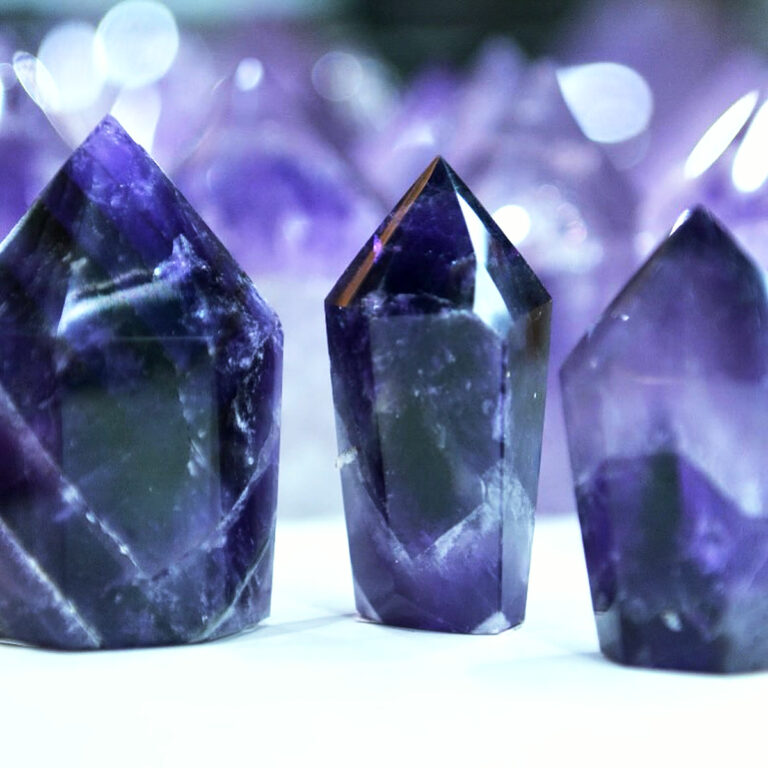
| Amethyst | The Brazilian stone most people can name; huge production | Also produced in Uruguay, Zambia and elsewhere; abundant and inexpensive |
| Paraíba tourmaline | Named after a Brazilian state; the country’s most expensive gem | The trade now applies the name to material from Nigeria and Mozambique too |
| Brazilianite | Literally named after Brazil; first described in 1945 from Minas Gerais | A collector mineral with no commercial or public profile |
| Emerald | Significant Brazilian production | Colombia dominates the stone’s identity internationally |
Brazilianite deserves a note. It is the one mineral that takes its name from the country. Mineralogists first described this sodium aluminium phosphate in 1945 from Minas Gerais. On the naming argument alone it would win, but it loses on every other count. Only collectors really know this specimen mineral, and it has no role in commerce or public recognition.
Brazil’s Actual Official Emblems, for Contrast
| Symbol | Designation |
|---|---|
| National flag, anthem, coat of arms, seal | Constitutionally recognised national symbols |
| National tree: pau-brasil (Paubrasilia echinata) | Law 6.607 of 1978 |
| National bird: sabiá-laranjeira (rufous-bellied thrush) | Designated by decree in 2002 |
| National gemstone | None designated |
The pattern is informative: where Brazil has wanted a national emblem, it has legislated one. The absence of a gemstone designation is therefore a real absence. It is not an oversight for whoever asserts it most often to fill in.
Why American Buyers Expect There to Be One
There is a reason this question comes up so often from the United States, and it is not confusion: US states do designate official gems and minerals by statute. For example, Arkansas has diamond as its official state gem and quartz as its state mineral. California designated benitoite as its state gem and serpentine as its state rock. Arizona names turquoise, Oregon the sunstone, Maine tourmaline and Nevada the Virgin Valley black fire opal. In fact, most states have made some designation of a gem, mineral or rock.
An American buyer therefore arrives with a reasonable expectation that a country as mineral-rich as Brazil would have done the same. However, it has not. The framework simply differs. Brazil legislates individual national emblems when it chooses to, such as a tree and a bird. It has never extended that to a gemstone, despite being one of the most important gem-producing countries in the world.
So the honest answer to give a customer who asks is: no official designation exists, and if one did, the Ouro Preto district’s near-monopoly on imperial topaz gives that stone the strongest case.
Why the Question Matters Commercially
It matters more than it looks, in two directions.
For buyers: if a supplier tells you a stone is “Brazil’s national gemstone”, that is a marketing claim, not a fact you can pass to your own customers. Reselling it puts an unverifiable statement in your product copy under your name.
For sellers: the accurate version is better copy anyway. “The Ouro Preto district in Minas Gerais is the main commercial source of imperial topaz in the world” is specific, verifiable and genuinely impressive, and it survives a customer who checks. In contrast, a vague national claim does not.
That principle also applies well beyond this question. In a trade where grading is subjective and sellers often assert origin rather than document it, the suppliers and retailers who state precisely what they can support are the ones who build accounts that reorder.
Sourcing Brazilian Stone
CS Minerals supplies Brazilian crystals, minerals and natural stones (amethyst, quartz, agate, tourmaline, beryls and decorative stone) to wholesale and professional buyers in the United States. Each lot states its origin region and treatment status.
Request wholesale access for current availability.
Related reading: What Crystals Are Commonly Found in Brazil?, What Is the Most Expensive Gemstone in Brazil? and What Country Is Famous for Crystals?
How to Talk About Brazil’s National Gemstone Without Overclaiming
Most of the trade repeats the claim that Brazil has a national gemstone, but the claim is wrong. That creates a small commercial problem for anyone writing product copy: the phrase sells, but using it plainly is inaccurate.
The safe construction is to describe the association rather than assert a designation. “Imperial topaz comes from almost nowhere else, and Ouro Preto is its main commercial source worldwide” is accurate and carries more weight than “Brazil’s national gemstone” ever did. It gives the customer a fact they can check instead of a title they cannot.
Three phrasings that stay accurate:
- “Brazil’s best known gemstone export” for amethyst, which is defensible on trade volume.
- “Named after Brazil” for brazilianite, which is literally true and rarely used.
- “Mined almost exclusively in Minas Gerais” for imperial topaz, which is the strongest factual claim available.
Why Brazil’s National Gemstone Comes Up in Wholesale Conversations
Buyers ask about a national gemstone because they are looking for a story to attach to the display, not because they care about legislation. Understanding that changes the answer you give them.
What actually sells a Brazilian stone at retail is provenance a customer can picture: the district, the geology, the reason it looks the way it does. A geode formed in a gas cavity in Cretaceous basalt is a better counter story than a title no government ever issued.
For a supplier, the practical consequence is what you should be asking for. Request the producing district rather than the country, because the district is what carries the characteristics your customer will notice. Ametista do Sul amethyst, Ouro Preto topaz and Minas Gerais tourmaline behave differently at the counter. A supplier who cannot tell you the district is usually a step too far from the source to know.
What to Put on a Label Instead
Since no designation exists to cite, the label has to carry something a customer can verify. District, species and treatment status do more work than any national title would.
For example, a line such as “Amethyst, Ametista do Sul, Rio Grande do Sul, untreated” tells a buyer where it formed, what it is, and whether anyone treated it. That is three checkable facts in eleven words, and it is the format that survives a customer searching for it afterwards.
A buyer who asks for the national gemstone is usually asking a different question underneath: which Brazilian stone should I put at the centre of my display. Answer it that way, and the conversation goes somewhere useful: nobody has to defend a designation that no government ever made.
Brazil’s National Gemstone: Frequently Asked Questions
Does Brazil have an official gemstone?
Brazil has no officially designated national gemstone. No federal legislation names an official national gem or mineral, unlike the national tree (pau-brasil, by Law 6.607 of 1978) or the national bird (the sabiá-laranjeira, designated by decree in 2002). Imperial topaz has the strongest reputational claim, because the Ouro Preto district in Minas Gerais is its main commercial source worldwide.
Is amethyst Brazil’s national stone?
No. Amethyst is the Brazilian stone most people can name, and Brazil is a major producer. However, it is not an official designation, and Uruguay, Zambia and other countries also produce amethyst. Its abundance is exactly why it does not identify Brazil the way imperial topaz does.
What links imperial topaz to Brazil?
Because the Ouro Preto district in Minas Gerais is its main commercial source in the world: an unusual degree of concentration for a gem material. The stone also belongs to the mining history of Minas Gerais and to Brazil’s imperial period, from which the name derives.
Which mineral takes its name from Brazil?
Brazilianite, a sodium aluminium phosphate first described in 1945 from Minas Gerais and named for the country. Collectors prize it, but it has no commercial or public profile, which is why nobody proposes it as a national stone despite having the best claim on the naming argument alone.
What gemstone did Brazil give Queen Elizabeth II?
Aquamarine. The people of Brazil presented an aquamarine and diamond necklace and matching earrings around her 1953 coronation, and the set became one of the best-known pieces associated with Brazilian gems. It is a large part of why people often name aquamarine as a Brazilian national stone.
Does Brazil have an official national mineral?
No. Brazil designates national symbols by legislation (as it did for the national tree and national bird) and no such instrument exists for a gemstone or mineral. Any claim that a particular stone holds that status is reputational rather than legal.
About CS Minerals
CS Minerals is a Brazilian supplier of crystals, minerals and natural stones serving wholesale buyers, retailers and professional buyers in the United States. The company combines Brazilian sourcing, product curation, live selling and international logistics to connect buyers with Brazilian stones and minerals.
Written by the CS Minerals Wholesale Team · Last updated
General reference information. We cite legislative designations as of the date of publication; readers verifying a legal designation should consult the current Brazilian statute directly.
Comments
2 responses to “What Is Brazil’s National Gemstone?”
[…] reading: What Crystals Are Commonly Found in Brazil?, What Is Brazil’s National Gemstone? and What Country Is Famous for […]
[…] reading: What Is the Most Expensive Gemstone in Brazil?, What Is Brazil’s National Gemstone? and What Country Is Famous for […]