
By the CS Minerals Wholesale Team · Last updated
Citrine wholesale is mostly a heat-treated amethyst market. The majority of citrine sold in bulk worldwide is natural amethyst, much of it from Brazil, that has been heated to turn its purple color into yellow, orange or reddish brown. Truly natural citrine exists, but it is uncommon, usually paler and priced higher. A good wholesale buyer knows the difference, labels it honestly and prices each type in its own tier.
Citrine is one of the steadiest sellers in any crystal shop. Its warm color photographs well, it works in both metaphysical and home decor displays, and it comes in every format from tumbled stones to large clusters. That popularity is exactly why buyers need to understand what they are ordering. Selling heated amethyst as “natural citrine” is one of the most common mislabeling problems in the crystal trade, and it is easy to avoid.
What Is Citrine, and Why Is Most of It Heat-Treated?
Citrine is the yellow to orange variety of quartz. Its color comes from iron impurities and the conditions the crystal was exposed to. Amethyst, the purple variety, contains similar iron, and when amethyst is heated to several hundred degrees Celsius, its purple fades and yellow, orange or brownish tones appear.
Why the trade heats amethyst
Natural citrine deposits are relatively rare. Amethyst, by contrast, is abundant, especially in southern Brazil and Uruguay. Heating turns plentiful amethyst into a warm-colored quartz that sells well, at a cost far below that of rare natural citrine. This practice has been standard in the gem and mineral trade for a very long time.
Where it comes from
A large share of the world’s heat-treated citrine starts as amethyst from Rio Grande do Sul, Brazil, the same state where Soledade, widely known as Brazil’s agate capital, is located. Some citrine-colored quartz is also produced by heating smoky quartz. Natural citrine has been reported from Brazil, Madagascar and a handful of other localities, but in much smaller volumes.
Natural vs Heat-Treated Citrine: How to Tell the Difference
This is the question every citrine wholesale buyer eventually asks. There are useful visual clues, but no quick test that works on every stone. Even major gem laboratories are often cautious about issuing conclusions on the color origin of citrine, which is why supplier disclosure matters so much.
| Feature | Heat-treated citrine (heated amethyst) | Natural citrine |
|---|---|---|
| Typical color | Strong orange, amber, reddish brown (“Madeira” tones) | Pale to medium yellow, sometimes with a smoky or greenish cast |
| Clusters and geode pieces | Dark orange tips fading to milky white at the base | Color more even along the crystal; clusters are uncommon |
| Color distribution | Often concentrated at the tips | Usually more uniform, sometimes subtle color zoning |
| Availability in bulk | High | Limited |
| Typical price level | Accessible | Higher, especially for good color and size |
The white base tell
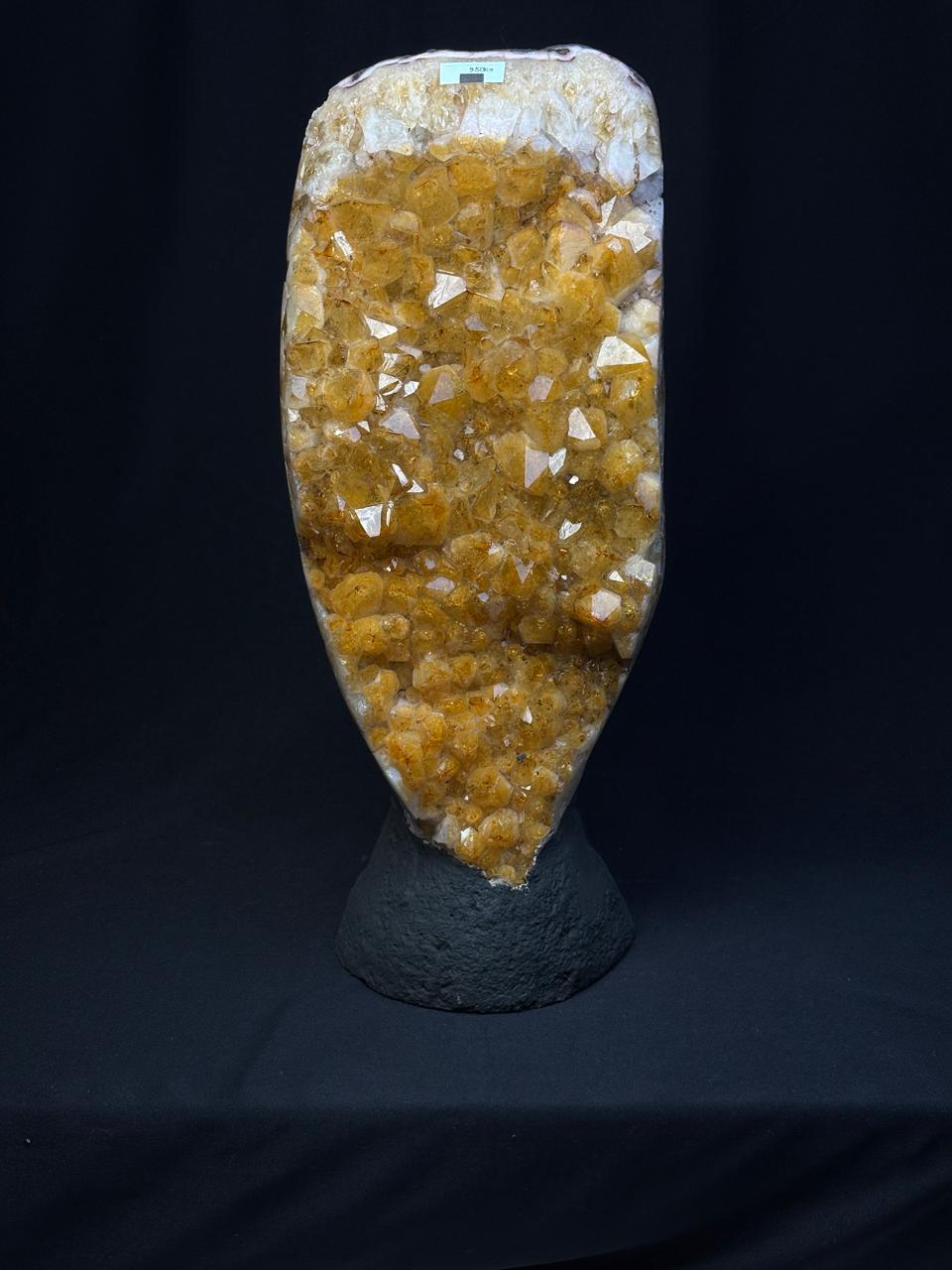
Amethyst crystals in a geode often have deep purple tips and pale, almost colorless bases. When the geode is heated, the tips turn deep orange while the bases stay milky white. A citrine cluster with bright orange points rising from white quartz is almost certainly heated amethyst.
Color alone is not proof
Pale yellow does not automatically mean natural, since light heating can also produce pale tones. And some natural citrine is fairly saturated. Treat color as a clue, not a verdict, and rely on the supplier’s written description for the final label.
What about lemon quartz?
Bright greenish-yellow “lemon quartz” is commonly produced by treating quartz, often through irradiation and sometimes heat. It is sold under its own name and should be described as treated when that is the case. Do not mix it into natural citrine stock.
How to Label Citrine Honestly
Heat-treated citrine is a legitimate, popular product. The problem is only in how it is described. In the United States, the FTC Jewelry Guides say treatments should be disclosed when they significantly affect value, and the price gap between heated and natural citrine is significant. Consumer protection rules in the UK, EU and Australia work on the same principle: do not mislead the buyer.
Wording that works
- “Citrine (heat-treated amethyst)” on shelf tags and product titles.
- “Heat-treated citrine” as a short form where space is limited.
- “Natural citrine, unheated” only when your supplier confirms it in writing.
- A short explanation on the product page: “The warm color of this citrine was created by heating natural Brazilian amethyst, a standard practice in the trade.”
Wording to avoid
- “Natural citrine” or “genuine untreated citrine” for heated material.
- “Rare citrine” for a heated cluster, which is not rare.
- Any claim that the stone attracts money, heals or treats a condition. Metaphysical meanings can be described as what citrine is “traditionally associated with,” not as fact.
Most customers respond well to a clear explanation. Many actually enjoy learning that their citrine started as amethyst. Use the same wording on your invoices, shelf tags and online listings so the description never changes as the stone moves from your stockroom to the customer.
Citrine Wholesale Formats: What to Stock
Citrine is available in almost every format, and each one serves a different customer. A balanced order usually includes an entry product, a mid-range product and a few statement pieces.
Tumbled citrine
Small polished stones sold by weight. They are the entry point for new customers and a reliable impulse buy at the counter.
Citrine points
Single crystals, polished or natural. Polished points are often cut from heated material and are popular for displays and gifting.
Citrine clusters and geode pieces
The classic heated amethyst look: orange tips on a white base. They are strong mid-range sellers and look good in groups by size.
Cathedrals and large geodes
Heated amethyst cathedrals and geode halves turned citrine color are statement pieces for home decor buyers and shop windows. They are heavy and need careful packing.
Rough and polished-face pieces
Rough citrine-colored quartz and pieces with one polished face appeal to collectors and decorators who like a natural look.
For an overview of how citrine fits with the rest of a wholesale assortment, see our guide to wholesale crystals by type.
Citrine Wholesale Pricing Tiers
Citrine prices change with supply, exchange rates and quality, so fixed price lists go out of date quickly. What stays stable is the structure. Wholesale citrine is usually priced by weight for tumbled and rough material, and by piece or lot for clusters, points and statement pieces.
What moves the price
- Color: even, attractive color sells for more than patchy or muddy tones.
- Crystal quality: intact tips, good luster and few chips raise value.
- Size and shape: larger, well-formed clusters and cathedrals cost more per piece.
- Proportion of color: clusters with more orange and less white base are often preferred.
- Natural vs heated: documented natural citrine sits in a higher tier.
A simple tier model for your shop
- Entry tier: tumbled citrine and small points. Low price, high volume.
- Mid tier: clusters, geode pieces and polished points in medium sizes.
- Statement tier: large clusters, cathedrals and geodes, priced individually.
- Premium tier: natural, unheated citrine, clearly labeled and priced for its rarity.
Our guides on how much crystals cost wholesale and how to price crystals to sell explain wholesale price structure and markup logic in more detail.
Matching Citrine Wholesale Orders to Your Sales Channel
The right citrine assortment depends on who buys from you. The same cluster can be a bestseller in one shop and dead stock in another. Think about your channel before you choose formats and grades.
Metaphysical and crystal shops
These customers buy citrine for its traditional associations with warmth, optimism and abundance, and they often want to hold the stone before buying. Tumbled stones, small points and hand-sized clusters sell steadily. Clear labels matter here, because this audience asks a lot of questions about natural versus heated material.
Home decor and gift retailers
Decor buyers care about color, size and visual impact more than about treatment details, though they still deserve an honest label. Larger clusters, geode pieces and cathedrals work well, especially when grouped with amethyst and clear quartz for a contrast of colors.
Jewelry makers and designers
Makers look for small, consistent pieces, polished points and rough suitable for wire wrapping or setting. Consistency of color across a lot matters more to them than to a decor buyer, so ask your supplier for tighter color grading.
Online sellers
Online, the photo is the product. Citrine with strong, even color and clean tips photographs best. Because customers cannot see the stone in person, the written description has to do more work: state that it is heat-treated, give dimensions and weight, and show the base as well as the tips.
How to Buy Citrine Wholesale Without Surprises
A few questions to your supplier prevent most problems with citrine lots.
- Is this citrine heat-treated amethyst, heated smoky quartz or natural? Get the answer in writing.
- Where was the material mined? Brazilian origin is common, but ask.
- How is the lot graded? Ask about color, tip condition and size range.
- Can I see the actual pieces? Photos of the lot or a live video show color and base proportion better than a catalog image.
- How is it packed? Clusters and cathedrals chip easily at the tips, so ask how they are protected, and ask for current lead times and shipping options.
Buying close to the source helps here. Suppliers in Rio Grande do Sul work with amethyst and citrine every day and can tell you plainly what the material is. You can read more about Brazilian material in our guide to crystals found in Brazil.
Caring for Citrine Stock
Heat-treated and natural citrine are both quartz, so they are durable for everyday handling. There is one practical point worth knowing: some quartz colors can fade with long, strong sun exposure. Keep display pieces out of direct sunlight in shop windows, and rotate window stock regularly.
Clean with a soft brush and water, and avoid harsh chemicals. For clusters and cathedrals, handle by the base, not the tips. When storing surplus stock, wrap each cluster separately so tips do not rub against each other, and keep boxes labeled with the lot description from your supplier.
Frequently Asked Questions
Is most wholesale citrine heat-treated?
Yes. Most citrine sold in bulk is natural amethyst, much of it from Brazil, that has been heated to create a yellow to orange color. Natural citrine exists but is much less common and usually costs more.
Is heat-treated citrine real citrine?
It is real quartz with a citrine color created by heat. The trade widely sells it as citrine, but it should be labeled as heat-treated so buyers know the color is not natural. It is a legitimate and stable product.
How can I tell if citrine is natural?
Natural citrine tends to be pale to medium yellow with even color, while heated amethyst is often strong orange with white bases on clusters. These are clues, not proof, and even labs are often cautious about color origin in citrine. Rely on written disclosure from your supplier.
More Questions
Where does wholesale citrine come from?
A large share comes from southern Brazil, especially Rio Grande do Sul, where abundant amethyst is heated to produce citrine. Natural citrine has been found in Brazil, Madagascar and a few other places in smaller quantities.
How should I label heat-treated citrine?
Use clear wording such as “Citrine (heat-treated amethyst)” or “Heat-treated citrine” on tags and listings. Avoid “natural” or “rare” for heated material, and describe any metaphysical meanings as traditional associations rather than facts.
Does citrine fade in the sun?
Some quartz colors, including some citrine, can fade with long exposure to strong sunlight. It is good practice to keep citrine out of sunny shop windows and rotate display stock.
Order Brazilian Citrine From the Source
CS Minerals is a Brazilian crystal and mineral wholesaler based in Soledade, Rio Grande do Sul, with 25 years in the trade. We work with amethyst and citrine from the region and ship wholesale orders worldwide with a US$100 minimum order. Watch our live sales from the warehouse Monday to Friday, 8am to midnight Brazilian time on Instagram @csminerals, see the real pieces and ask how each lot is described. Learn the process on our how to order wholesale crystals page or explore the wholesale collection.