
By the CS Minerals Wholesale Team · Last updated
Brazilian amethyst wholesale means buying amethyst geodes, cathedrals, clusters, points and tumbled stones directly from producers and exporters in Brazil, mostly from the basalt fields of Rio Grande do Sul. Prices depend on color depth, crystal size, shine, shape and weight, and every serious supplier grades by those factors rather than by a single universal scale. If you understand the grading language and how heavy pieces are packed, you can buy with confidence even from thousands of kilometers away.
Amethyst is the backbone of most crystal shops. It sells as a small tumbled stone at the counter, as a mid-size cluster on the shelf and as a statement cathedral in the window. That range makes it one of the few materials that works at every price point, which is exactly why buying it well has such a large effect on your margins.
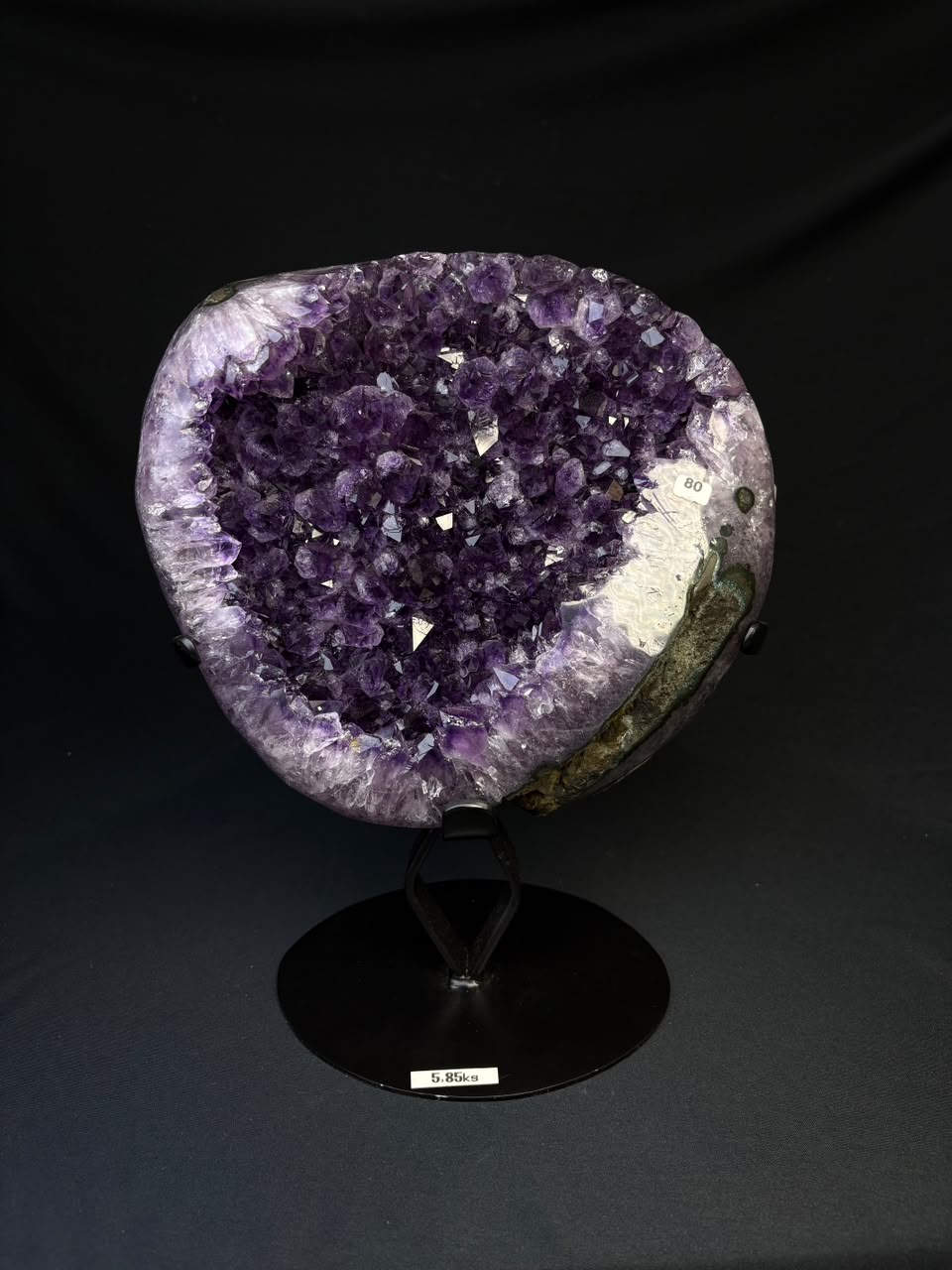
Where Does Brazilian Amethyst Come From?
Most of the amethyst geodes and cathedrals sold around the world come from one geological setting: the Paraná flood basalts, a huge sequence of Lower Cretaceous lava flows that covers much of southern Brazil and northern Uruguay. In Brazil the rock unit is called the Serra Geral Formation. In Uruguay the same volcanic sequence is known locally as the Arapey Formation.
Inside those lava flows, gas bubbles and cavities later filled with silica-rich water. Over a very long time the cavities were lined first with agate and then with quartz crystals, and where traces of iron and natural irradiation were present, the quartz turned purple. The result is the classic amethyst geode: a hard basalt shell outside, a band of agate, and a lining of purple crystals inside.
Ametista do Sul and the Alto Uruguai region
The town of Ametista do Sul, in the north of Rio Grande do Sul, is the best-known amethyst mining district in Brazil. Mining there is done through many small underground galleries dug horizontally into the hillsides, following the geode-bearing basalt layer. Neighboring municipalities in the same region also produce geodes, and a large share of the material is then processed, cut, polished and exported through the stone trade of Rio Grande do Sul, including Soledade.
Rio Grande do Sul is not the only amethyst source in Brazil. Other states, such as Minas Gerais and Bahia, produce amethyst in different geological settings, often as points, crystals or gem rough rather than large geodes. For a broader overview of Brazilian material, see our guide to crystals found in Brazil.
Brazilian vs Uruguayan Amethyst: What Is the Real Difference?
Buyers often hear that “Uruguayan amethyst is darker” and “Brazilian amethyst is bigger.” There is some truth in both statements, but they are generalizations about typical material, not rules. Both countries mine the same volcanic formation, just on different sides of the border.
Uruguayan geodes from the Artigas area are famous for deep, saturated purple and small, tightly packed crystals. Brazilian geodes from Rio Grande do Sul are known for their size and for the tall, open cathedral shapes that decorators love, with color that runs from pale lilac to deep violet depending on the mine and the pocket.
| Factor | Typical Rio Grande do Sul (Brazil) | Typical Artigas (Uruguay) |
|---|---|---|
| Geological setting | Serra Geral basalts | Arapey basalts (same flood basalt province) |
| Typical color | Wide range, from light lilac to deep purple | Often deep, saturated purple |
| Crystal size | Small to large, often with visible points | Frequently smaller, dense crystals |
| Typical formats | Large cathedrals, big geodes, clusters, points | Smaller geodes, clusters, high-color pieces |
| Availability of large pieces | Good, a major source of tall cathedrals | More limited in very large sizes |
| Price logic | Wide range across grades and sizes | Often priced higher per kilo for top color |
The practical takeaway is simple. Judge each lot by its color, crystal and shape, not by the country printed on the label. A top Brazilian pocket can match Uruguayan color, and a weak Uruguayan piece is still a weak piece. Always label origin honestly, because many buyers do care and mislabeling damages trust.
How Is Brazilian Amethyst Graded for Wholesale?
There is no official international grading system for amethyst geodes and clusters. Each exporter uses its own labels, such as A, AA, AAA or “Extra.” That is why the letters on a quote mean little unless you know what the supplier looks at. The criteria below are the ones that matter in almost every warehouse.
Color
Color depth and evenness are the biggest price drivers. Deep, even purple across the whole cavity sits at the top. Pale lilac, patchy color or crystals that fade to white at the tips sit lower. Watch for a reddish or bluish flash in the purple, which many buyers prize.
Crystal size and shine
Some customers want large, well-formed points; others prefer a fine “sugar” texture. Neither is wrong, but the crystals should be bright and glassy, not dull or frosted. Shine often matters more to a shopper than size.
Damage and repairs
Check for broken tips, cracks through the shell and missing crystal areas. Honest suppliers disclose glued repairs and filled areas. A few repaired tips on a large cathedral can be acceptable at the right price, but you need to know before you buy, not after the box is open.
Shape, cut and finish
For cathedrals and geodes, the silhouette sells the piece. Buyers look at symmetry, the depth of the cavity and how the edges were cut. Many pieces have a polished rim, a painted or polished exterior, or a cut and leveled base so they stand upright. These are normal finishing choices, but they should be described.
Weight and dimensions
Most geodes and cathedrals are priced by weight bands or by piece, with height and weight listed on the quote. Always check both, because two cathedrals of the same height can differ a lot in weight and freight cost.
- Top grade: deep even color, bright crystals, no visible damage, balanced shape.
- Mid grade: good color with some variation, minor tip damage, solid shape. This is the volume seller for most shops.
- Commercial grade: lighter or uneven color, more damage, irregular shape. Good for lower price points, tumbling, craft use and bulk displays.
Amethyst Formats Every Wholesale Buyer Should Know
Brazilian amethyst reaches the market in more formats than most buyers realize. Knowing them helps you build an assortment that covers every price point in your shop.
Cathedrals
An amethyst cathedral is a tall, upright geode cut open along its length so the purple interior faces forward, like an arch. Sizes run from small tabletop pieces to cathedrals taller than a person. They are the statement pieces that stop people at the window, and they are almost always sold as individual, photographed pieces rather than by lot.
Geodes and half geodes
Smaller rounded geodes are sold whole, halved or as “open” pieces. Pairs cut from the same geode are popular for gifts and as bookends. These move well in the mid price range.
Clusters
Clusters are pieces of geode lining broken into shelf-friendly sizes. They are usually sold by the kilo in size ranges, and they are the steady earners for most crystal retailers.
Points, tumbled stones and carvings
Single points, tumbled stones and chips cover the lowest price points. Polished points, spheres, hearts and other carvings made from amethyst add variety. Carved and polished goods are a separate category from natural geode material, so ask for them separately on your quote.
If you are building a full range beyond amethyst, our overview of wholesale crystals by type shows how the main materials fit together in a shop.
Is All Purple Quartz Natural? What About Heat Treatment?
Natural amethyst gets its color from traces of iron combined with natural irradiation in the rock. The color is stable under normal indoor conditions, although some amethyst can fade with long exposure to strong direct sunlight. It is a good idea to keep window displays out of harsh afternoon sun and to tell customers the same.
The bigger honesty issue is heat. When amethyst is heated, its purple color can change to yellow, orange or brown. A large share of the “citrine” sold worldwide, especially the bright orange geodes and clusters with white bases, is actually heat-treated amethyst, much of it from Brazil. There is nothing wrong with selling it, as long as it is labeled as heat-treated. Selling it as natural citrine is not acceptable.
A few other things to watch for:
- Dyed or coated pieces: uncommon for amethyst geodes, but some tumbled material and “aura” pieces are coated. These should always be disclosed.
- Painted exteriors: the outer shell of some geodes is painted or sealed for a cleaner look. This is a finishing choice and should be stated.
- Glass imitations: mostly found in cheap beads and small tumbled stones, not in geodes.
How to Buy Brazilian Amethyst Wholesale Step by Step
Buying amethyst from origin is not complicated, but it does reward a little preparation. Here is the process most retailers follow when ordering from a Brazilian exporter.
- Define your mix. Decide how much of your budget goes to statement pieces (cathedrals, large geodes) versus steady sellers (clusters, points, tumbled). Many shops start with a few showpieces and a larger volume of mid-size clusters.
- Ask for photos and video of individual pieces. For cathedrals and large geodes, you should see the exact piece, with height and weight. For lot material, ask for a representative photo of the lot and a clear grade description.
- Agree on grade language. Ask the supplier what “A” or “Extra” means in their warehouse, and whether repairs, painted exteriors or cut bases are part of that grade.
- Confirm packing and freight. Ask how heavy pieces are packed and how they will travel. Ask for current lead times and shipping options, since they vary by destination and season.
- Check your import requirements. Customs rules, duties and taxes depend on your country. Check the official source for your market (US CBP, HMRC, Australian Border Force or your EU customs authority) before you order.
- Inspect on arrival and document. Photograph each crate or carton as it arrives, before and after unpacking. This protects both you and your supplier.
For the full buying process, including payment and first-order tips, read our guide on how to buy crystals wholesale.
Buying remotely through live selling
One of the biggest challenges of buying amethyst from abroad is that every cathedral is different. Live video selling solves much of this. At CS Minerals, the team broadcasts from the warehouse in Soledade Monday to Friday, 8am to midnight Brazilian time, on Instagram @csminerals. Buyers can ask to see a piece from different angles, check the shine under light and compare several options before committing.
How Are Amethyst Cathedrals and Geodes Packed for Export?
Amethyst crystals are hard, but the tips are brittle and large pieces are heavy. Good packing is part of what you are paying for when you buy from an experienced exporter.
What good packing looks like
- Each crystal face protected with foam, bubble wrap or paper so nothing touches the cavity.
- Heavy pieces immobilized inside the box or crate so they cannot shift in transit.
- Large cathedrals packed upright or on their backs according to their shape, with the base secured.
- Clear labels for weight, orientation and “fragile” on every package.
Wooden crates and ISPM 15
If your order ships in wooden crates or on pallets, many destination countries require the wood to be heat-treated and marked under the ISPM 15 international standard. This is especially strict in Australia and New Zealand, and it applies in the US, UK and EU too. Ask your supplier how your shipment will be packed so there are no surprises at the border.
Cleanliness and biosecurity
Some countries also require that stones arrive clean, with no soil or organic material. Amethyst from underground mines is usually washed and cleaned before export, but it is worth confirming if you import into a market with strict biosecurity rules.
How Much Does Brazilian Amethyst Cost at Wholesale?
We do not publish fixed price tables here, because amethyst prices move with supply, exchange rates and freight. What we can explain is the price structure, which holds true across the trade.
- Clusters and rough: usually priced by the kilo, with the price per kilo rising with color, shine and size of the pieces.
- Geodes and cathedrals: usually priced per piece or by weight band, with a strong premium for deep color, balanced shape and large sizes.
- Points, tumbled and carvings: priced by the kilo or by the piece, with carving labor adding to the price.
Freight often represents a real share of your landed cost for heavy amethyst, so compare offers on a landed cost basis: product plus packing plus freight plus duties and taxes. For a deeper look at how wholesale pricing works across materials, see how much crystals cost wholesale.
Pricing amethyst in your shop
Amethyst sells on beauty, so price the piece in front of you, not the kilo. Two clusters of the same weight can deserve very different retail prices. Keep your best pieces visible, and let the mid-grade clusters do the volume work.
Describing amethyst without health claims
Amethyst is traditionally associated with calm and clarity in many crystal traditions. You can mention those associations as tradition, but avoid presenting them as medical or proven effects. Advertising regulators such as the FTC in the US, the ASA in the UK and the ACCC in Australia take a firm line on health claims.
Frequently Asked Questions
Where does most Brazilian amethyst come from?
Most Brazilian amethyst geodes and cathedrals come from the basalt lava flows of Rio Grande do Sul, in southern Brazil, with the Ametista do Sul district as the best-known source. The material is mined from small underground galleries and then cut and finished in the state’s stone industry. Other states, such as Minas Gerais and Bahia, also produce amethyst in different formats.
Is Uruguayan amethyst better than Brazilian amethyst?
Not automatically. Uruguayan amethyst from Artigas is often darker with smaller crystals, while Brazilian material from Rio Grande do Sul offers a wider range of colors and larger pieces, including tall cathedrals. Both come from the same flood basalt province, so it is better to judge each piece by color, shine and shape.
What does “AAA” mean for amethyst geodes?
There is no official grading standard for amethyst geodes, so “AAA” or “Extra” means whatever the supplier decides. In most warehouses the top grade means deep even color, bright crystals, little or no damage and a balanced shape. Always ask the supplier to explain their grade names before you order.
More Questions
Can I buy a single amethyst cathedral wholesale?
Many exporters sell cathedrals as individual pieces, and at CS Minerals the minimum order is US$100, so a single mid-size piece can fit a first order. Freight on one heavy piece can be significant, which is why many buyers combine cathedrals with clusters and other stones in the same shipment. Ask for a quote that includes packing and freight.
Does amethyst fade in the sun?
Some amethyst can lose color after long exposure to strong direct sunlight. Normal indoor light is not a concern, but window displays that get hours of harsh sun every day should be rotated or shaded. It is a good tip to pass on to your customers.
Is orange “citrine” really heated amethyst?
Much of the bright orange or yellow citrine sold as geodes and clusters is amethyst that was heat-treated to change its color. It is a real quartz product, but it must be labeled as heat-treated rather than sold as natural citrine. Natural citrine exists, but it is less common and usually paler.
Buy Brazilian Amethyst from the Source with CS Minerals
CS Minerals is a wholesale supplier of crystals, minerals and natural stones based in Soledade, Rio Grande do Sul, with 25 years of experience in the trade. We sell amethyst cathedrals, geodes, clusters, points and carved pieces, together with citrine, agate, quartz and many other stones, and we ship internationally. The minimum order is US$100, and you can watch our live selling from the warehouse Monday to Friday, 8am to midnight Brazilian time, on Instagram @csminerals.
Ready to start? See how to order wholesale crystals or browse the wholesale collection.