
By the CS Minerals Wholesale Team · Last updated
The best crystals for interior design are large, stable statement pieces such as amethyst cathedrals, open geodes, quartz clusters, citrine geodes and polished agate, chosen by size, weight, color and finish to suit a specific space. Designers usually source them as individual, photographed pieces rather than by lot, so they can approve the exact item for a client. Planning the weight, the base, the lighting and the freight crate early avoids most of the problems that derail a crystal installation.
Natural stone brings something to a room that manufactured decor cannot: every piece is unique and millions of years old. That is exactly why clients love it, and why sourcing it needs a different process from ordering furniture from a catalog. This guide walks through that process, from choosing the piece to getting it safely onto the floor.
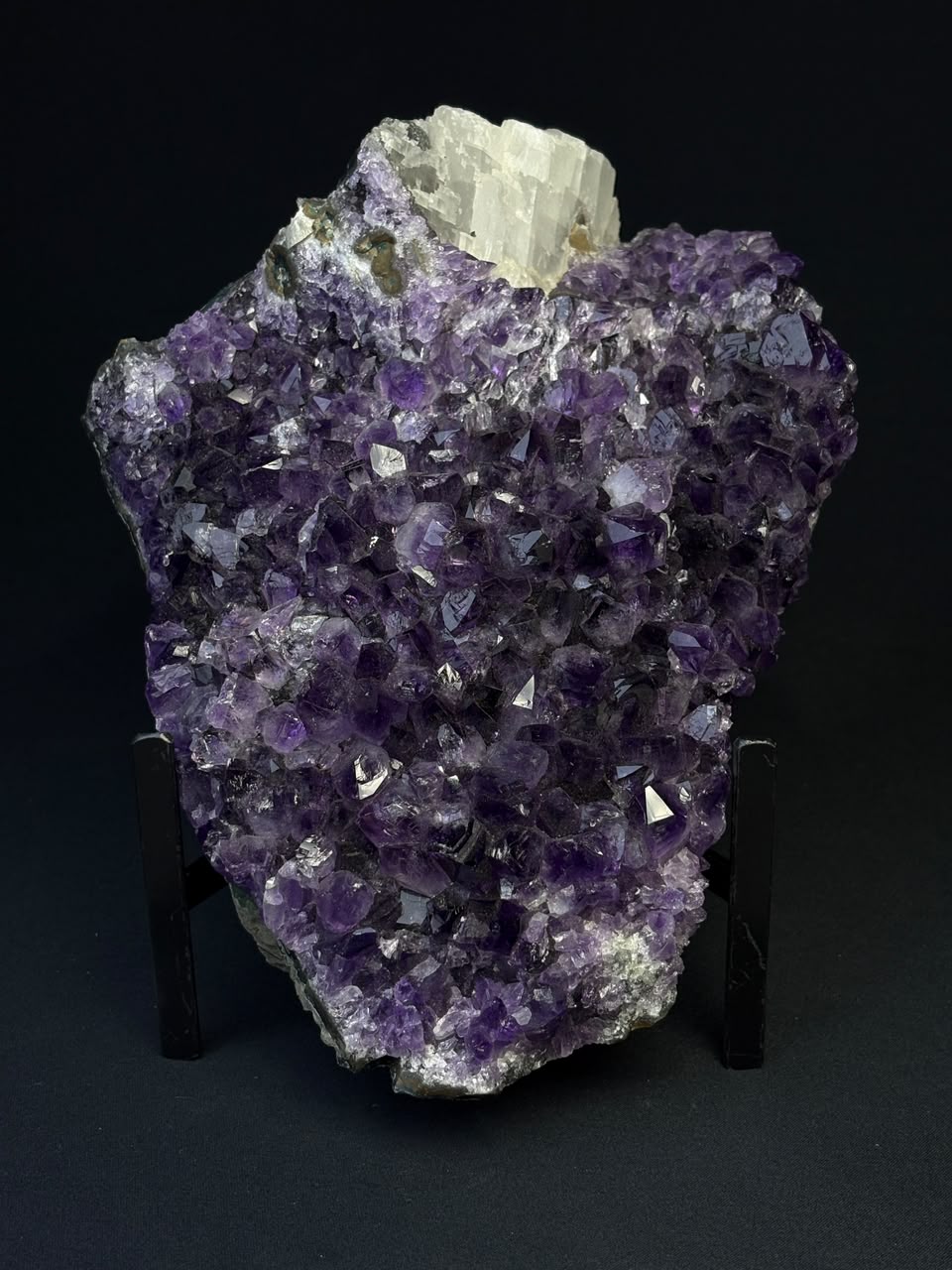
What Are the Best Crystals for Interior Design?
Not every crystal suits an interior. The pieces that work well share three traits: strong visual impact at a distance, a stable form and a finish that fits the style of the space.
Amethyst cathedrals
An amethyst cathedral is a tall geode opened along its length, with the purple interior facing forward. Cathedrals are among the most popular crystal statement pieces in residential and hospitality projects. Brazil, especially the basalt fields of Rio Grande do Sul, is one of the main sources of large cathedrals.
Open geodes and geode pairs
Round or oval geodes cut in half show their interior like a bowl or a cave. Matching pairs look striking on either side of a console, a fireplace or an entrance. Amethyst, citrine (usually heat-treated amethyst) and agate geodes are the most common.
Quartz clusters and large points
Clear quartz clusters and large polished points suit minimalist and Scandinavian styles, where purple might be too strong. Smoky quartz works well with dark woods and warm metals.
Polished agate and slices
Agate slices, bookends and polished geodes add color and pattern in a smaller format. Grouped slices can create wall features or be used on shelves and coffee tables. Bright blue, pink and green agate is dyed, which is fine for design use but should be disclosed to the client.
Specimens and carved pieces
Spheres, bowls, large carved forms and mineral specimens suit libraries, offices and collectors’ homes. They are easier to place than a heavy cathedral and still read as a statement.
Residential, hospitality and retail projects
The use changes the choice. In homes, clients often want one meaningful piece that fits their color palette and can be seen up close. In hotels, spas and restaurants, crystals for interior design need to read from across a lobby and survive heavy foot traffic, so size, stability and protection come first. In retail and showrooms, a crystal often works as a brand signature, placed where customers pause, such as a reception desk or a window.
Knowing the context early also helps with budget. A private client may accept a longer wait for the perfect piece, while a hospitality opening date is fixed, which favors choosing from pieces that are already available and photographed.
Comparing Statement Pieces: Size, Weight and Placement
The table below gives a general comparison to help you shortlist. Exact weight depends on the individual piece, so always ask your supplier for the measured weight of the item you are specifying.
| Piece | Visual impact | Weight profile | Typical placement | Key planning point |
|---|---|---|---|---|
| Large amethyst cathedral | Very high | Heavy to very heavy | Lobbies, living rooms, entrances | Floor load, base, handling on site |
| Tabletop cathedral | High | Moderate | Consoles, shelves, reception desks | Stable surface, lighting |
| Open geode or geode pair | High | Moderate to heavy | Fireplaces, consoles, side tables | Matching pair, orientation |
| Quartz cluster | Medium to high | Light to moderate | Shelves, coffee tables, bathrooms | Protecting points from knocks |
| Agate slices and bookends | Medium | Light | Shelving, walls, windows | Dyed or natural color disclosure |
| Spheres and carvings | Medium | Light to moderate | Offices, libraries, bedrooms | Stands and rolling risk |
If you want to browse finished decor pieces sold as the exact item shown, the Home Decor section of our crystal catalog works this way.
How Do You Plan Weight, Bases and Safety?
This is the part most often underestimated. Large cathedrals and geodes can be far heavier than they look, and the biggest pieces can weigh hundreds of kilos. Planning the structure and the base before ordering saves time and cost.
Check the floor and the route
- Floor load: for very heavy pieces, especially on upper floors or raised floors, involve the project architect or engineer before specifying.
- Access route: measure doors, corridors, stairs and elevators. A cathedral that fits the room may not fit through the door in its crate.
- Handling: plan how the piece will move from the truck to its final position. Heavy pieces may need a pallet jack, a lifting crew or specialist movers.
Choose the right base
Many cathedrals and geodes come with a cut and leveled base, and some are mounted on a cement or stone base so they stand upright. For design projects, you may want a custom base in steel, wood or stone, or a rotating base for pieces viewed from several sides. Ask your supplier what the piece comes with and plan any custom base with a local fabricator who can work from exact dimensions.
Safety in public and family spaces
In hotels, offices, retail and homes with children, heavy pieces must not tip. Anchor tall pieces where needed, keep them away from high-traffic edges and consider a plinth that keeps small hands away from the crystal points. These precautions matter as much as aesthetics.
Lighting and Placement: Making Crystals for Interior Design Stand Out
Crystals depend on light. The same cathedral can look flat in a dark corner and spectacular under a well-placed spotlight.
Lighting tips
- Front and angled light: a spotlight from above and slightly in front brings out the depth and sparkle of the cavity.
- Internal LED: some designers install a small LED strip inside the opening of a cathedral or geode. Keep heat low and cables hidden.
- Backlighting: translucent agate slices and some quartz look best with light behind them, in windows or on light panels.
- Warm vs cool: warm light suits citrine, smoky quartz and agate. Neutral to cool light often shows amethyst color more accurately.
Avoid strong direct sunlight on amethyst
Some amethyst can fade with long exposure to strong direct sunlight. For pieces placed near large windows or skylights, consider UV-filtering glass, shading or a position that avoids the harshest hours of sun. It is a detail clients appreciate being told in advance.
Humidity and cleaning
Amethyst, quartz and agate tolerate normal indoor humidity. Dust with a soft brush or low-pressure air, and avoid harsh chemicals. Some minerals, such as selenite, are water-sensitive and not suitable for bathrooms or outdoor areas, so check the material before specifying it for wet zones.
How to Source Large Crystals and Geodes as a Designer
Sourcing a statement crystal is closer to buying art than buying furniture. Each piece is unique, so the process is built around approving a specific item.
- Brief the supplier. Share the space, the style, the target height and width, the maximum weight and the budget range. The more specific you are, the better the shortlist.
- Ask for individual photos and video. Request images from several angles, with a scale reference, plus measured height, width, depth and weight.
- Ask about finish and treatment. Is the exterior natural, polished or painted? Is the base cut or cemented? Are there any repairs? Is the color natural, heated or dyed?
- Approve and reserve. Once the client approves, confirm the reservation of that exact piece with your supplier.
- Confirm packing and freight. Ask how the piece will be crated and shipped, and request current lead times for your destination. Lead times vary by destination, season and freight mode, so build a buffer into your project schedule.
- Check import rules. Duties, taxes and documentation depend on your country. Check the official source (US CBP, HMRC, EU TARIC, Australian Border Force) or ask a customs broker.
Seeing the piece live
Photos can hide the depth of a cavity. Seeing the piece on camera closes most of that gap. At CS Minerals, the team goes live from the Soledade warehouse Monday to Friday, 8am to midnight Brazilian time, on Instagram @csminerals, and designers can ask to see a piece from different angles and under different light before approving it.
For more on the mechanics of a wholesale order, see our guide on how to buy crystals wholesale.
Freight, Crates and Delivery: What Should Designers Expect?
Heavy crystals travel as freight, not as parcels. Understanding the basics helps you set realistic expectations with your client.
Crates and ISPM 15
Large pieces are usually shipped in wooden crates or on pallets. Many countries require export wood packaging to be heat-treated and marked under the ISPM 15 standard, and Australia and New Zealand also enforce strict biosecurity rules on cleanliness. Confirm with your supplier how the crate will be built and marked.
Delivery to site
Freight is often delivered to a warehouse, a freight terminal or a curbside point rather than into the final room. Arrange a local mover or installer who can collect the crate, uncrate it on site and place the piece on its base. Keep the crate until you have inspected the piece.
Inspection and documentation
Photograph the crate on arrival, before and during uncrating. Check the crystal against the approval photos. Good documentation protects everyone if there is any issue in transit.
Budgeting landed cost
For a heavy piece, freight, crating, duties, taxes and local handling can add a significant amount to the price of the crystal itself. Quote your client on landed and installed cost, not just the stone price.
Presenting Crystals to Clients Honestly
Clients often ask about value, origin and meaning. Clear answers build trust and protect your reputation.
- Origin: state the country and, where known, the region. Most large amethyst cathedrals come from southern Brazil or Uruguay.
- Treatment: disclose heated citrine, dyed agate, irradiated smoky quartz and coated aura quartz.
- Finish: mention painted or polished exteriors, cement bases and any repairs.
- Value: decor crystals are bought for beauty. Avoid presenting them as investments. Our article on whether crystals are worth money explains why.
- Meaning: if a client asks, amethyst is traditionally associated with calm in many crystal traditions. Present it as tradition, not as a proven effect.
A short spec sheet per piece, with dimensions, weight, origin, finish and care notes, looks professional and saves questions later.
Frequently Asked Questions
What are the best crystals for interior design?
Amethyst cathedrals, open amethyst and citrine geodes, clear and smoky quartz clusters, polished agate and large carved pieces are the most popular choices for interiors. They combine strong visual impact with stable forms. The right choice depends on the style, scale and lighting of the space.
How heavy is a large amethyst cathedral?
Weight varies widely with height, wall thickness and the base, and the largest cathedrals can weigh hundreds of kilos. Two cathedrals of the same height can differ a lot in weight. Always ask the supplier for the measured weight of the exact piece before specifying it.
Can I see the exact geode before buying?
Yes, statement pieces are normally sold as individual items, and you should ask for photos, video and measurements of the exact piece. At CS Minerals, designers can also watch live selling from the warehouse on weekdays and ask to see a piece from different angles. Approve and reserve the piece before shipping is arranged.
More Questions
Will an amethyst cathedral fade in a sunny room?
Amethyst is the one to watch in bright rooms: months of hard sun through a window can soften its purple, while ordinary indoor lighting does no harm. For sunny positions, use UV-filtering glass or shading, or place the piece away from the harshest light.
How are large geodes shipped internationally?
Large geodes and cathedrals usually travel as freight in wooden crates or on pallets, with the wood treated under ISPM 15 where required. Delivery is often to a terminal or curbside, so a local mover or installer is needed to place the piece. Ask for current lead times, since they vary by destination and season.
Is there a minimum order for designers?
At CS Minerals the minimum order is US$100, so a single statement piece or a small group of decor items can make up an order. Freight and crating on heavy pieces are quoted separately. Many designers combine a showpiece with smaller items for the same project.
Source Statement Crystals from Brazil with CS Minerals
CS Minerals is a wholesale supplier of crystals, minerals and natural stones based in Soledade, Rio Grande do Sul, Brazil, with 25 years of experience. We supply amethyst cathedrals, geodes, quartz clusters, agate and carved pieces, and our Home Decor section sells the exact finished piece you see. We ship internationally, the minimum order is US$100, and you can see pieces live from our warehouse Monday to Friday, 8am to midnight Brazilian time, on Instagram @csminerals.
See how to order wholesale crystals or contact our team with your project brief.