
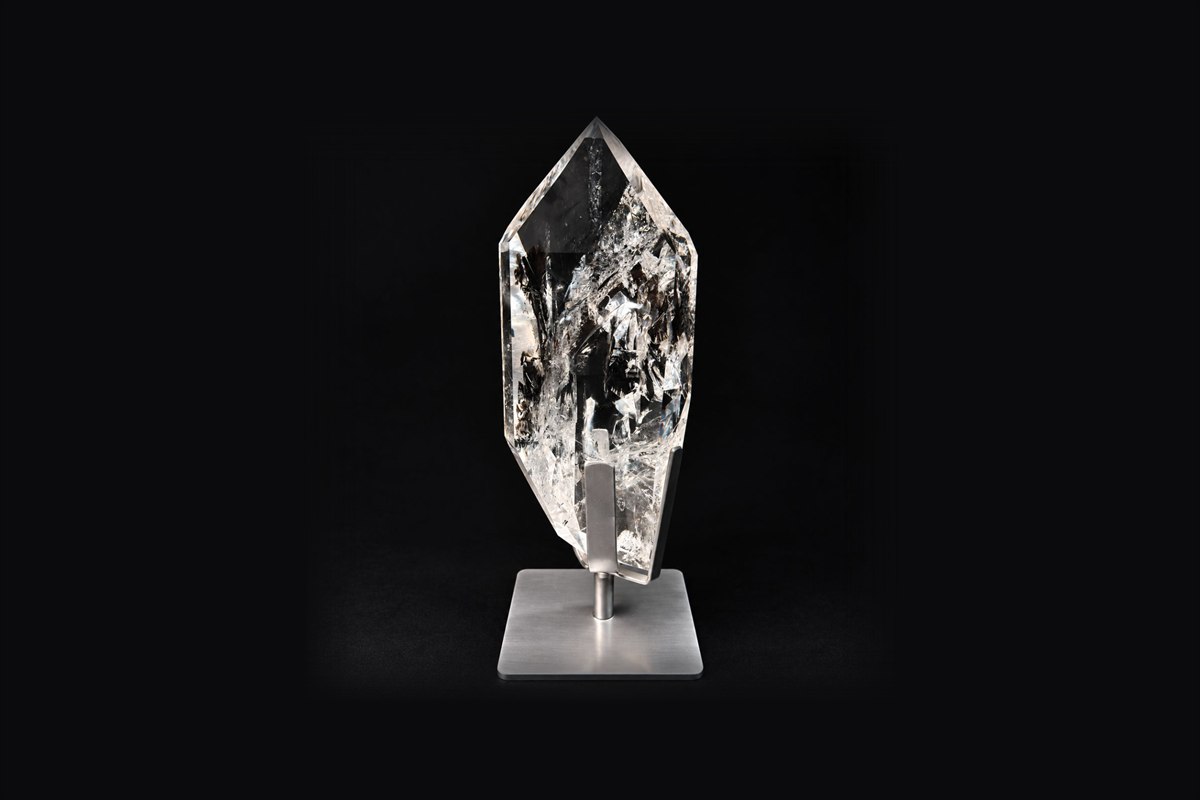
Quick answer: Brazil is the country most famous for crystals, and for a specific reason: it produces the broadest range of any single country, from bulk quartz and agate through fine tourmaline and beryl to amethyst cathedrals weighing hundreds of kilograms. No other country covers that span.
But “famous for crystals” resolves differently per material. For example, Madagascar is the reference for labradorite and ocean jasper. Uruguay for the darkest amethyst. India for zeolites. Morocco for vanadinite. Mexico holds the most spectacular crystals ever found: the giant gypsum crystals of the Naica mine. And Namibia’s Tsumeb mine is arguably the most celebrated single mineral locality in the world. This article therefore maps who is the reference for what.
Why Brazil Is the Country Most Famous for Crystals
Brazil’s position is not about any single spectacular stone. Instead, it rests on breadth, and that breadth is geological.
The country contains three distinct crystal-forming environments rather than one: ancient granitic pegmatites in the eastern states, which grew large gem crystals of tourmaline, beryl and topaz; hydrothermal veins depositing quartz; and the gas cavities of Cretaceous basalt flows across the south, which filled to become amethyst and agate geodes.
The commercial result is that a single country supplies both faceting-grade gem rough and 300-kilogram decorative cathedrals. As a result, a buyer can fill an entire assortment (every price tier, every format) from one origin. That is also why Brazil is the answer most people reach for, and why it is the answer for a wholesale buyer specifically.
Detail on what the country actually produces: What Crystals Are Commonly Found in Brazil?
Which Country Is Famous for Which Crystals
| Material | Reference country | Notable region or locality |
|---|---|---|
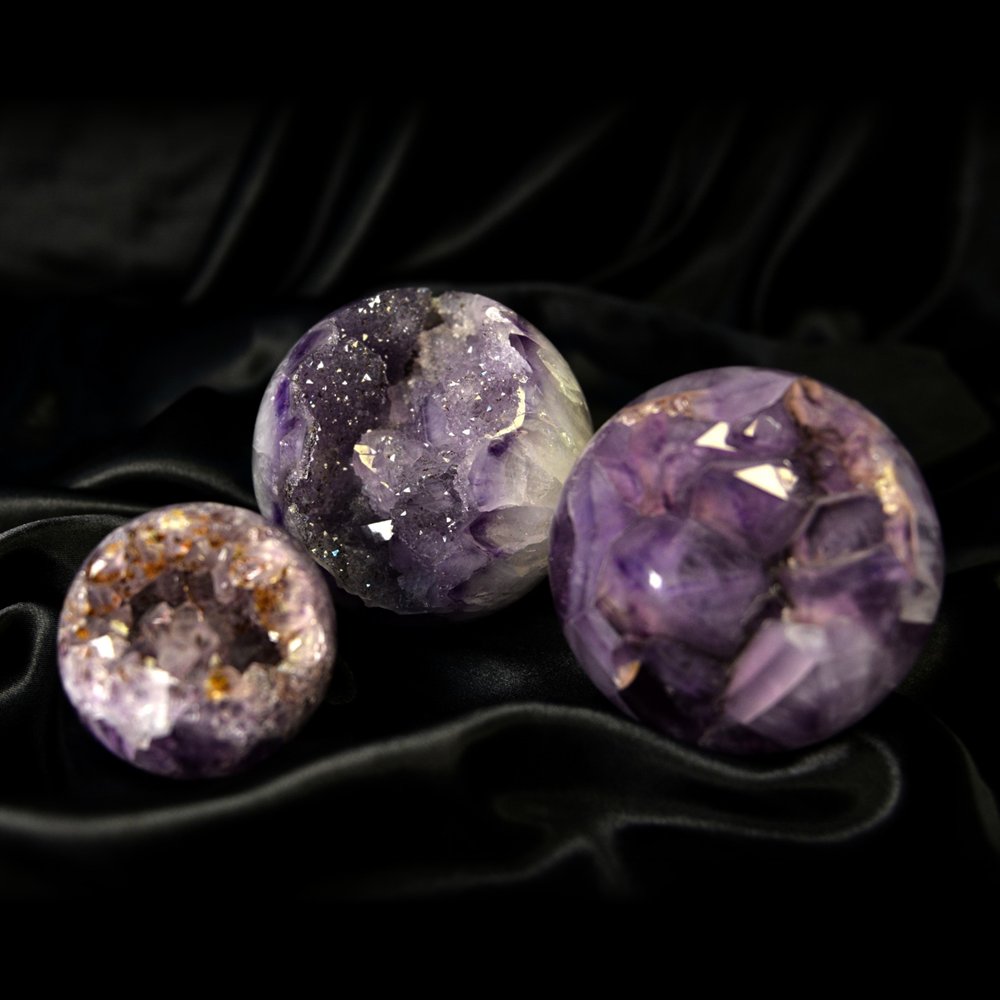
| Amethyst geodes and cathedrals | Brazil | Ametista do Sul / Alto Uruguai, Rio Grande do Sul |
| Darkest-saturation amethyst | Uruguay | Artigas region: the same basalt formation as southern Brazil |
| Agate | Brazil | Salto do Jacuí area, Rio Grande do Sul; cut in Soledade |
| Rutilated quartz | Brazil | Novo Horizonte, Bahia |
| Imperial topaz | Brazil | Ouro Preto district, Minas Gerais: the main world source |
| Paraíba tourmaline | Brazil | São José da Batalha, Paraíba (also found in Nigeria and Mozambique) |
| Labradorite, ocean jasper, celestite | Madagascar | Antsirabe region and the west coast |
| Zeolite family | India | The Deccan basalt quarries of Maharashtra |
| Vanadinite | Morocco | Mibladen and Midelt |
| Giant gypsum (selenite) crystals | Mexico | Naica mine, Chihuahua |
| Specimen pyrite | Peru | Huanzala and other Andean mines |
| Fluorite | China | Yaogangxian and other Hunan mines |
| Tourmaline, kunzite, aquamarine (Asian) | Pakistan / Afghanistan | Skardu and the Braldu valley; Afghan pegmatites |
| Lapis lazuli | Afghanistan | Sar-e-Sang, Badakhshan: worked for millennia |
| Malachite, cobaltoan calcite | DR Congo | Katanga copper belt |
| Emerald | Colombia | Muzo, Chivor and Coscuez |
| Sapphire | Sri Lanka | Ratnapura |
| Rare secondary minerals | Namibia | Tsumeb mine: see below |
| Clear quartz (US domestic) | United States | The Ouachita Mountains, Arkansas |
The World’s Most Famous Crystals and the Country Behind Each
Four places are famous in their own right, independent of the countries that contain them: worth knowing because they come up constantly in the trade.
Naica, Chihuahua, Mexico
The Naica mine’s Cave of the Crystals contains gypsum (selenite) crystals reaching around eleven to twelve metres in length: among the largest natural crystals ever documented. They grew in mineral-saturated water at high temperature over a very long period. However, the chamber is effectively inaccessible without protective equipment because of the heat and humidity, and nothing from it circulates commercially: it is famous scientifically rather than as a source of goods.
Tsumeb, Namibia
A copper, lead and zinc deposit that produced an extraordinary mineralogical diversity: well over two hundred distinct mineral species, including a number for which it is the type locality. It is arguably the single most celebrated mineral locality among collectors, so Tsumeb provenance carries a genuine premium on specimens.
Ametista do Sul, Rio Grande do Sul, Brazil
The district that made Brazilian amethyst a global commodity. The geodes here formed in cavities within Cretaceous basalt, so the area produces both retail-scale material and the very large cathedrals that define the top of the decorative market.
Sar-e-Sang, Badakhshan, Afghanistan
The historic source of lapis lazuli, worked for thousands of years and the origin of the lapis used in the ancient Mediterranean world. In fact, few localities have that continuity of production.
A Country Famous for Crystals Is Not Always the Largest Producer
This distinction is worth making because the two get conflated, and buyers make sourcing decisions on the wrong one.
| A country can be famous because… | Which is different from… |
|---|---|
| It produced a legendary locality or specimen | Producing commercial volume today |
| It is the reference for one prized material | Supplying a broad range |
| It has a long historical association | Having active, accessible mines now |
| Its material is visually distinctive | Its material being economically significant |
Naica is the clearest example: the most spectacular crystals on record, but commercially irrelevant. Conversely, China is a major producer of worked lapidary goods without holding much romantic reputation in the trade. For production figures, the USGS gemstone statistics are the most consistent public source.
For a buyer, the useful question is never “which country is famous” but “which country is the reference for the material I need, and can I reach a supplier there”. That maps the sourcing decision properly: see Where Can I Buy Crystals Wholesale?
Responsible Sourcing Across Origins
Mineral supply chains differ enormously in transparency, and some origins carry documented concerns around labour conditions, informal and unsafe extraction, and conflict financing. That is not an argument against any origin. Instead, it is an argument for asking the same questions everywhere:
- Can the supplier name the region or district a lot came from?
- Can they provide legal origin and export documentation?
- Do they buy at the mine, at a cutting center, or from another exporter?
- For origins with known concerns, what diligence do they actually perform?
A supplier who treats these as normal commercial questions is therefore one you can build on.
Why the Country Famous for Crystals Is Also the Practical Choice
Set aside reputation and the practical case is straightforward: breadth, scale and availability in one origin. A buyer sourcing from Brazil can cover volume material, mid-tier polished goods, premium specimens and statement pieces without adding suppliers. In addition, established trading centers at Teófilo Otoni for coloured stones and Soledade for agate and amethyst processing make that practical rather than theoretical.
CS Minerals is a Brazilian origin supplier of crystals, minerals and natural stones, selling to wholesale and professional buyers in the United States.
Request wholesale access for current Brazilian availability.
Related reading: What Crystals Are Commonly Found in Brazil?, What Is the Most Expensive Gemstone in Brazil? and Where Can I Buy Brazilian Crystals Wholesale?
Which Country Is Famous for Crystals, and Which One to Actually Buy From
Reputation and supply are two different questions, and a buyer who confuses them ends up chasing material that is not for sale. In fact, several of the most famous localities in the world are closed, exhausted, or produce only at collector volumes. Fame is a historical record, whereas supply is a commercial one.
The Naica caves are not a source you can order from: authorities control access, and the chambers flooded again once pumping stopped. Tsumeb’s main workings closed in the 1990s, so Tsumeb material on the market today is old stock moving between collections. Sar-e-Sang lapis passes through a long chain before it reaches a Western buyer, which makes documented sourcing difficult.
Brazil, however, sits in a different position. The districts that made the country famous are still producing at commercial scale, still cutting locally, and still shipping to retail buyers abroad. That is the practical reason a shop ends up sourcing Brazilian material even when the most photographed crystals in the world came from somewhere else.
How to Check a Country of Origin Claim
Origin gets repeated down a supply chain far more often than it gets verified. Before you accept a country on a label, separate three things that buyers frequently confuse:
- Where it was mined. The actual geological source, which is the only claim that carries meaning.
- Where it was cut or polished. Often a different country, because cutting follows labour cost and skill, not geology.
- Where it shipped from. The least meaningful of the three, and the one most often presented as origin.
So ask which of the three a supplier is describing, and ask for the answer in writing on the invoice. A seller buying close to the source can answer without hesitating. In contrast, a seller three steps down the chain usually cannot, because the record disappeared at the first consolidation.
This matters commercially, not just academically. If you describe a stone to your customer as Brazilian and it turns out to be Madagascan material that transited through Brazil, the correction lands on you, not on the wholesaler who told you. Therefore, buying closer to origin is the only reliable way to keep an origin claim you can defend.
What “authentic” should mean on a label
The same logic applies to the word authentic. It means nothing on its own, because no one sells stones they describe as fake. Instead, what carries meaning is the pair of claims underneath it: the species is what the label says, and the treatment status is disclosed. A supplier who will put both in writing has answered the question that authentic only gestures at.
In short, the practical conclusion for a buyer is simple. Fame tells you where to look first, while supply tells you where to order. When the two overlap, which is the case for Brazilian amethyst, agate and quartz, you get a story your customer already recognises attached to material you can actually reorder.
Which Country Is Famous for Crystals? FAQs
Which country is best known for crystals?
Brazil, primarily because it produces the broadest range of any single country: bulk quartz and agate, fine tourmaline and beryl, imperial topaz, and amethyst cathedrals weighing hundreds of kilograms. Other countries are the reference for specific materials: Madagascar for labradorite and ocean jasper, Uruguay for the darkest amethyst, India for zeolites, Morocco for vanadinite.
Which country has the best crystals?
The question only has an answer per material. Brazil for amethyst, agate, rutilated quartz and imperial topaz. Colombia for emerald. Sri Lanka for sapphire. Afghanistan for lapis lazuli. Madagascar for labradorite. So a supplier claiming to be strongest in everything is reselling material from origins it has no operational connection to.
Where do most crystals come from?
Commercial supply spreads across Brazil, Madagascar, India, China, Morocco, Pakistan, Afghanistan, Peru, Mexico, Uruguay, Zambia, the Democratic Republic of Congo and the United States, among others, with each dominating different materials. Brazil, however, supplies the widest range and much of the world’s decorative amethyst, agate and quartz.
What is the most famous crystal mine in the world?
Two have the strongest claims. The Naica mine in Chihuahua, Mexico, contains gypsum crystals reaching around eleven to twelve metres: among the largest ever documented, though commercially irrelevant. The Tsumeb mine in Namibia produced well over two hundred mineral species, including several for which it is the type locality, and it is also the most celebrated locality among collectors.
Is Brazil the largest producer of crystals?
Brazil is among the leading producers of coloured gemstones and quartz and is the most significant single source of decorative amethyst, agate and large quartz formations. Whether it is “largest” depends on the material measured: other countries lead in materials Brazil does not produce in quantity, and production data by species is not consistently reported across the trade.
Does the country of origin affect a crystal’s value?
Sometimes significantly. For most decorative material, origin matters mainly as quality information. For certain gems, however, the market prices origin directly: Brazilian-origin Paraíba tourmaline generally trades above visually similar Nigerian or Mozambican material, and Tsumeb provenance carries a premium on specimens. Where origin carries price, an independent laboratory report should establish it rather than a seller’s claim.
About CS Minerals
CS Minerals is a Brazilian supplier of crystals, minerals and natural stones serving wholesale buyers, retailers and professional buyers in the United States. The company combines Brazilian sourcing, product curation, live selling and international logistics to connect buyers with Brazilian stones and minerals.
Written by the CS Minerals Wholesale Team · Last updated
General reference information. Mineral localities and active production areas change over time, and production data by species is not consistently reported across the trade.
Comments
4 responses to “What Country Is Famous for Crystals?”
[…] Related reading: What Is the Most Expensive Gemstone in Brazil?, What Is Brazil’s National Gemstone? and What Country Is Famous for Crystals? […]
[…] Related reading: What Crystals Are Commonly Found in Brazil?, What Is the Most Expensive Gemstone in Brazil? and What Country Is Famous for Crystals? […]
[…] Related reading: What Crystals Are Commonly Found in Brazil?, What Is Brazil’s National Gemstone? and What Country Is Famous for Crystals? […]
[…] That trade helped make the town a world centre for gem cutting, and it also tied the agate country of southern Brazil to European markets for generations. Soledade, today widely known as Brazil’s agate capital, sits in the same region. So for European buyers, it is a useful story: the agate slices, bookends and geodes in your shop may well come from the same area that supplied the historic German cutters. To learn more about the Brazilian side of the story, read our overview of the countries famous for crystals. […]