Category: Wholesale Guides

  • How to Sell Crystals Online

    How to Sell Crystals Online

    Quick answer: To sell crystals online, you have to solve five problems: choosing a channel (your own store, a marketplace, or live selling), photographing pieces honestly enough that they arrive as expected, writing listings that prevent returns, shipping goods that are heavy and brittle at the same time, and processing one-of-a-kind inventory at a sustainable pace.

    That last one is the real constraint, although almost nobody warns you about it. A unique piece is a SKU with a quantity of one. You must individually weigh, measure, photograph, describe and list every single stone, and then retire it when it sells. Whether you can build a throughput for that determines whether the business scales, more than your traffic does.

    The Core Problem: Unique Inventory Is a SKU of One

    Most e-commerce advice assumes repeatable products: one listing, many units, one photo shoot. Crystals, however, frequently break that assumption. In fact, clusters, cathedrals, towers and specimens are individual objects with individual dimensions, weight, colour and condition.

    As a result, the per-unit labour is fixed and real:

    1. Weigh and measure the piece
    2. Photograph it: several angles, including the base
    3. Film a short video
    4. Write a description covering species, dimensions, weight, origin and treatment
    5. List it, priced individually
    6. Retire the listing when it sells and pack that specific piece

    Two consequences follow, and both are commercial rather than technical. Cheap unique pieces often are not worth listing at all: if the labour to list a stone costs more than the margin on it, you are working for free. And your assortment strategy should deliberately mix the two inventory classes: repeatable polished goods cut to specification, which can be listed once and reordered, alongside unique pieces where the individual treatment is justified by the price.

    Practical rule: set a minimum price below which a piece does not get an individual listing. Below that line, sell it instead as a graded assortment, a mixed lot, or in a live sale: formats that price many pieces with one unit of labour.

    Choosing a Channel to Sell Crystals Online

    ChannelYou getYou give upBest for
    Your own storeFull margin, your customer list, your dataYou must generate all the trafficSellers with an existing audience
    General marketplacesExisting buyer traffic, buyer protectionCommission, and usually the customer relationshipStarting out; testing demand
    Live sellingThe strongest format for unique pieces; high conversionA schedule you must hold; you are the productUnique inventory and mixed lots
    Social sellingDiscovery and audience buildingClumsy checkout; platform dependenceFeeding the other three channels

    Photos That Help You Sell Crystals Online Honestly

    In this category, photography is not marketing but product specification: the buyer is making a decision entirely from your images. Over-edited photos win the first order and lose the customer, and on heavy goods a return costs you shipping in both directions.

    • A scale reference in every frame. For instance, a hand, a coin or a ruler. Size is the most commonly misjudged variable and the leading cause of returns.
    • Consistent, ordinary light. Diffuse daylight or a consistent softbox. Not dramatic side lighting, which hides fractures and colour zoning.
    • Shoot dry. Wet stone photographs far better than it looks. After all, what arrives is dry.
    • Show the base and the reverse. This is where cutting quality, stability and damage are visible, and where problems get hidden.
    • Video for anything unique. That is because colour and internal structure do not survive a single still. A slow rotation under normal light is the honest format.
    • Do not backlight everything. Light behind a stone makes almost any quartz look clear and saturated.
    • One consistent background. A coherent grid looks professional and makes colour comparisons meaningful across listings.

    Writing a Listing That Reduces Returns

    Every listing should state, without the buyer having to ask:

    FieldWhy it prevents a return
    SpeciesRemoves ambiguity between similar-looking materials
    Dimensions (H × W × D)“Large” causes more returns than any other single word
    WeightSets the buyer’s physical expectation, and is your shipping cost
    Origin regionMatters to collectors; builds credibility with everyone else
    Treatment statusNatural, heat-treated, dyed or coated. Protects you legally and commercially
    Condition notesDisclosed chips and contact points cost you far less than discovered ones
    Whether it stands unaidedA cluster that needs a base is a different product
    “This exact piece” vs “similar to”The single most important clarity for unique inventory

    Disclosing a flaw does not cost you the sale nearly as often as sellers fear. Discovering one on arrival, however, costs you the sale, the return shipping on a heavy item, and the customer.

    Shipping Heavy, Fragile Goods When You Sell Crystals Online

    Crystals are brittle and dense, and that combination generates claims. Solve this before your first sale, not after your first break.

    • Individual wrapping, then isolation. Every piece wrapped, and no two pieces touching.
    • Double-box mid-size items. Inner box packed tight, outer box with a cushioning layer between.
    • Crate anything large. Wooden crate with internal bracing, not a reinforced carton.
    • Points and terminations get extra protection. They are the first thing to break and the first thing the buyer inspects.
    • Watch dimensional weight. Carriers price on volume as well as actual weight, so over-boxing costs money, but under-boxing costs more.
    • Insure anything valuable, and read what the carrier actually excludes.
    • Photograph every outgoing package. Contents, then packed, then sealed. This resolves claims in your favour.
    • Publish your own breakage policy. Buyers of heavy goods look for it, so its absence reads as risk.
    • Buy supplies ahead. Running out mid-order is how corners get cut, and that is when breakages happen.

    Live Selling Mechanics

    Live selling suits this category better than almost any other product, because it solves the central problem of remote buying: the customer watches the actual stone turn under light, at a known scale, and can ask a question before committing.

    What makes it work operationally:

    • Hold a schedule. Predictability builds an audience more than any single broadcast does.
    • Bring enough volume and variety. A broadcast needs enough pieces to hold attention and enough surprise to keep it. This also changes what you buy: mixed lots and graded assortments feed live selling better than tight SKU replenishment.
    • Have a clear claiming mechanic and state it at the start of every show. Ambiguity about who claimed what is the fastest way to lose goodwill.
    • Show scale physically. Hold the piece, put a known object beside it, and then say the dimensions aloud.
    • Invoice and pack the same week. Live buyers expect momentum; slow fulfilment undoes the enthusiasm the format creates.
    • Handle the piece honestly on camera. Show the back and the base. Live selling’s advantage is trust; hiding a flaw on camera destroys it permanently.

    Compliance Rules When You Sell Crystals Online

    • No health or medical claims. Claims that a stone treats, cures or prevents a condition are objective health claims that cannot be substantiated for a decorative object, and are a real regulatory exposure in the United States. Instead, describe the stone. This also extends to customer reviews you publish and endorse on your own storefront. See Do I Need a License to Sell Crystals?
    • Disclose treatments. Heat-treated citrine, dyed agate and coated aura quartz are standard practice, and the FTC Guides for the Jewelry Industry expect them to be disclosed. If you resell treated material as natural, the misdescription is yours.
    • Do not describe glass as mineral. “K9 crystal”, cherry quartz, opalite, goldstone and most blue or green “obsidian” are manufactured glass. Selling them is fine, but misdescribing them is not.
    • Sales tax. Large marketplaces generally collect and remit on sales made through their platforms, but that does not cover your own website. Economic nexus rules can create obligations in states you have no presence in.

    Building a Listing Pipeline to Sell Crystals Online at Scale

    When you sell crystals online, the operational difference between a hobby and a business is throughput. A pipeline that works:

    1. Batch by stage, not by piece. Weigh and measure everything, then photograph everything, then write everything, then list everything. Switching stages per piece is what makes the work feel endless.
    2. Use a fixed photo setup. Same background, same light, same camera position, every session. In short, consistency is speed.
    3. Template the description with required fields, so nothing ships undocumented.
    4. Assign an internal reference to every unique piece at intake, and write it on the storage label. You will need to find that exact stone weeks later when it sells.
    5. Separate the two inventory classes in your records from day one: repeatable SKUs and one-of-one pieces. They need different replenishment logic and different pricing logic.
    6. Track your own cost per listing. Once you know it, your minimum individual-listing price stops being a guess.

    Sourcing for an Online Business

    If you sell crystals online, the market rewards material that photographs well and carries value relative to its weight, because weight is a direct cost on every sale. It also rewards material nobody else is showing, since a listing competing against a hundred identical listings competes only on price.

    Both therefore point upstream. Buying closer to origin gives access to pieces that are not in every domestic catalog, and gives the margin room to absorb shipping on heavy goods. CS Minerals is a Brazilian origin supplier working with online and live sellers in the United States, with material supplied with the dimensional detail an individual listing requires.

    Join the CS Minerals wholesale list to see availability and live sales as you build.

    Related reading: Who Can I Sell Crystals To?, How to Price Crystals to Sell and What Is the Best Website to Buy Crystals?

    How to Sell Crystals Online: Frequently Asked Questions

    Pick one channel (your own store, a marketplace, or live selling) and build a repeatable process around it: weigh and measure each piece, photograph it with a scale reference in consistent light, write a listing stating species, dimensions, weight, origin and treatment status, and pack it properly for a heavy fragile item. The operational constraint is throughput on unique pieces, since each one is a separate listing.

    There is no single best place. Marketplaces give you existing traffic and take commission and usually the customer relationship. Your own store gives you full margin and the customer but requires you to generate traffic. Live selling converts best for one-of-a-kind material but demands a schedule you can hold. Most established sellers combine an owned store with a live channel.

    Use consistent diffuse light, shoot the stone dry, include a scale reference in every frame, show the base and reverse, and film a slow rotation for unique pieces. Avoid heavy editing, dramatic side lighting and backlighting everything: all three flatter the stone and cause returns when it arrives looking different.

    Wrap each piece individually so no two touch, double-box mid-size items, and crate anything large with internal bracing. Give points and terminations extra protection, insure valuable pieces, and photograph every package at each packing stage so claims can be resolved. Publish your own breakage policy: buyers of heavy goods look for it.

    Yes, and marketplaces are a common starting point because the buyer traffic already exists. Expect commission and, usually, limited access to the customer relationship. If you list unique pieces across a marketplace and your own store at the same time, decide where stock is authoritative first, or you will oversell one-of-one items.

    Describing traditional or cultural associations is common, but claims that a stone treats, cures or prevents a disease or condition are objective health claims that cannot be substantiated for a decorative object and create real regulatory exposure in the United States. That extends to reviews you publish on your own storefront. Describe the stone instead. This is general information, not legal advice.

    About CS Minerals

    CS Minerals is a Brazilian supplier of crystals, minerals and natural stones serving wholesale buyers, retailers and professional buyers in the United States. The company combines Brazilian sourcing, product curation, live selling and international logistics to connect buyers with Brazilian stones and minerals.

    Written by the CS Minerals Wholesale Team · Last updated
    General commercial information, not legal or tax advice. Marketplace policies and sales tax rules change: confirm current requirements with the platform and your state revenue authority. CS Minerals sells natural stone and decorative objects and makes no health or therapeutic claims.
  • Who Can I Sell Crystals To?

    Who Can I Sell Crystals To?

    Quick answer: You can sell crystals to two broad markets. Consumers (decor buyers, gift buyers, collectors and enthusiasts) buy one piece at a time through stores, online shops, markets and live sales. Businesses, on the other hand, buy in quantity or by specification: metaphysical and crystal shops, gift shops, jewelry stores, jewelry makers and lapidaries, interior designers and architects, spas and wellness venues, hospitality, corporate gifting programs, subscription boxes, film and prop houses, museums and schools, and other resellers.

    The practical difference is not volume: it is what each side needs from you. Consumers buy on appearance and trust. Business buyers, however, need consistency, documented specifications, invoice terms and reliable lead times, and they pay for those. In fact, the highest-ticket buyers in this category are almost always B2B, and most sellers never approach them.

    Consumers You Can Sell Crystals To

    • Decor buyers want a piece that works in a specific room, so size and colour matter most. Tickets run mid to high, and you reach them through an online store, Instagram and home and design markets.
    • Gift buyers want something presentable and well packaged at a clear price. Tickets are low to mid, and they shop in retail stores, gift shops and seasonal markets.
    • Enthusiasts want variety, discovery and new arrivals. They spend low to mid amounts but buy often, especially through live selling, social media and your own list.
    • Collectors want specimen quality, locality information and provenance. Tickets run from mid to very high, and they buy at shows, on specialist forums, through dealer networks and through direct relationships.
    • Jewelry hobbyists want rough, cabochons and beads by weight. They also spend low to mid amounts at high frequency: online, on craft marketplaces and through guilds and clubs.

    Note the collectors: they are the one consumer segment with genuinely high ticket potential, and the one that requires you to know what you are selling: species, locality, formation, condition. Indeed, collectors will pay multiples for a documented specimen and nothing at all for a vague description, and many of them check your locality claims against databases such as Mindat.

    Businesses You Can Sell Crystals To

    Shops, jewelers and resellers that buy crystals to sell

    • Metaphysical and crystal shops order broad assortments across tiers, plus display pieces. Tickets are mid and recurring, and reliable replenishment with consistent grading wins the account.
    • Gift shops want packaged, labelled goods at accessible price points. Tickets are low to mid but recurring, so unit price and sell-through speed decide the account.
    • Jewelry stores buy finished stones, cabochons and select specimens at mid to high tickets. Grading discipline and treatment disclosure win them over.
    • Jewelry makers and lapidaries order rough and preforms by weight on a recurring basis, and they judge you on yield per kilogram and consistency between orders.
    • Other resellers buy lots and assortments at mid to high tickets. Price and consistency decide it, since you become their supplier.

    Project, hospitality and institutional buyers

    • Interior designers and architects buy large statement pieces, slabs and sculptural specimens at high to very high tickets. Exact dimensions, weight, photography and delivery certainty win the project.
    • Spas and wellness venues want display pieces for treatment and reception spaces at mid to high tickets. Durability, easy cleaning and a coherent look across rooms matter most.
    • Hotels and hospitality buy lobby and suite pieces, often in multiples, at high tickets. Repeatability across rooms, plus insurance and installation, wins the order.
    • Corporate gifting programs order consistent pieces in quantity, often with branded packaging, at mid to high seasonal tickets. Volume consistency and a firm deadline you can hold win the account.
    • Subscription boxes need high volume at a tight cost per unit, so the ticket is low per unit yet high in total. Predictable cost and absolute reliability on dates keep the account.
    • Film, TV and prop houses want specific looks, sometimes rented rather than sold, and tickets vary but can be high. Speed and the ability to source to a brief win the work.
    • Museums and schools buy teaching and display specimens with accurate labelling at low to mid tickets, because accurate identification and locality data matter above all.

    The B2B Buyers Most People Who Sell Crystals Never Approach

    Four of the buyer types above have the highest ticket sizes in the category, yet only a small fraction of crystal sellers approach them, largely because they require a different kind of selling.

    Interior designers and architects

    These are specification buyers. They are not browsing; they are solving a problem in a room with a budget attached, and a single piece can be worth many retail sales. What they need is not persuasion. Instead, it is precise information: exact dimensions, exact weight, real photographs from multiple angles, confirmed availability, and a delivery commitment. They also need to know whether a piece is unique (specified for one project) or repeatable (can be used across several). Give them that, and the sale then becomes straightforward.

    Hospitality

    Hotels and restaurants buy for lobbies, suites and public areas, frequently in multiples. As a result, repeatability matters: twelve similar pieces beat one exceptional piece. Requirements that retail buyers never mention become central: insurance, installation, weight loading and long procurement timelines.

    Corporate gifting

    Seasonal, high volume, and won or lost on reliability. The buyer’s fear is not price: it is a shipment arriving after the event. Consistency across units and a deadline you can genuinely hold matter more than the material itself.

    Spas and wellness venues

    They buy for atmosphere and buy repeatedly as they refit. Practical constraints therefore govern: pieces must be cleanable, durable in humid environments, safe around clients, and coherent across multiple rooms.

    What B2B Buyers Need That Consumers Do Not

    This is where most retail sellers fail when they try to move into B2B. The product is the same, but the requirements are not.

    • Written specifications. Exact dimensions and weight, not “large”. A designer cannot specify a piece they cannot dimension.
    • Consistency across units. Multiples that match, when the brief calls for multiples.
    • Firm lead times. Projects have dates. A missed date is worse than a higher price.
    • Invoices and terms. Purchase orders, invoices, and in many cases payment terms rather than card at checkout.
    • Documentation. Treatment status in writing, origin information, and for larger pieces, installation and handling requirements.
    • Insurance and liability clarity. Who carries the risk in transit, and who is responsible if a heavy piece is damaged during installation.
    • A named contact. B2B buyers escalate to people, not to inboxes.

    How to Approach a Business Buyer and Sell Crystals in Quantity

    1. Lead with the specification, not the story. Species, dimensions, weight, origin, photographs, availability, price. A designer reading a paragraph about energy is a designer who has stopped reading.
    2. Send real photographs of real inventory. Multiple angles, ordinary light, a scale reference, and the base.
    3. Answer the logistics question before it is asked. How it crates, what it weighs, what the delivery site needs.
    4. Offer a reserve. Projects move slowly; the ability to hold a unique piece for a decision window is genuinely valuable and costs you little.
    5. Be findable when a brief lands. Most of these buyers search when a project starts, not before.
    6. Do not discount to open the account. These buyers are not price-shopping; they are risk-shopping. Above all, reliability wins.

    Matching Your Inventory to the Buyers You Sell Crystals To

    If you want to sell to…You need to stock…
    Gift shops and impulse retailVolume tier: packaged, labelled, light, low price point
    Crystal and metaphysical shopsAll four tiers, consistently reorderable
    CollectorsSpecimen-grade pieces with locality and condition information
    Jewelry makersRough and preforms by weight, consistent between lots
    Designers and architectsLarge unique pieces, fully dimensioned and photographed
    Hospitality and corporateRepeatable pieces available in matching multiples

    Read that table in reverse and it becomes a sourcing brief: the buyer you want determines what you must be able to buy. For instance, a seller who only stocks the volume tier cannot serve a designer, no matter how good the pitch is.

    Where CS Minerals Fits

    CS Minerals is a Brazilian origin supplier selling to several of the business rows above (retail stores, online and live sellers, jewelry makers, designers and collectors) in the United States. For the designer and architect side specifically, we supply material with the dimensional and photographic detail a specification requires.

    If you are building toward the higher-ticket B2B buyers, the constraint is usually upstream: you cannot sell a 300-kilogram cathedral you cannot source. Join the CS Minerals wholesale list to see what is available as you build.

    Related reading: Natural Stones for Architects and Designers, How to Sell Crystals Online and How to Price Crystals to Sell.

    Who Can You Sell Crystals To When You Have No Buyer List Yet?

    Every buyer type above assumes you already know someone. However, most sellers do not, and the first ten customers decide whether the business survives the first year.

    The fastest route is not cold outreach. It is placing inventory where a buyer already is, and letting the sale start the relationship:

    • Consignment with an existing shop. A gift shop or salon carries a small display and you split the sale. No purchase risk for them, real shelf presence for you.
    • A market stall next to the right neighbour. Craft markets, wellness fairs and mineral shows put you beside traffic that already stops for this category.
    • One event florist or planner. A single planner who likes your pieces reorders for every event, which is a better return than fifty retail buyers.

    Each of these produces something more useful than the first sale: a reason to talk to the buyer again, and evidence of what actually moves.

    Reading What a Buyer Is Really Asking For

    Business buyers rarely say what they need directly, and the phrasing tells you which one you are talking to.

    For example, a buyer who asks about consistency wants to reorder the same thing, which means they are building a shelf and you should quote by weight. Someone who asks whether a piece is one of a kind wants exclusivity, which means price per piece and no duplicates in their market. Finally, a buyer who asks how fast you ship is filling a deadline, and the piece matters less than the date.

    Answering the wrong question loses the order even when your inventory is right. In other words, match the quote to the question, and the conversation usually continues.

    One buyer type is worth naming separately because it is easy to miss: the repeat gift buyer. Someone who bought once for a birthday returns for the next occasion, and they are already sold on the category. Keeping a simple record of what each customer bought turns that into a predictable second sale.

    Who Can I Sell Crystals To? Frequently Asked Questions

    Consumers (decor buyers, gift buyers, enthusiasts, collectors and jewelry hobbyists) and businesses, including metaphysical and crystal shops, gift shops, jewelry stores, jewelry makers, interior designers and architects, spas, hotels, corporate gifting programs, subscription boxes, prop houses, museums and other resellers. The highest-ticket buyers are usually B2B.

    Yes, and it is one of the more durable channels because orders recur. Stores buy on consistency: they need to know a reorder will match the first order in grade and size. Approach them with a clear assortment across price tiers, written specifications, and terms, not with a single interesting piece.

    Lead with specification rather than narrative: exact dimensions, exact weight, multiple real photographs including the base, confirmed availability, whether the piece is unique or repeatable, and how it crates and delivers. Designers buy to solve a problem in a room with a budget and a date, so certainty is what you are actually selling.

    By ticket size, the specification buyers (interior designers, architects and hospitality) because a single piece can be worth many retail sales. By reliability, recurring wholesale accounts with stores, because the revenue repeats. Most established sellers want both: recurring accounts for the base and specification work for the peaks.

    Not always. Specification buyers such as designers frequently buy a single piece at a project price, not at a wholesale discount. Stores and resellers do buy at wholesale, because they must resell at a margin. The distinction matters for your pricing: one is a project sale, the other is a trade sale.

    Yes, for teaching and display collections. This buyer values accurate identification and locality data above appearance, so it suits sellers who document their material properly. Tickets are usually modest, but the requirement is steady and the credibility is useful.

    About CS Minerals

    CS Minerals is a Brazilian supplier of crystals, minerals and natural stones serving wholesale buyers, retailers and professional buyers in the United States. The company combines Brazilian sourcing, product curation, live selling and international logistics to connect buyers with Brazilian stones and minerals.

    Written by the CS Minerals Wholesale Team · Last updated
    General commercial information, not legal or tax advice. Ticket sizes described are relative indications, not price quotations.

  • How Much Money Do I Need to Start a Crystal Business?

    How Much Money Do I Need to Start a Crystal Business?

    Quick answer: How much money you need to start a crystal business depends almost entirely on two decisions: which channel you sell through, and how deep your first inventory is. For example, a market-stall or online-only start needs registration, a photography setup, packing supplies and inventory. In contrast, a physical store adds rent, deposit, fit-out, fixtures and staff, which typically multiplies the requirement several times over.

    Anyone who gives you a single dollar figure is guessing at your channel, your city and your inventory depth. Instead, what is genuinely useful is the complete line-item structure, so you can price your own plan, and the one line almost every new seller omits, which is working capital. This article therefore gives you both, plus a blank worksheet.

    Why the Money to Start a Crystal Business Is Not a Single Number

    Four variables move the total by an order of magnitude, and none of them are knowable from outside your plan:

    1. Channel. A storefront carries rent, deposit, fit-out and staff before it sells anything. An online-only start carries almost none of that and carries traffic acquisition instead.
    2. Inventory depth. This is the single largest line, and also the most elastic. You can cover all four price tiers shallowly or go deep on one: the first costs far less and teaches you more.
    3. Sourcing route. Buying domestically means small orders and no freight or duties. Importing directly, on the other hand, means a lower unit cost against a much larger minimum order plus freight, duties, broker fees and a breakage allowance.
    4. Location. Finally, rent, deposits, local licensing and labour vary enormously between markets.

    What You Spend Money On to Start a Crystal Business

    Every line item, sorted by type. However, not every line applies to every plan: that is the point of separating them.

    One-time setup

    Line itemApplies toNotes
    Business registration / entity formationAllState filing fee; varies by state and structure
    EINAllIssued free by the IRS
    State seller’s permitAllFee varies by state, although some are free
    City / county business licenseMostEasy to overlook because it is local
    DBA registrationIf trading under another name
    Accountant / attorney consultationRecommendedThe entity decision is worth paying for once
    Photography setupOnline, liveLighting, backdrop, tripod, turntable; however, a phone camera is generally sufficient
    Scale and measuring toolsAllNon-negotiable, because you must state weight and dimensions
    Display fixturesStore, marketsStone is heavy, so fixtures must be rated for it
    Store fit-out and signageStoreUsually the largest one-time cost overall
    Market stall equipmentMarketsTables, canopy, transport, lighting
    Security deposit and first rentStoreOften several months up front

    Inventory and its true cost

    Line itemNotes
    Product costThe invoice, and only part of what the inventory costs you
    International freightDirect import only, because weight and volume drive it
    Duties and customs feesDirect import only; depends on tariff classification
    Customs broker feeDirect import only; especially worth paying on the first shipment
    InsuranceOn anything of value in transit
    Inland freight from portDirect import only
    Breakage allowanceNever zero in this category, so budget it as a line, not a surprise

    Recurring, from month one

    Line itemApplies to
    Rent and utilitiesStore
    StaffStore; some live operations
    E-commerce platform subscriptionOnline
    Domain and hostingOnline
    Payment processing feesAll: a real percentage off the top
    Marketplace commissionMarketplace sellers
    Packing and shipping suppliesOnline, live: more than expected for heavy fragile goods
    Outbound shippingOnline, live
    Marketing and advertisingAll
    Market or fair stall feesMarkets
    Accounting and bookkeepingAll
    Insurance (liability, stock)All
    Storage, if not at homeVaries

    How Much Money Three Types of Crystal Business Need to Start

    Same business, three very different capital requirements. Then use this to identify which structure your plan actually is.

    Markets / fairsOnline onlyPhysical store
    Lowest-cost entryYesClose secondNo: highest by a wide margin
    Fixed monthly costLow: per-event feesLow: platform and hostingHigh: rent and staff before any sale
    Biggest line itemInventoryInventoryRent, deposit and fit-out
    Hidden costYour time and transportTraffic acquisition; per-piece listing labourFit-out overruns
    Speed to first revenueFast: next eventMedium: needs trafficSlow: build-out first
    Main riskWeather and footfallNo trafficFixed costs outrunning revenue

    The pattern worth noting: for the two low-cost routes, inventory is the dominant cost, so your startup requirement is mostly a decision you control. For a storefront, however, the dominant costs are contractual and largely fixed before you sell anything, which is why most crystal businesses now start in one of the first two columns and open a location later, if at all.

    Worksheet: Money Needed to Start Your Crystal Business

    Price your own plan to see how much money you need to start a crystal business. Then fill in only the rows that apply to your channel.

    CategoryYour figure
    One-time setup (registration, permits, professional advice)
    Equipment (photography, scale, display, stall or fit-out)
    Deposits and first rent
    Inventory: product cost
    Inventory: freight, duties, broker, insurance, inland
    Breakage allowance
    Packing and shipping supplies
    Platform, domain, hosting (first year)
    Marketing (first 3 months)
    Insurance (first year)
    Subtotal
    Working capital: 3 to 6 months of recurring costs
    Total requirement

    Working Capital: The Line Everyone Forgets

    Most new crystal businesses do not fail because the startup budget was too small. They fail because the whole budget went into inventory and there was nothing left to operate on.

    In this category the problem is sharper than in most, for three reasons:

    • Inventory is illiquid. Stone is heavy, and selling it quickly means discounting it, and unique pieces discounted to clear are gone permanently at a price you cannot repeat.
    • Reorder lead times are long. If replenishment arrives by ocean freight, you must fund the next order well before the current one has sold through.
    • Demand is seasonal. Gift-driven sales concentrate late in the year, so the buying decision (and the cash outflow) happens in a quieter quarter.

    In short, hold three to six months of recurring costs as working capital, separate from inventory, and treat that reserve as untouchable. A business with all its capital in stone cannot act when a good lot appears, which is exactly when it should.

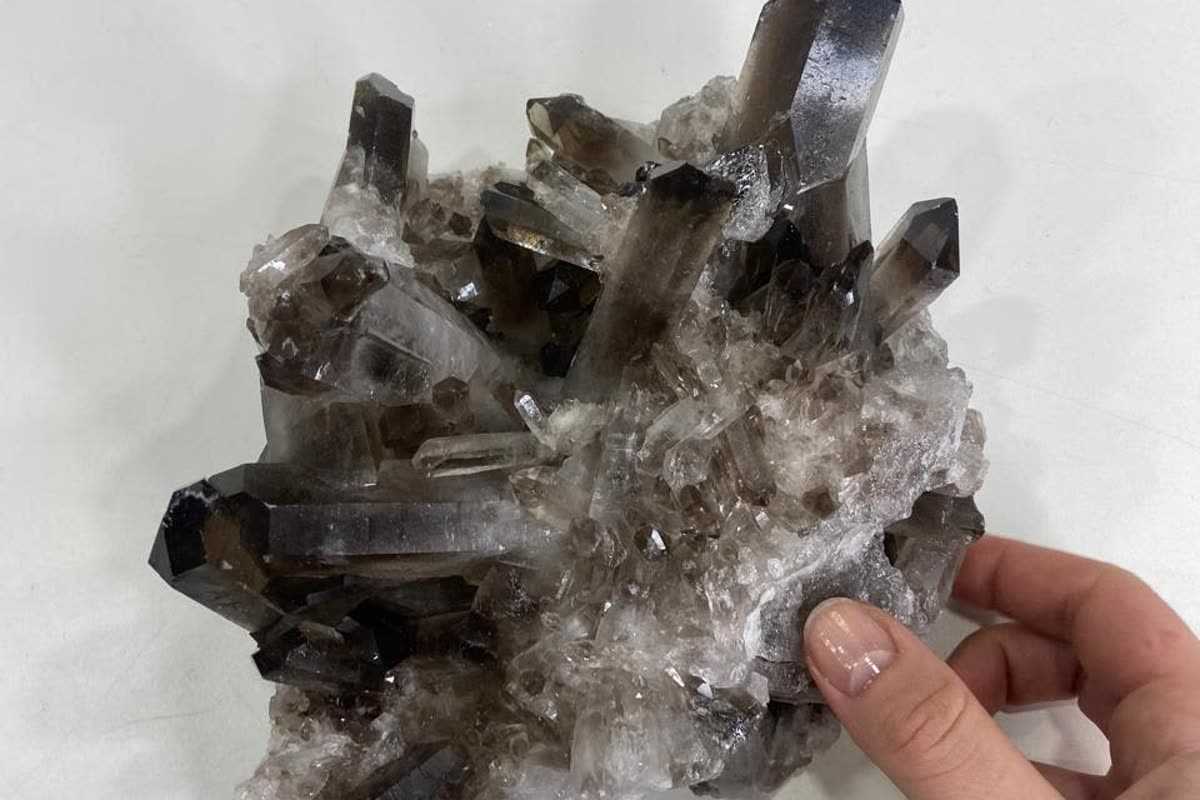
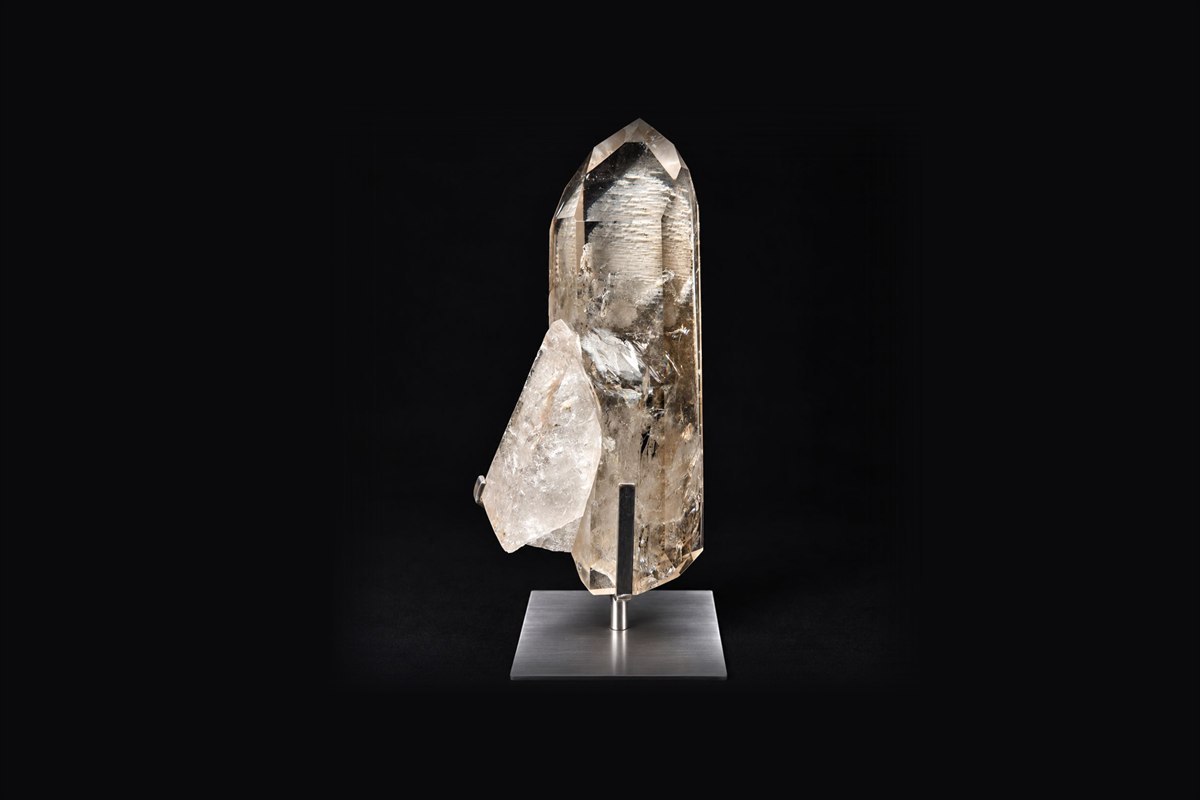
    Hand holding a smoky quartz cluster with well formed terminated points, a mid-tier piece in a new crystal business

    Where New Businesses Overspend

    • Inventory depth on untested SKUs. By far the largest avoidable cost. Instead, buy shallow and wide.
    • Photography equipment. In fact, a phone camera, a window and a consistent backdrop outperform expensive gear used inconsistently.
    • Fit-out and fixtures. Especially before proving the concept in a lower-cost channel.
    • Branding before product. A logo package cannot fix an assortment with no mid tier, however good it looks.
    • Ocean freight on a first order. Cheaper per kilogram, but it delays the feedback loop by weeks, and feedback is what the first order is for.

    Where New Businesses Underspend

    • The mid-ticket tier. After all, under-buying here is why stores get traffic and no margin.
    • Packing materials. Under-packing heavy fragile goods costs more in claims than the materials would have.
    • The breakage allowance. Budgeting zero means every break then comes out of profit on the rest.
    • Accounting. Sales tax, nexus and landed cost tracking get complicated faster than expected in this trade.
    • Working capital. See above: the most common single cause of failure.

    How to Start a Crystal Business With Less Money Than You Think

    1. Pick the lowest-fixed-cost channel first. Markets or online, rather than a storefront.
    2. Buy domestically for the first order. Small minimum, no freight or duties, and therefore fast feedback.
    3. Cover all four price tiers shallowly. Coverage teaches you what sells, whereas depth only tests one guess.
    4. Include exactly one statement piece. Identity matters and a single piece provides it.
    5. Reinvest from revenue, not from savings. Let the first order fund the second.
    6. Move to direct import only when you have sell-through data. That is when origin pricing pays for its own complexity.

    When Direct Import Starts Making Sense

    Direct import lowers unit cost but raises the minimum order, adds freight, duties, broker fees and a breakage allowance, and extends lead times. It becomes worthwhile when you know which tiers and species actually move: because then you are buying volume you can sell rather than volume you hope to sell.

    CS Minerals is a Brazilian origin supplier working with wholesale buyers in the United States. If you are earlier in the process, join the CS Minerals wholesale list to follow availability and live sales while you build: no order required.

    Related reading: How to Start a Crystal Business, How Much Are Crystals Wholesale? and Do I Need a License to Sell Crystals?

    Where the Money Goes in the First Ninety Days After You Start a Crystal Business

    Startup budgets tend to assume the money leaves in one purchase. In practice, however, it leaves in three waves, and the second one catches people.

    The first wave is inventory and registration, which everyone plans for. The second wave then covers everything that makes the inventory sellable: packaging, display, photography and the shipping supplies for heavy fragile goods. The third is the reorder, which arrives before the first batch has fully sold.

    Budgeting only for the first wave is the most common reason a new seller runs out of cash while holding stock they cannot yet convert.

    Finally, one more line rarely gets budgeted: the cost of learning. The first assortment almost always contains material that does not sell, and that is not waste: it is the price of finding out what your market wants. Treat it as a line item rather than a mistake, and the number stops feeling like a failure when it appears.

    How Much Money to Start a Crystal Business: FAQs

    There is no single figure, because the total is driven by your channel and your inventory depth. For instance, a market-stall or online-only start requires registration, a photography setup, packing supplies, inventory and working capital. A physical store, however, adds deposit, rent, fit-out, fixtures and staff, which typically multiplies the requirement several times. Price your own plan using the line-item worksheet above rather than relying on a headline number.

    For online and market-based businesses, inventory, which is also the most elastic cost, since you control depth. For a physical store, on the other hand, rent, deposit and fit-out, which are largely fixed and incurred before any sale. That difference is also why most crystal businesses now start online or at markets and consider a location later.

    You can start small: one low-fixed-cost channel, a domestic supplier with a small minimum, and a shallow assortment covering all four price tiers. However, you cannot skip working capital. Putting every available dollar into inventory is the most common cause of failure, because stone is illiquid and reorder lead times are long.

    Less than feels right, and spread across all four tiers rather than concentrated in the cheapest. Above all, the purpose of a first order is information: which species, sizes and price points actually sell for you. Depth on an untested SKU converts cash into shelf-warmers, and in this category shelf-warmers are heavy.

    Yes, and it is also the line most often omitted. Hold three to six months of recurring costs separate from inventory. Crystal inventory is illiquid, reorder lead times can run weeks by ocean freight, and gift-driven demand is seasonal, so cash needs to bridge a gap that is longer than most new sellers expect.

    Domestically, at the start. Unit cost is higher, but minimums are small, there is no freight or duty outlay, and the feedback loop is days rather than weeks. Direct import lowers unit cost and becomes worthwhile once you know which tiers and species move, because then the larger minimum is volume you can actually sell.

    About CS Minerals

    CS Minerals is a Brazilian supplier of crystals, minerals and natural stones serving wholesale buyers, retailers and professional buyers in the United States. The company combines Brazilian sourcing, product curation, live selling and international logistics to connect buyers with Brazilian stones and minerals.

    Written by the CS Minerals Wholesale Team · Last updated
    General business information, not legal, tax, accounting or financial advice, and not a representation that any business will produce a particular result. Costs vary by location, channel and plan: review your own figures with a qualified professional.

  • How to Start a Crystal Business

    How to Start a Crystal Business

    Quick answer: To start a crystal business, follow ten steps: choose your business model, define your customer, complete legal and tax setup, choose your sourcing channel, buy a layered first inventory, set pricing from landed cost, build photography and descriptions, open your sales channel, solve packing and shipping, then manage cash flow and reorders.

    Above all, the order matters. Most new crystal businesses fail at step five (buying the wrong inventory mix, usually all cheap material) and the cause is skipping step two. If you do not know who you are selling to, every buying decision after that is a guess.

    Step 1: Choose a Model to Start a Crystal Business

    These are genuinely different businesses with different capital needs, skills and risks. Pick one to start your crystal business; combining them comes later.

    ModelMain skill it demandsMain risk
    Physical retail storeMerchandising and locationFixed costs before revenue
    Online storePhotography and listing throughputTraffic: you must build your own
    Live sellingPerformance and hosting; restock cadenceYou are the product; hard to step away
    Markets and fairsDisplay and in-person sellingWeather, footfall, and your time
    Jewelry makingLapidary and metalworkSkill acquisition time
    B2B / design supplySourcing and specificationLong sales cycles; large single orders
    Import and wholesaleLogistics and capital managementHighest capital requirement

    A note on live selling, because it is the fastest-growing route in: it rewards volume and variety over tight replenishment, because a broadcast needs enough pieces to hold an audience and enough surprise to keep it. As a result, it changes what you buy, not just how you sell.

    Step 2: Define Your Customer Before You Buy Anything

    Most new sellers skip this step, and it determines everything downstream. Answer three questions in writing:

    1. Who is buying? A collector, a decor buyer, a gift buyer, a jewelry maker and a designer want different material at different price points.
    2. What do they spend? Your price ladder therefore has to match their actual budget, not your aspiration.
    3. Where do they already look? That is your channel, even though it is not always the channel you would prefer to work in.

    If your answer to question one is “anyone who likes crystals”, you have not answered it, and you will buy a bit of everything, which is the most expensive way to learn. Who Can I Sell Crystals To? maps the options.

    Step 3: Legal and Tax Setup to Start a Crystal Business

    There is no crystal-specific license in the United States. What you generally need: a registered business, an EIN from the IRS, a state seller’s permit so you can collect sales tax, and a resale certificate, which is also the document wholesalers require before opening an account. In addition, many cities and counties add their own business license.

    Do this before approaching suppliers. Otherwise, you risk the most common reason an application stalls: applying for wholesale accounts without a resale certificate. Full detail and the health-claims rules that catch crystal sellers specifically: Do I Need a License to Sell Crystals?

    Step 4: Choose Your Sourcing Channel

    Four options, and the right first one is usually not the cheapest one:

    • A domestic distributor: small minimums, fast, no customs, higher unit cost. The sensible starting point for most new sellers, because you are buying information about what sells before you commit import capital.
    • A wholesale marketplace: lowest friction, weakest differentiation. Good for testing a category.
    • A trade show: the only way to judge material by hand. For US buyers the anchor is the Tucson Gem, Mineral & Fossil Showcase in Arizona, late January into mid-February each year; the Denver show runs in September.
    • Direct from origin: best selection, best unit price, access to unique pieces; requires freight, customs and a larger commitment. This is where you move later, once you have sell-through data.

    Detail on all four: Where Can I Buy Crystals Wholesale?

    Step 5: Buy a Layered First Inventory to Start Your Crystal Business

    In fact, this is where new businesses lose money. A working assortment has four layers, and each one does a job:

    LayerJobIf you skip it
    Volume: tumbled stones, chips, small pointsEntry purchase and add-on salesNothing for a browsing or low-budget customer
    Mid-ticket: clusters, towers, spheres, bowlsCarries most of your gross profitTraffic with no margin: the classic failure
    Premium: finer specimens, better gradesServes your best customersYou send serious buyers elsewhere
    Statement: one large pieceGives the business an identityYou look like everyone else

    Two rules for a first buy. Weight the mid tier, because that is where the money is. And buy shallow and wide, not deep and narrow: your first order is buying information about demand, and depth on an untested SKU is the fastest way to tie up capital.

    Step 6: Set Pricing From Landed Cost

    Price from landed cost per sellable unit, never from the invoice: product cost plus freight, duties, insurance, packing, broker fees, inland delivery and a breakage allowance, divided by the units you can actually sell. Allocate inbound freight by weight, not by value; otherwise your cheap heavy lines look profitable when they are not.

    Keystone (doubling landed cost, a 50% gross margin) is the traditional convention in the gift and mineral trades and a reasonable starting reference, not a rule. Full method, including how to price unique pieces (which cannot be priced cost-up): How to Price Crystals to Sell.

    Step 7: Build Photography and Descriptions

    For online and live selling this is the product, not a marketing task. Three things matter more than equipment:

    • A scale reference in every frame. After all, size is the most commonly misjudged variable and the leading cause of returns.
    • Honest colour. Shoot in consistent, ordinary light. Over-saturated images sell the first order and lose the customer.
    • Video for unique pieces. That is because colour and internal structure do not survive a single still image.

    Also state, for every listing: species, dimensions, weight, origin region, and treatment status. That last one protects you: if you resell treated material as natural, the misdescription is yours.

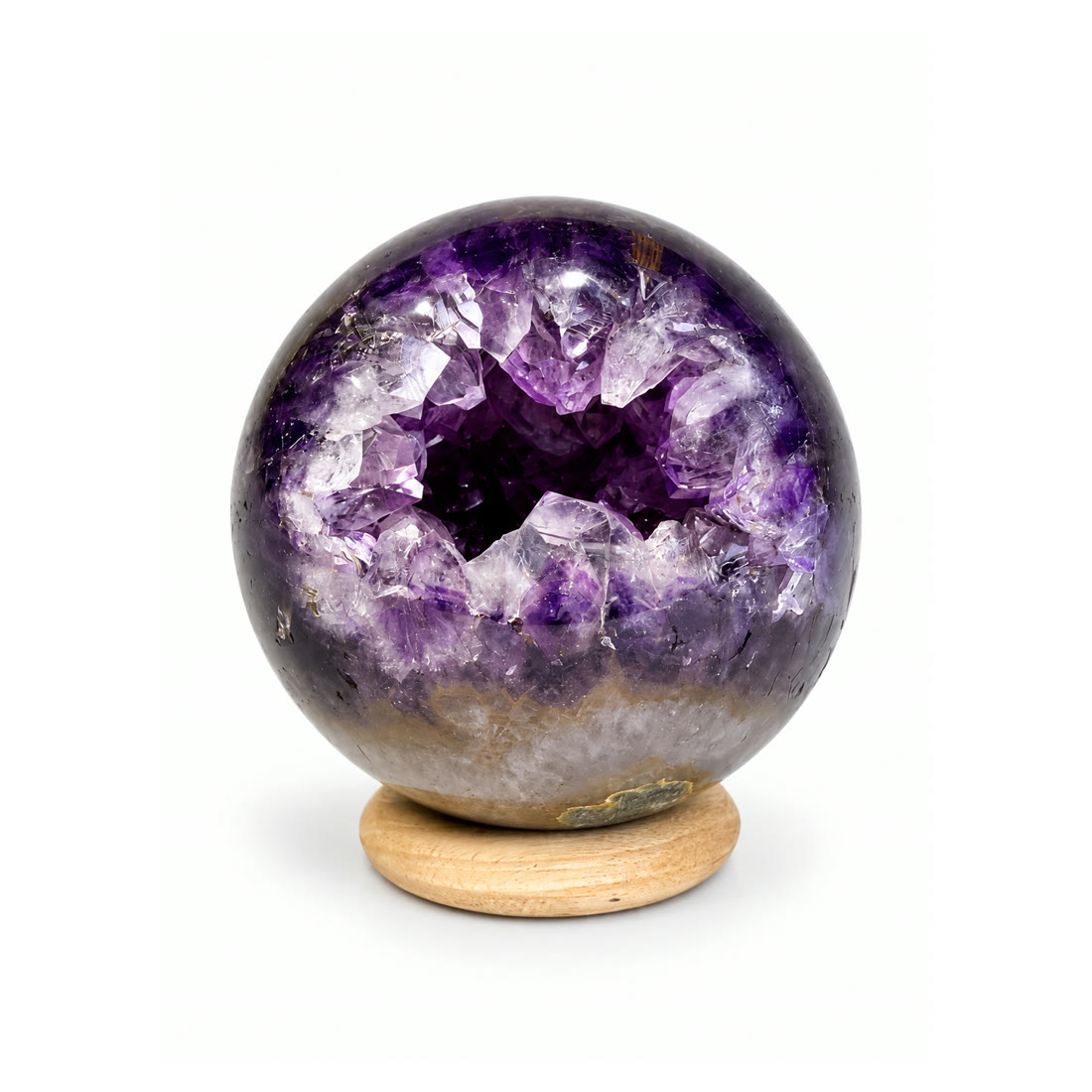
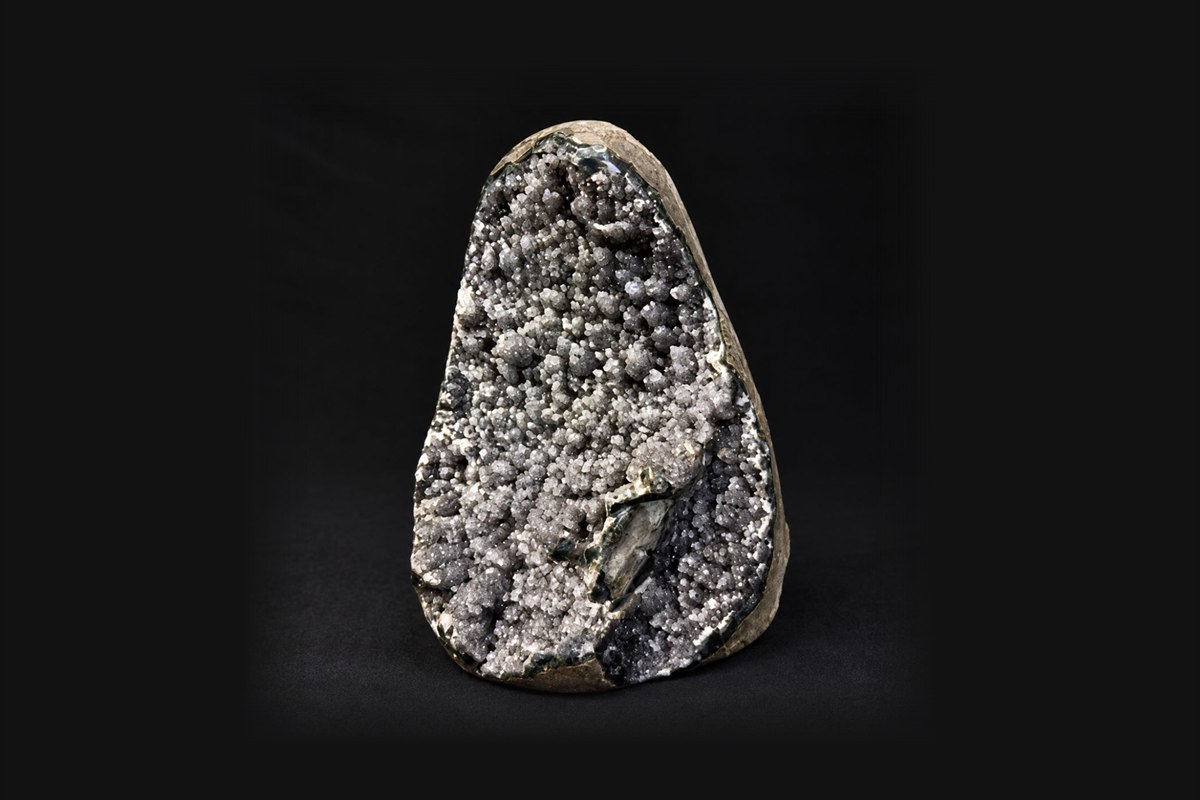
    A polished amethyst sphere opened around a natural crystal pocket

    Step 8: Open One Sales Channel to Start Your Crystal Business

    Start with one and do it properly. For instance, a marketplace gives you existing traffic and takes a fee and your customer relationship. In contrast, your own store gives you margin, data and the customer, and requires you to generate traffic. Finally, live selling gives you the strongest format for unique pieces and demands a schedule you can hold. Running three badly beats none, but only just. See How to Sell Crystals Online.

    Step 9: Solve Packing and Shipping Before Your First Sale

    Crystals are brittle and heavy, and that combination is what generates claims. Sort this out before you need it:

    • Individual wrapping, foam or bubble isolation between pieces, double-boxing for mid-size items
    • Crates with internal bracing for anything large
    • Packing materials bought in advance: running out mid-order is how corners get cut
    • Shipping quoted by dimensional weight, not just actual weight
    • Insurance on anything valuable, and a written breakage policy of your own
    • Photographs of each outgoing package, which resolve claims in your favour

    Step 10: Manage Cash Flow and Reorders

    Inventory is where the cash is, and in this category it is heavy, expensive to hold and slow to liquidate if you buy wrong.

    • Track sell-through by tier, not just by SKU. If volume turns and mid-tier does not, fix the mid-tier selection, not the total budget.
    • Set reorder points on your slowest lane. If replenishment arrives by ocean freight, your trigger sits weeks ahead of the stockout. In other words, most stockouts in this trade are calendar failures, not demand surprises.
    • Buy Q4 in Q3. Gift-driven demand concentrates late in the year, which means the buying decision happens earlier than feels natural when freight is slow.
    • Keep a cash reserve separate from inventory. A business with all its capital in stone cannot take the opportunity when a good lot appears.

    Five Mistakes to Avoid When You Start a Crystal Business

    1. Buying only the cheapest tier. Percentage margin looks fine, but dollar contribution is too small to pay for anything.
    2. Buying deep before testing. Depth on an untested SKU converts cash into shelf-warmers.
    3. Pricing from the invoice. Freight, duties and breakage are real costs, and ignoring them prices you into a loss.
    4. Over-editing photographs. Wins the first sale, loses the customer and generates returns on heavy goods where return shipping hurts.
    5. Making health claims. Unsubstantiable, and a real regulatory exposure in the United States. Instead, sell the stone.

    A Realistic First 90 Days After You Start a Crystal Business

    WeeksFocus
    1-2Model, customer definition, business registration, EIN, state permit
    3-4Resale certificate; shortlist suppliers; request videos and quotes
    5-6Deliberately small first order, shipped fast; build listing template and photo setup
    7-8Receive, inspect against spec, photograph, list, price from landed cost
    9-12Sell, record sell-through by tier, then place a second order shaped by what actually moved

    In short, the second order is the real beginning. The first one is tuition.

    When You Are Ready to Buy at Origin

    Once you have sell-through data and know which tiers move, buying closer to origin is the largest single lever on your margin: it is a sourcing decision, not a selling one. CS Minerals is a Brazilian origin supplier of crystals, minerals and natural stones working with wholesale buyers in the United States.

    If you are earlier than that, join the CS Minerals wholesale list to see availability and live sales as you build: no order required.

    Related reading: How Much Money Do I Need to Start a Crystal Business? and Are Crystals Worth Any Money?

    How to Start a Crystal Business: Frequently Asked Questions

    Start with one channel and a domestic supplier rather than an import, so your first mistakes are cheap and fast to correct. Define your customer before buying anything, buy shallow and wide across all four price tiers, and treat your first order as information rather than inventory. The second order (shaped by what actually sold) is where the business really starts.

    No crystal-specific license exists in the United States. You generally need a registered business, an EIN, a state seller’s permit to collect sales tax, and a resale certificate to buy wholesale: plus any city or county business license. Requirements vary; confirm with your state revenue authority. This is general information, not legal advice.

    Weight your first buy toward recurring, broadly recognised categories (quartz varieties, amethyst, agate and polished decorative goods) spread across all four price tiers rather than concentrated in the cheapest. Avoid depth on anything untested, and include one statement piece for identity even if it is your largest single line item.

    Profitability depends on where you buy in the chain, how your assortment is weighted, how well you present material and how fast inventory turns, so no general figure applies. Structurally, the biggest levers are sourcing closer to origin and weighting the mid tier rather than the cheapest tier. See Are Crystals Worth Any Money?

    Yes, and many do. Online and live selling need storage and a photography setup rather than a storefront. Check whether your city or county requires a home occupation permit, and plan storage realistically: stone is dense, and a modest inventory by piece count can be heavy enough to matter.

    Enough to cover all four price tiers and to make a display or a broadcast look intentional, not enough to have depth on any single untested SKU. The right measure is coverage across tiers, not total units. Depth comes after you have sell-through data.

    About CS Minerals

    CS Minerals is a Brazilian supplier of crystals, minerals and natural stones serving wholesale buyers, retailers and professional buyers in the United States. The company combines Brazilian sourcing, product curation, live selling and international logistics to connect buyers with Brazilian stones and minerals.

    Written by the CS Minerals Wholesale Team · Last updated
    General business information, not legal, tax or financial advice, and not a representation that any business will produce a particular result. Confirm licensing and tax obligations with your state authority and a qualified professional. Trade show dates change: confirm with the organizer.

  • Do I Need a License to Sell Crystals?

    Do I Need a License to Sell Crystals?

    Quick answer: No, you do not need a special license to sell crystals in the United States. The same rules apply to crystals as to any other retail goods. In practice that usually means three things: registering a business, getting a seller’s permit (also called a sales tax permit) from your state so you can collect sales tax, and obtaining a resale certificate, which is what wholesalers ask for before opening an account and what lets you buy inventory without paying sales tax on it.

    States and local governments set the requirements, and they vary. If you import directly you also take on importer-of-record obligations. And there is one rule that catches crystal sellers specifically and is not about licensing at all: health and medical claims. Selling a stone is unregulated; claiming it treats a condition is not.

    This is general information, not legal or tax advice. Requirements depend on your state, your county, your city and how you sell. Confirm with your state revenue authority and, for anything structural, with an attorney or CPA in your state.

    You Do Not Need a Special License to Sell Crystals

    Crystals, mineral specimens and decorative natural stone are ordinary retail merchandise. No US federal or state agency issues a special license to sell crystals, and you need no professional qualification to trade them. There is no equivalent of a liquor license or a firearms dealer license here.

    What applies instead is the general framework for selling goods: business registration, sales tax collection, and consumer protection rules about how you describe what you are selling. The rest of this article covers those in order.

    What You Actually Need Instead of a License to Sell Crystals

    Business registration

    You will generally register a business entity or operate as a sole proprietor. An LLC is a common choice for retail because it separates business liability from personal assets, but the right structure depends on your circumstances and tax position: this is the one item genuinely worth a conversation with a CPA before deciding.

    An EIN

    The IRS issues an Employer Identification Number, and it is free to obtain. Sole proprietors with no employees can often use their Social Security number instead, but you usually need an EIN for a business bank account, and for commercial importing.

    A seller’s permit / sales tax permit

    Your state’s revenue department issues it. This is what registers you to collect and remit sales tax on taxable retail sales. Most states require it before you begin selling, and the name varies by state: seller’s permit, sales and use tax permit, sales tax license, certificate of authority. Same function.

    A resale certificate

    The document that lets you buy inventory without paying sales tax on it, on the basis that tax will be collected when you sell it to the end customer. In most states, you receive it off the back of your sales tax registration. This is also the document wholesalers ask for: see below.

    A local business license to sell crystals in your city

    Many cities and counties require their own general business license or tax registration independent of the state. If you operate from home, some jurisdictions also require a home occupation permit. These are easy to overlook because they are local and rarely mentioned in national guides.

    A DBA, if you trade under a different name

    If your trading name differs from your registered legal name, you generally need a “doing business as” registration at state or county level.

    The Resale Certificate: Why Wholesalers Ask for It

    Most wholesale suppliers sell only to businesses, and will ask for a resale certificate or equivalent documentation before opening an account. Two reasons, and both are practical rather than gatekeeping:

    1. Tax. A wholesale sale is exempt from sales tax because tax is collected downstream at retail. The supplier needs your certificate on file to document why they did not charge you tax.
    2. Channel integrity. Wholesale pricing exists for resellers. A supplier selling at wholesale to consumers is undercutting the retailers who are its actual customers.

    So the practical sequence for a new seller is: register the business, get the state sales tax registration, obtain the resale certificate, then apply for wholesale accounts. Applying before you have the certificate is the most common reason a wholesale application stalls.

    Do You Need a License to Sell Imported Crystals?

    You need no special license, but buying from an overseas supplier adds a separate set of obligations, which sit with you rather than with the supplier unless you buy on DDP terms.

    • You become the importer of record: legally responsible for correctly classifying the goods and paying duties owed.
    • Classification matters. Crystals and stones do not have one tariff line. Classification depends on how worked the material is (unworked, simply sawn, or finished into articles) and the rate follows the classification, not the product’s marketing name.
    • Duty treatment changes. Rates applying to goods of Brazilian origin have changed more than once in recent years. Verify the current rate for your specific tariff line at the time you order rather than relying on an older figure.
    • Use a customs broker on the first shipment. The fee is small against the cost of a misclassification that then repeats on every subsequent import. For a recurring SKU, consider requesting a binding ruling so the classification is settled before volume builds.
    • Ask your supplier for legal origin and export documentation. Legitimate exporters issue commercial invoices as a matter of course, because customs requires them.

    Primary sources: the USITC Harmonized Tariff Schedule for classification, and US Customs and Border Protection for import procedures.

    The Rule That Matters More Than Any License to Sell Crystals: Health Claims

    This is the most consequential compliance issue in this category, and it has nothing to do with licensing.

    Selling a mineral specimen is unregulated commerce. Claiming that it treats, cures, prevents or alleviates a disease or medical condition moves you into territory regulated by the Federal Trade Commission (which requires that objective product claims be substantiated) and potentially the Food and Drug Administration, depending on how the product is presented. Disease-treatment claims about a physical object are not substantiable, so the safe position is not to make them.

    What this means in practice:

    RiskySafer
    “Relieves anxiety and lowers blood pressure”Describe the stone: species, origin, size, colour, formation
    “Cures insomnia”Describe the traditional or cultural association, framed as such
    “Boosts immunity”No health framing at all
    Customer testimonials describing medical improvementTestimonials about the object: appearance, quality, service
    “Doctor recommended”, “clinically proven”Nothing implying clinical endorsement

    Note that a testimonial does not reduce your exposure: a claim made in a review you publish and endorse on your own storefront can be treated as your claim.

    One thing to watch on the supply side: if a wholesale supplier’s own catalog is full of healing and medical claims, they are handing you copy you should not reuse. Descriptive, factual product information is the safer input, and it is also better commercial copy for a B2B buyer.

    Other Product Compliance Worth Knowing

    • Treatment disclosure. Heat-treated citrine, dyed agate and coated aura quartz are standard, accepted trade practice, but if you resell treated material as natural, the misdescription is yours. Get treatment status in writing from your supplier and pass it on.
    • Glass sold as crystal. “K9 crystal”, cherry quartz, opalite, goldstone and most blue or green “obsidian” are manufactured glass, not mineral. Selling them is perfectly legitimate; describing them as natural stone is not.
    • California Proposition 65. Some mineral and metal-bearing materials can trigger warning requirements for products sold into California. Worth checking if you sell there at volume.
    • Products marketed to children. If you market items to children, federal children’s product safety rules (including testing and certification requirements) may apply. Small tumbled stones marketed as toys are a different regulatory category from the same stones sold as decor.
    • Sanctions and restricted origins. Some countries’ mineral exports are subject to restrictions or heightened diligence. Ask your supplier for origin documentation as a matter of routine.

    Do You Need a License to Sell Crystals at Markets, Fairs and Online?

    • Temporary and mobile selling. Many states issue temporary seller’s permits for craft fairs, festivals and markets, and some events require you to show your permit before you can set up.
    • Online marketplace sales. Under marketplace facilitator rules, large platforms generally collect and remit sales tax on your behalf for sales made through them. That does not remove your own registration obligations for sales made through your own website or in person.
    • Selling across state lines. Economic nexus rules mean you can acquire a sales tax obligation in a state you have never physically been to, once sales into it pass a threshold. Thresholds vary by state. This is the part most growing online sellers discover late.

    Checklist: Every License and Permit You Need to Sell Crystals

    1. Choose and register a business structure (talk to a CPA if you are unsure)
    2. Obtain an EIN from the IRS
    3. Register for a seller’s permit / sales tax permit with your state
    4. Obtain your resale certificate
    5. Check city and county business license and home occupation requirements
    6. Register a DBA if trading under a different name
    7. Open a business bank account
    8. Apply for wholesale accounts, with the resale certificate ready
    9. If importing: get an EIN, engage a customs broker, confirm HTS classification
    10. Write product copy that describes the stone and makes no health claims
    11. Get treatment status in writing for every lot, and disclose it downstream

    Next steps: How to Start a Crystal Business and How to Buy Crystals Wholesale.

    Do I Need a License to Sell Crystals? Frequently Asked Questions

    Not a crystal-specific license: no such thing exists in the United States. You generally need a registered business, a seller’s permit or sales tax permit from your state so you can collect sales tax, and a resale certificate to buy inventory tax-free. Many cities and counties also require their own general business license. Requirements vary by location; confirm with your state revenue authority.

    Usually yes. Most wholesale suppliers require it before opening an account, both to document why they did not charge you sales tax and to keep wholesale pricing within the reseller channel. In most states the certificate follows from your sales tax registration, so register with the state first, then apply for wholesale accounts.

    Occasional personal sales of your own possessions are different from operating a business, but once you are buying inventory to resell you are trading, and registration and sales tax obligations generally apply. Selling without them also blocks you from wholesale accounts, since suppliers require the documentation.

    Describing traditional or cultural associations is common practice, but claims that a stone treats, cures or prevents a disease or medical condition are objective health claims, which US advertising rules require to be substantiated, and which cannot be substantiated for a decorative object. The safe position is to describe the stone factually and make no health or medical claims. Customer testimonials describing medical improvement can be treated as your claims too.

    No import license is required for ordinary mineral specimens, but you become the importer of record, responsible for correct tariff classification and any duties owed. Classification depends on how worked the material is, and duty treatment on goods from some origins has changed in recent years. Work with a licensed customs broker on your first shipment and verify current rates for your specific tariff line.

    Generally yes on taxable retail sales in states where you are registered, which is what the seller’s permit is for. Large online marketplaces usually collect and remit on sales made through their platforms, but that does not cover your own website or in-person sales. Economic nexus rules can also create obligations in states you have no physical presence in once sales pass a threshold.

    Sourcing Your Inventory

    Once your resale certificate is in hand, you can open wholesale accounts. Request wholesale access to CS Minerals for Brazilian crystals, minerals and natural stones, with treatment status disclosed per lot.

    About CS Minerals

    CS Minerals is a Brazilian supplier of crystals, minerals and natural stones serving wholesale buyers, retailers and professional buyers in the United States. The company combines Brazilian sourcing, product curation, live selling and international logistics to connect buyers with Brazilian stones and minerals.

    Written by the CS Minerals Wholesale Team · Last updated
    General information only, not legal, tax or customs advice. Licensing, permit and sales tax requirements are set at state and local level and change. Confirm your own obligations with your state revenue authority and a qualified attorney or CPA in your state, and confirm import requirements with a licensed customs broker. CS Minerals sells natural stone and decorative objects and makes no health or therapeutic claims.
  • Are Crystals Worth Any Money?

    Are Crystals Worth Any Money?

    Quick answer: Most crystals are worth very little money, and a small minority are worth a great deal. Quartz is one of the most abundant minerals in the Earth’s continental crust and common amethyst is mined in quantity in Brazil, Uruguay and Zambia, which is why ordinary tumbled stones are inexpensive commodities. Instead, value concentrates in rarity, colour quality, size, integrity and provenance.

    On the business question: yes, money is made selling crystals, but not from the stones appreciating. It comes from a sourcing advantage, curation, presentation and an audience, the same places margin comes from in any product business. Crystals are not a standardised, liquid asset class, and this article explains specifically why not.

    What Makes Crystals Worth Real Money

    Eight drivers, roughly in order of how much they move price:

    1. Rarity of the species. Abundance sets the floor. Quartz and common amethyst are genuinely plentiful; fine tourmaline, alexandrite and imperial topaz are not. No amount of presentation closes that gap.
    2. Colour quality. Within one species, saturation and evenness of colour is often the single largest multiplier. For example, deep, evenly coloured amethyst and pale patchy amethyst are the same mineral at very different prices.
    3. Size, especially intact size. Price per kilogram usually rises with piece size, because large undamaged formations are disproportionately rare. A 200 kg cathedral is not ten times a 20 kg one.
    4. Integrity. Fractures, chips, broken terminations, repaired bases and glued matrix all reduce value substantially, and they are also the flaws sellers most often hide in photographs.
    5. Formation and aesthetics. Termination quality, symmetry, contrast against matrix, and whether the piece stands unaided.
    6. Treatment status. Generally, natural material commands a premium over treated. Heat-treated citrine and dyed agate are standard, accepted trade practice, and they price as treated material, which is precisely why disclosure matters.
    7. Locality and provenance. For collectors, a specimen from a documented and now-exhausted locality can be worth multiples of visually identical material of unknown origin.
    8. Finish quality. For worked goods: polish, symmetry and base cut, which are labour, not geology.

    Which Crystals Are Worth the Most Money

    The gap between “a crystal” and “a valuable crystal” is enormous. At the top of the Brazilian range:

    MaterialWhy it commands a premium
    Paraíba tourmalineCopper-bearing elbaite with a distinctive neon blue-green colour, first found in the 1980s at São José da Batalha in Paraíba. Widely regarded as among the most expensive gemstones per carat in the world
    Fine alexandriteColour-change chrysoberyl; Brazilian material from Minas Gerais gained a strong reputation. Extremely rare in fine quality
    Imperial topazThe Ouro Preto district in Minas Gerais is its main commercial source worldwide, which is unusually concentrated for a gem material
    Fine emerald and aquamarineTop-colour, high-clarity material in larger sizes is scarce at any origin
    Exceptional specimensLarge, undamaged, well-formed pieces with documented locality: valued as specimens rather than as gem rough

    And at the other end: tumbled stones, small polished points, chips and common cluster material are inexpensive by the kilogram because supply is abundant. That is not a criticism. After all, a retail business needs those goods. It just means they do not store much value. More detail in What Is the Most Expensive Gemstone in Brazil?

    Are Crystals Worth Money as an Investment?

    Treat this carefully, because the honest answer is not the one most content on this subject gives.

    Crystals and mineral specimens are not a standardised asset class, and four specific things follow from that:

    • No standardised grading. Unlike diamonds, decorative mineral specimens have no general certification scheme. There is no independent grade you can quote to a future buyer. Laboratory reports exist for cut gemstones and do carry weight, but that is a different market from specimens and decor.
    • Thin liquidity. The price a fine specimen realises depends on finding the specific buyer who wants that specific piece. That buyer may not exist this month.
    • A wide spread. The difference between what a dealer pays and what a dealer charges is large, which means a piece bought at retail generally has to appreciate substantially before reselling breaks even.
    • New supply. A new find can change the price of a material quickly. That is a real risk in minerals in a way it is not in most collectibles.

    People do hold fine specimens for many years and realise gains, and the very top of the market has genuine collector depth. But it behaves like collecting (expertise, patience, relationships and access) not like a savings instrument. In short, anyone presenting crystals as a reliable store of value is selling something.

    Can You Make Money Selling Crystals?

    Yes, and the margin comes from the business, not from the stones. Four things determine whether a crystal business earns:

    1. Where you buy in the chain

    A stone can pass through miner, local dealer, exporter, importer and distributor before reaching a retailer, and each step adds margin. Where you enter that chain mostly determines your unit cost, not how hard you negotiate. This is the largest single lever available to a retailer, and it is a sourcing decision, not a selling one. See How Much Are Crystals Wholesale?

    2. Your product mix

    Stores concentrated in the cheapest tier get traffic and no margin. In contrast, the mid tier (clusters, towers, spheres, mid-size polished goods) is where the gross profit actually sits. Statement pieces earn partly by bringing people through the door rather than by turning quickly.

    3. Presentation and audience

    Two retailers selling identical material at identical cost can realise very different prices, because photography, display, description and trust support a price. In this category presentation is not decoration; it is a material part of what the customer is buying, since they cannot assess the stone technically.

    4. Turn rate

    A 70% margin on stock that moves once a year is worse than a 45% margin on stock that moves monthly. Crystal inventory is heavy, capital-intensive and easy to over-buy. Most crystal businesses that struggle are not struggling on margin percentage: they are struggling because capital is sitting on shelves.

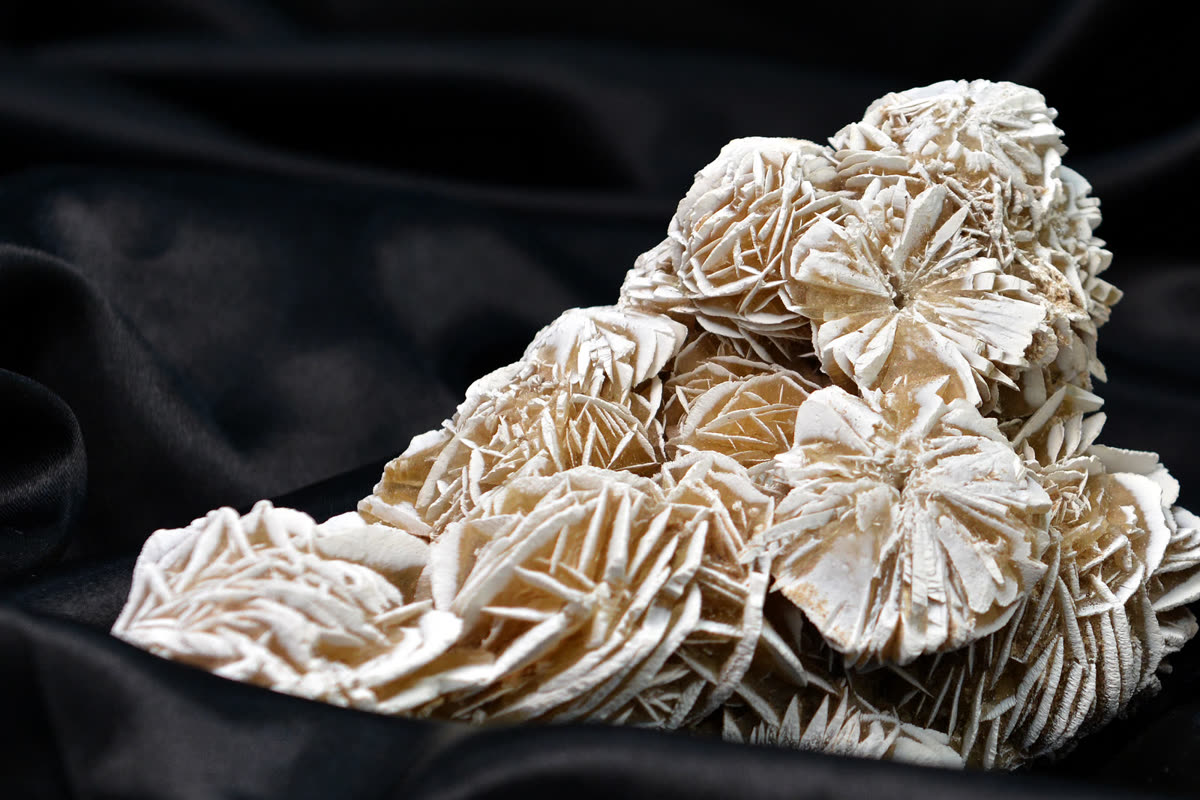
    Desert rose crystal cluster on black fabric, an inexpensive stone worth little money compared with rare gem crystals

    The Honest Risks: When Crystals Are Not Worth the Money

    • The low end is crowded. A very large number of sellers offer tumbled stones and small polished pieces at thin margins.
    • Unique inventory is operationally expensive. You must photograph, measure, weigh, describe and list every one-of-a-kind piece individually. That per-unit labour is why cheap unique pieces often are not worth listing.
    • Freight and breakage are structural, not incidental. Stone is dense and brittle. As a result, both costs are permanent features of the category.
    • Capital gets stuck. Over-buying is the most common failure, and heavy goods are expensive to hold and to move on.
    • Compliance exposure on claims. Marketing crystals with health or medical claims creates real regulatory risk in the United States (see the FTC Health Products Compliance Guidance). Sell the stone, not a treatment. See Do I Need a License to Sell Crystals?

    How to Judge Whether Crystals Are Worth the Money Asked

    1. Identify the species and treatment status in writing before anything else.
    2. Compare against realised sales, not asking prices. What pieces list for and what they sell for are different numbers.
    3. Inspect integrity properly: ask for video in ordinary daylight, and specifically for the base and the reverse.
    4. Get exact weight and dimensions. “Large” is not a measurement, and on heavy pieces weight is also a freight cost.
    5. Ask what it would take to source another. If the answer is “easily”, it is not a scarce piece, whatever the listing says.
    6. Discount for anything undisclosed. A seller who will not state treatment status has told you how to price the risk.

    Where CS Minerals Fits

    CS Minerals is a Brazilian origin supplier, which is relevant to exactly one of the four levers above: the first, and the largest. Buying closer to origin is what gives a retailer room to price to their market rather than compete against everyone working from the same domestic catalog.

    We are not going to tell you crystals are an investment, because they are not a standardised one. What we will do is quote Brazilian material on stated terms with treatment status disclosed, so the arithmetic in How to Price Crystals to Sell is possible to run before you commit.

    How Much Money Crystals Are Worth to a Buyer Versus a Seller

    The same stone carries two different numbers, and confusing them is where most disappointment comes from. To a seller it is worth the landed cost plus whatever the market will carry. To a buyer, however, it is worth whatever the piece does in the room it ends up in.

    That gap is why crystals are rarely worth the same money at resale as at retail. A customer who paid two hundred dollars for a cathedral bought the object and the moment of choosing it, and neither transfers to the next buyer.

    For a business, the useful test is not what a piece might fetch one day. It is whether it sells at your price within a season, because inventory that does not turn is capital you already spent.

    Are Crystals Worth Money? Frequently Asked Questions

    Most are worth little, because the common species are genuinely abundant: quartz is one of the most common minerals in the Earth’s continental crust. Value concentrates in rarity, colour quality, size, integrity, provenance and finish. A tumbled amethyst and a fine untreated Paraíba tourmaline are both “crystals” and are separated by several orders of magnitude in price.

    Yes, but from the business rather than from the stones appreciating. The determinants are where you buy in the chain from mine to retailer, how your assortment is weighted across price tiers, how well you present and describe material, and how fast your inventory turns. No honest figure for earnings applies generally, because all four vary by operation.

    They do not behave like a standardised investment. Decorative mineral specimens have no general certification scheme, liquidity is thin because a sale depends on finding the specific buyer for that specific piece, the dealer spread is wide, and a new find can move the price of a material quickly. Fine specimens are collected successfully over long horizons, but that is collecting (expertise, patience and access) not a savings instrument. This is general information, not investment advice.

    Paraíba tourmaline is the strongest answer: a copper-bearing elbaite with a distinctive neon blue-green colour, first found in the 1980s at São José da Batalha in Paraíba, and widely regarded as among the most expensive gemstones per carat in the world. Fine alexandrite and imperial topaz from Minas Gerais also sit at the top of the Brazilian range.

    Because the supply is genuinely large. Common amethyst is mined in quantity in Brazil, Uruguay and Zambia, and quartz is abundant worldwide. Low price on ordinary tumbled or polished material usually reflects real abundance rather than anything being wrong with the stone: though some very cheap “crystal” is glass rather than mineral, which is a separate issue of disclosure.

    Common material generally does not, because it can be replaced easily and cheaply. Exceptional material (large, undamaged, well-coloured, with documented locality) holds value better, because it cannot. The determining question for any piece is how hard it would be to source another like it.

    Request Wholesale Access

    Building a crystal business? The largest lever is where you buy. Request wholesale access to CS Minerals for Brazilian material quoted on stated terms.

    About CS Minerals

    CS Minerals is a Brazilian supplier of crystals, minerals and natural stones serving wholesale buyers, retailers and professional buyers in the United States. The company combines Brazilian sourcing, product curation, live selling and international logistics to connect buyers with Brazilian stones and minerals.

    Written by the CS Minerals Wholesale Team · Last updated
    General commercial information. Not investment, financial, tax or legal advice, and not a representation that any business or purchase will produce a particular result. Crystals are sold here as natural stone and decorative objects; no health or therapeutic claims are made.

  • How Much Are Crystals Wholesale?

    How Much Are Crystals Wholesale?

    Quick answer: How much crystals cost wholesale depends first on the pricing basis: per kilogram for rough and bulk material, per piece for individual and unique items, and per lot for mixed assortments. Within each basis, price is then driven by species, colour saturation, clarity and integrity, size, formation and finish quality, whether the material has been treated, and how close to the mine you are buying.

    Anyone quoting you a single number for “wholesale crystals” is quoting a grade you have not seen. In fact, the same species can differ by more than an order of magnitude between mine-run and specimen grade. What you can do (and what this article shows you how to do) is read a quote properly, normalise two quotes so they are actually comparable, and calculate what the material will really cost you on the shelf.

    The Three Ways Wholesale Crystals Are Priced

    BasisUsed forWhat you are really buyingMain risk
    Per kilogramRough, tumbled, chips, bulk points, jewelry roughWeight, with quality expressed as a grade bandPaying for weight you cannot sell
    Per pieceClusters, towers, cathedrals, specimens, unique itemsThat specific stone and nothing elseJudging a piece you have not held
    Per lotMixed assortments, flats, trays, live-sale bundlesAn average, not a selectionThe good pieces in the photo are not representative

    Mixing the bases up is the first place money leaks. For example, a per-kilogram quote on unsorted material and a per-kilogram quote on graded material describe different products at the same unit of measure. Before comparing, ask what percentage of the lot the supplier expects to be retail-sellable, and expect an answer drawn from experience, not optimism.

    Seven Variables That Decide How Much Crystals Cost Wholesale

    1. Species. Abundance sets the floor. Quartz is one of the most common minerals in the Earth’s continental crust, and common amethyst is mined in quantity in Brazil, Uruguay and Zambia, which is why both are inexpensive at ordinary grades. Tourmaline, fine beryl and imperial topaz sit in an entirely different bracket because the geology that produces them is rarer.
    2. Colour saturation and evenness. Within a species this is often the single biggest multiplier. Deep, evenly distributed colour commands a large premium over pale or patchy material of identical size.
    3. Clarity and integrity. Fractures, chips, healed breaks, missing points and repaired bases all reduce value, and they are also easy to hide in photographs.
    4. Size. Price per kilogram usually rises with piece size, because large intact formations are disproportionately rare. A 200 kg cathedral is not ten times a 20 kg cathedral.
    5. Formation and finish. For specimens: crystal termination quality, matrix, and whether the piece stands unaided. For worked goods: symmetry, polish quality and base cut.
    6. Treatment status. Generally, natural material commands a premium over treated. Heat-treated citrine and dyed agate are standard, accepted practice, and they price differently from untreated stone, which is exactly why disclosure matters.
    7. Distance from the mine. See below: this is the variable buyers most often overlook, and the one they have the most control over.

    The Markup Ladder: Why the Same Stone Has Five Prices

    A crystal can pass through several hands before it reaches a US shelf, and each step adds a margin. Understanding the ladder tells you what you are actually buying when you choose a channel.

    StepWhoWhat they add
    1Mine or minerExtraction. Material is unsorted and unwashed
    2Local dealer / cutting centerSorting, washing, cutting, polishing, grading
    3Exporter in the producing countrySelection, export documentation, consolidation, freight
    4Importer / distributor in the destination countryImport risk, duties, warehousing, domestic breakdown into small orders
    5RetailerDisplay, curation, customer acquisition, retail margin

    Every step is doing real work: none of this is waste. But it means your unit cost is determined mostly by where you enter the ladder, not by how hard you negotiate. A retailer buying at step 4 and a retailer buying at step 3 are not going to close the gap through negotiation; they are in different positions in the chain.

    It also means the honest trade-off is visible: entering at step 3 buys you a lower unit cost and hands you freight, customs, lead time and a larger minimum. Entering at step 4 buys you speed and small orders at a higher unit cost. The comparison is laid out in How to Buy Crystals Wholesale.

    Why Suppliers Do Not Publish Price Lists for Unique Pieces

    Buyers sometimes read the absence of a public price list as evasion. In most cases, however, it is structural: a unique piece is a SKU with a quantity of one. Its price reflects that individual stone’s colour, size, integrity and stance, none of which generalise to the next one. A supplier would have to rewrite a published list every time a piece sold.

    Repeatable goods, on the other hand, are different. Polished items cut to specification (spheres, towers, bowls, bookends) can and often do carry list pricing by size band, because the next unit really is comparable to the last one.

    So the reasonable expectation is: list pricing for repeatable SKUs, quotes for unique pieces. A supplier refusing to quote in writing at all is a different matter. That is a red flag, not a business model.

    Large Brazilian amethyst heart with a calcite formation at its centre, held in one hand: a unique piece that wholesale crystals suppliers price individually

    What a Wholesale Crystals Quote Must Contain

    • The commercial term: FOB, CIF or DDP. This moves your landed cost more than the unit price does, and two quotes on different terms are not comparable numbers.
    • The grade, in the supplier’s own stated language, and what that language means.
    • Size range or exact dimensions, numerically.
    • Treatment status.
    • Whether packing is included or billed.
    • The MOQ basis: value, weight or piece count, and per SKU or per order.
    • Lead time, separated into preparation and transit.
    • Validity period. Stone prices move with exchange rates and freight; a quote without an expiry is not a commitment.

    How to Compare Two Quotes Properly

    Three normalisations, in this order. Skipping any of them makes the cheaper quote look better than it is.

    1. Normalise the term. Convert both to landed cost at your door. A FOB quote and a DDP quote are separated by freight, duty, insurance, broker fees and inland delivery: often enough to invert the ranking.
    2. Normalise the grade. Ask both suppliers for photographs or video of material at the grade they quoted. If one is showing you better stone, you do not have two quotes for the same thing.
    3. Normalise sellable yield. Divide by the units you can actually retail, not the units shipped. A lower price per kilogram with a 40% reject rate loses to a higher price with a 5% reject rate.

    Landed cost per sellable unit =

    ( product cost + international freight + duties and customs fees + insurance + packing, if billed + broker fees + inland freight + breakage allowance ) ÷ units you can actually sell

    Note the two line items buyers skip. Breakage is real in a category where the goods are brittle and heavy: carry an allowance rather than assuming zero. And duties depend on how worked the material is; classification follows the tariff schedule, not the marketing name, and duty treatment on goods of Brazilian origin has changed more than once in recent years. Confirm the current rate for your specific tariff line in the USITC Harmonized Tariff Schedule and with a licensed customs broker before you commit.

    Where the Money Actually Leaks

    • Buying weight instead of sell-through. Cheap tonnage that sits is more expensive than fewer pieces that turn.
    • Ignoring freight on low-value heavy material. Stone is dense. On the cheapest goods, freight can exceed the cost of the goods themselves.
    • Comparing unit prices across different terms. The single most common error in this category.
    • Assuming zero breakage. It is never zero.
    • Buying only the cheapest tier. High traffic, no margin: the failure pattern described in How to Buy Crystals Wholesale.
    • Paying step-4 prices for step-3 risk. If you are handling the import yourself, you should be buying at origin pricing. If you are paying distributor pricing, you should be getting distributor speed.

    How to Get a Real Price on Wholesale Crystals

    Because price depends on grade, size, quantity, treatment and terms, a usable quote requires you to specify those. Come to a supplier with: species, approximate quantity or weight, size range, intended use (retail bin, mid-tier display, statement piece), your preferred term, and your destination. With those six inputs, a supplier can then quote in a single exchange. Otherwise, you will get a range wide enough to be useless.

    CS Minerals quotes Brazilian material (amethyst, quartz, agate, tourmaline, beryls and Brazilian decorative stone) to wholesale buyers in the United States on stated terms, so landed cost can be calculated rather than guessed at.

    Related reading: How to Price Crystals to Sell and Are Crystals Worth Any Money?

    Frequently Asked Questions

    There is no single figure, because price depends on species, grade, size, treatment status and where in the supply chain you buy. Bulk material is priced per kilogram, individual and unique pieces per piece, and mixed assortments per lot. Within one species, mine-run and specimen grade can differ by more than an order of magnitude. To get a usable number, specify species, quantity, size range, intended use and commercial term.

    Three reasons, usually all at once: the suppliers are at different steps in the chain from mine to retailer, they are quoting different grades under similar-sounding descriptions, and they are quoting on different commercial terms (FOB, CIF or DDP). Normalise all three before concluding one is cheaper.

    Per kilogram, yes. Per sellable unit, not necessarily. Bulk lots are often unsorted, so part of the weight is material you cannot retail, and stone is dense enough that freight on low-value heavy goods can exceed the cost of the goods. Establish whether a lot is mine run or graded, and what share the supplier expects to be sellable, before comparing.

    Usually for repeatable goods and rarely for unique pieces. Polished items cut to specification can carry list pricing by size band because each unit is comparable to the last. A one-of-a-kind cathedral is a SKU with a quantity of one, and its price reflects that individual stone, so it is quoted, not listed. A supplier who will not quote in writing at all is a different concern.

    Rather than judging their margin, judge your landed cost against what you can retail the piece for. A supplier at origin with a healthy margin can still deliver you a lower landed cost than a domestic distributor with a thin one, because they sit earlier in the chain. Compare landed cost per sellable unit, not the other party’s markup.

    Add product cost, international freight, duties and customs fees, insurance, packing if billed, broker fees, inland freight and a breakage allowance, then divide by the number of units you can actually sell. That figure (landed cost per sellable unit) is the only number that belongs in your retail pricing.

    A quote, in almost every case. A price list describes a catalogue, while a quote describes your order: the grades you asked for, the quantities you need, the terms and the destination. For one of a kind material a list cannot exist, because each piece is priced on its own merits.

    Request a Wholesale Quote

    Need a real number for your own order? Request wholesale access to CS Minerals with your species, quantity, size range and destination, and we will quote on stated terms.

    About CS Minerals

    CS Minerals is a Brazilian supplier of crystals, minerals and natural stones serving wholesale buyers, retailers and professional buyers in the United States. The company combines Brazilian sourcing, product curation, live selling and international logistics to connect buyers with Brazilian stones and minerals.

    Written by the CS Minerals Wholesale Team · Last updated
    General commercial information, not customs, tax or legal advice. Tariff classifications and duty rates change: confirm current rates with a licensed customs broker.

  • How to Price Crystals to Sell

    How to Price Crystals to Sell

    Quick answer: To price crystals to sell at a profit, start from landed cost per sellable unit, not from the invoice price. Landed cost includes freight, duties, insurance, packing, broker fees, inland delivery and a breakage allowance, divided by the units you can actually sell. Then apply your markup to that number.

    Two things then diverge. You price repeatable goods (tumbled stones, spheres, towers cut to specification) cost-up, because you can reorder them and the market sets a comparable price. You cannot price unique pieces cost-up in any meaningful way, because there is no next one: instead, you price them against comparables and against what the piece does for your store. Confusing the two is the most expensive pricing mistake in this category.

    Step 1: Know Your Landed Cost Before You Price Crystals to Sell

    Landed cost per sellable unit =

    ( product cost + international freight + duties and customs fees + insurance + packing, if billed + broker fees + inland freight + breakage allowance + your handling and photography time ) ÷ units you can actually sell

    Retailers routinely leave out three line items, and each one quietly eats margin:

    • Breakage. Stone is brittle and heavy. So assuming zero breakage means every broken piece comes straight out of profit on the rest.
    • Sellable units, not units received. On unsorted mine-run material a real share of the weight is not retailable. As a result, dividing by units shipped understates your cost.
    • Your own time. Unique pieces each need photographing, measuring, weighing, describing and listing. For one-of-a-kind inventory this is a genuine per-unit cost, not overhead, and it is why a $15 unique piece is often not worth listing at all.

    Step 2: Allocate Freight by Weight, Not by Value

    This is the mistake that distorts a whole mixed order. If you spread freight across items in proportion to their purchase value, the expensive light items absorb freight they did not cause, and the cheap heavy items look more profitable than they are.

    Weight and volume drive freight on stone, so allocate it the same way:

    Allocation methodWhat it doesResult
    By value (common, wrong)Charges freight to whatever cost the mostOverstates cost of small high-value items; hides the true cost of cheap bulk
    By weight (correct)Charges freight to whatever caused itReveals which cheap heavy SKUs are not actually profitable

    Consequently, retailers who switch to weight-based allocation frequently discover that their cheapest, heaviest line was losing money the entire time.

    Step 3: Understand Markup vs Margin

    These are different numbers, but retailers confuse them constantly. Markup is how much you add to cost. Margin, on the other hand, is what share of the selling price is profit.

    Multiplier on landed costMarkupGross margin
    1.5×50%33.3%
    2.0× (keystone)100%50.0%
    2.2×120%54.5%
    2.5×150%60.0%
    3.0×200%66.7%
    4.0×300%75.0%

    The formulas: margin = (retail − landed cost) ÷ retail, and markup = (retail − landed cost) ÷ landed cost.

    Keystone (doubling cost, a 50% margin) is the traditional convention in the gift, mineral and jewelry trades. However, it is a starting reference, not a rule, and your own number has to come from your own economics: rent, staff, payment processing, marketing, shrinkage, and how fast the item turns. For example, a store paying mall rent and a live seller working from a garage cannot run the same multiplier.

    Step 4: How to Price Repeatable Crystals to Sell

    For tumbled stones, chips, spheres, towers and anything cut to specification:

    1. Start from landed cost per sellable unit.
    2. Apply your target multiplier.
    3. Check it against the market: what comparable pieces actually sell for, not what they are listed at.
    4. Round to a clean price point.
    5. Verify the item still clears your minimum acceptable gross profit in dollars, not just in percent. A 60% margin on a $4 stone is $2.40, which may not cover the labour of handling it.

    That last check matters more than it sounds. Percentage margin on very cheap heavy items can look healthy while the absolute contribution is too small to justify the shelf space and the freight.

    Step 5: Price Unique Crystals to Sell Against Comparables

    Cost-up pricing fails on one-of-a-kind material, for a simple reason: your cost on that piece is a historical accident, and there is no second unit to average it against. A cathedral you bought well is not worth less because you bought it well.

    What to price against instead:

    • Comparables. What pieces of similar species, size, colour grade and integrity actually sell for: ideally observed sales, not asking prices.
    • The four value drivers within the species: size, colour saturation and evenness, integrity, and stance or presentation quality.
    • Replaceability. If you genuinely cannot source another like it, that is part of the price. If you could order three more next month, it is not a statement piece.
    • What the piece does for the store. A destination piece that brings people through the door earns part of its keep as a draw, which can justify holding it at a firm price rather than discounting to move it.

    And the discipline: set a floor and hold it. Unique inventory has no reorder, so a piece discounted to clear is gone permanently at a price you cannot repeat. In short, discounting is a tool for repeatable goods.

    Matched pair of pink agate geode halves mounted as wings on a gold stand: a unique piece you price against comparables to sell

    Step 6: Build a Price Ladder to Sell Crystals at Every Level

    A crystal assortment needs prices at several levels because it serves several decisions. The tiers are not arbitrary: each one exists to convert a different customer.

    TierCustomer decision it servesPricing logic
    Impulse“I’ll just take one”Clean round price points; margin in percent, not dollars
    Mid-ticket“This is what I came for”Your margin engine: price carefully, this is where the business earns
    Premium“I want the good one”Priced against comparables and grade, not against your other stock
    Statement“I’m making a decision, not a purchase”Comparables plus replaceability; firm floor, no discount

    The tier most often underpriced is the mid-ticket, because retailers anchor it against their own impulse tier instead of against the market. Meanwhile, the tier most often overpriced is impulse, which kills the add-on sale that makes a crystal store work.

    Step 7: Reprice When Landed Cost Moves

    Landed cost on imported stone is not stable. It moves with exchange rates, freight rates and duty treatment. For example, duty treatment on goods of Brazilian origin has changed more than once in recent years, so check the current rate for your tariff line in the USITC Harmonized Tariff Schedule. If you set a price against a landed cost from two years ago, you may be selling at a margin you no longer have.

    A practical rhythm: recalculate landed cost every time you place a reorder, and reprice the lines where it has moved more than a few percent. Do not reprice your whole catalog reactively, but do not let a stale cost basis carry your pricing for a year either.

    Common Mistakes When You Price Crystals to Sell

    • Pricing from the invoice. The invoice is not your cost.
    • Allocating freight by value. Hides the unprofitability of cheap heavy goods.
    • Confusing markup with margin. A “50% markup” and a “50% margin” differ by a third of your profit.
    • Cost-up pricing on unique pieces. Penalises you for buying well.
    • Discounting unique inventory to move it. There is no reorder at that price.
    • Matching a marketplace price. An individual seller shipping from home has a different cost structure than a store; matching their price adopts their economics without their overhead advantage.
    • Ignoring turn rate. A 70% margin on stock that moves once a year is worse than a 45% margin on stock that moves monthly.
    • Forgetting payment processing and platform fees. On online sales these are real percentage points off the top.

    How Sourcing Shapes the Way You Price Crystals to Sell

    In this category, your sourcing decision sets most of your pricing power. If your landed cost reflects buying at step four of the chain (from a domestic distributor) you are competing on price against every other retailer buying the same catalog. If it reflects buying closer to origin, you have room to price to the market and keep the difference, and you have pieces nobody else can put a price on at all.

    That is the connection between the two halves of this: How Much Are Crystals Wholesale? explains the buy side; this article is the sell side. The margin lives in the gap.

    CS Minerals sells Brazilian crystals, minerals and natural stones to wholesale buyers in the United States on stated commercial terms, so landed cost can be calculated before you commit, which is the only way this arithmetic works.

    Related reading: Are Crystals Worth Any Money? and How to Sell Crystals Online.

    How to Price Crystals to Sell in Two Channels

    A piece sold in your shop, at a market stall and online is the same cost and three different prices. Online also carries payment fees, shipping materials and a return rate the counter does not have.

    Set the shop price first, then work outward. If the online price has to drop below the shop price to compete, the piece is not right for that channel and discounting it will train your local customers to wait for the website.

    Frequently Asked Questions

    Keystone (doubling landed cost, which is a 100% markup and a 50% gross margin) is the traditional convention in the gift and mineral trades and a reasonable starting reference. Still, your actual number has to come from your own costs: rent, staff, payment processing, marketing and how fast the item turns. There is no universal correct multiplier, and the same store will use different ones across its price tiers.

    Markup is measured against cost; margin is measured against the selling price. Doubling your cost is a 100% markup but a 50% margin. Margin = (retail − landed cost) ÷ retail. Markup = (retail − landed cost) ÷ landed cost. Confusing them overstates profitability by a wide amount.

    Not from cost. Price it against comparables (what pieces of similar species, size, colour grade and integrity actually sell for) adjusted for how replaceable it is. Then set a floor and hold it, because unique inventory has no reorder: a piece discounted to clear is gone permanently at a price you cannot repeat.

    Include inbound freight in your landed cost, always: allocated by weight rather than by value, since weight is what caused it. Whether you show outbound shipping separately or build it into the price is a merchandising decision, but it must be accounted for either way; on heavy goods it is one of the largest single costs.

    That depends on your landed cost, your product mix, your turn rate and your operating costs, so no honest figure applies generally. Structurally, margin in this category comes from three places: buying closer to origin, weighting your assortment toward the mid tier rather than the cheapest tier, and presentation that supports a price. See Are Crystals Worth Any Money?

    The usual causes, in order of frequency: pricing from the invoice instead of landed cost, allocating freight by value instead of weight, unaccounted breakage, an assortment concentrated in the cheapest tier where percentage margin looks fine but dollar contribution is tiny, and a cost basis that has not been recalculated since freight or duty rates moved.

    Yes, and the online price is usually the higher of the two. Online carries payment processing, packing materials, shipping and a return rate a counter sale does not. Setting the two the same means the channel with more cost earns less margin, which is the opposite of what you want.

    Request Wholesale Access

    Pricing starts with what you pay. Request wholesale access to CS Minerals for Brazilian material quoted on stated terms.

    About CS Minerals

    CS Minerals is a Brazilian supplier of crystals, minerals and natural stones serving wholesale buyers, retailers and professional buyers in the United States. The company combines Brazilian sourcing, product curation, live selling and international logistics to connect buyers with Brazilian stones and minerals.

    Written by the CS Minerals Wholesale Team · Last updated
    General commercial information, not accounting, tax or legal advice. Pricing and margin decisions should be reviewed against your own financial records.

  • What Is the Best Website to Buy Crystals?

    What Is the Best Website to Buy Crystals?

    Quick answer: The best website to buy crystals depends first on whether you are buying one piece for yourself or buying inventory to resell. General marketplaces and retail crystal shops serve retail buyers; wholesale buyers need a supplier’s own B2B site, a wholesale marketplace, or a live selling channel, because retail sites cannot give you resale margin.

    Beyond that, no website is inherently trustworthy. Instead, what distinguishes a good crystal site is specific and checkable in about ten minutes: photographs of the actual unit rather than stock images, a scale reference in frame, stated dimensions and weight, explicit treatment disclosure, a real shipping and breakage policy, and named company details. This article therefore gives you the checklist, the photo red flags, and the list of glass and dyed materials routinely sold online as natural stone.

    First: Do You Want a Website to Buy Crystals Retail or Wholesale?

    This decides everything else, and buyers frequently get it wrong: ordering inventory from retail sites and then finding there is no margin left to resell on.

    Retail buyingWholesale buying
    You wantOne piece, nowInventory you can resell at a margin
    Right platformsRetail crystal shops, general marketplacesSupplier B2B sites, wholesale marketplaces, live selling
    Price basisPer piece, retailPer piece, per kilogram or per lot, at wholesale
    Documentation neededNoneUsually a resale certificate or equivalent
    MinimumOne itemAn MOQ by value, weight or piece count

    The Four Types of Website Where You Can Buy Crystals

    1. A supplier’s own B2B site

    The supplier’s own catalog, with wholesale pricing behind an approved account. It also offers the best prices and, at origin suppliers, access to material that never reaches marketplaces. However, it requires an application and usually a resale certificate. Most of these sites show availability rather than a fixed public price list, because you cannot catalogue unique pieces like SKUs.

    2. Wholesale marketplaces

    Platforms aggregating many suppliers behind one account and one checkout. They offer the lowest friction for a first wholesale order and also include buyer protection. The structural weakness, however, is that the inventory is, by design, visible to every other buyer: useful for testing a category, weak as the foundation of a differentiated store.

    3. General marketplaces

    Broad consumer platforms where individual sellers list crystals. Enormous selection and highly variable reliability, because the platform is not the seller. As a result, quality control, treatment disclosure and accurate sizing depend entirely on the individual listing. They are fine for retail purchases, but rarely priced for resale.

    4. Live commerce platforms

    Broadcast selling where the seller handles each piece on camera and buyers claim units in real time. This is the strongest online format for one-of-a-kind material, because you watch the actual stone turn under light at a known scale. However, it is the weakest format for precise replenishment, because you buy what is on the table that day.

    How to Check a Website in Ten Minutes Before You Buy Crystals

    Run this list on any site before you spend money. In short, failing three or more is a reason to leave.

    1. Are the photographs of the actual unit? For unique pieces, one listing must equal one stone. If the same photo appears across multiple listings, you are buying a category, not an item.
    2. Is there a scale reference in frame? For instance, a hand, a coin or a ruler. Size is the most commonly misjudged variable in online crystal buying.
    3. Are dimensions and weight stated numerically? “Large” is not a dimension.
    4. Is there video? After all, colour and internal structure do not survive a single still image. Video in ordinary light is the honest format.
    5. Is treatment disclosed? Look for explicit statements about heating, dyeing, irradiation or coating. Silence on this is also a finding.
    6. Is origin stated? A region or district, not just a country.
    7. Is there a written breakage and shortage policy? In this category, you will eventually use that policy.
    8. Are shipping costs and timelines shown before checkout? Heavy goods hide their cost in shipping.
    9. Are there real company details? Legal name, address, a way to reach a person. Exporters must issue commercial invoices, so a legitimate wholesale supplier has all of this.
    10. Are returns possible at all? Many wholesale suppliers do not accept returns on unique pieces, which is reasonable, but it must be stated, not discovered.

    Photo Red Flags

    • Colour that cannot exist in the species. Neon-purple amethyst and electric-blue quartz are editing, not geology.
    • Pure black or pure white backgrounds with hard rim lighting. Beautiful, but it hides fractures and colour zoning.
    • Wet-look surfaces. Sellers often photograph stone wet because water deepens colour and conceals dull, unpolished surfaces. However, what arrives is dry.
    • Single angle only. Every specimen has a good side, so one photograph shows you only the good side.
    • No base of the piece shown. For towers and cathedrals this is where cutting quality and stability are visible, and where sellers hide problems.
    • Backlighting on everything. Light behind a stone makes almost any quartz look clear and saturated.

    What “Genuine” Means When You Buy Crystals on a Website

    A significant share of material sold online as crystal is glass, or is natural stone altered so heavily that the colour you are buying is not the colour it formed with. None of this is illegal, and some of it is completely standard trade practice. In the United States, the FTC Guides for the Jewelry Industry treat failing to disclose certain gemstone treatments as deceptive. The problem is non-disclosure, and if you resell an undisclosed treated stone as natural, the complaint arrives at your counter, not the supplier’s.

    Sold asWhat it usually isHow to handle it
    “K9 crystal”, “crystal blanks”, “crystal glass”Optical glass, not mineral at allNot a natural stone. Legitimate as glass; misleading as “crystal”
    “Cherry quartz”Glass with inclusionsManufactured material
    “Opalite”Manufactured opalescent glassManufactured material
    “Goldstone”Glass with copper flecksManufactured material
    “Blue obsidian”, “green obsidian”Usually glass slagNatural obsidian is black, brown or mahogany-toned
    Bright dyed agate slices and geodesNatural agate, dyedStandard practice: sellers must disclose it as dyed
    Aura, titanium or angel aura quartzNatural quartz with a vapour-deposited metal coatingStandard practice: sellers must disclose it as coated
    Most commercial citrineAmethyst, heat-treated to shift colourLong-standing, accepted practice: sellers must disclose it as treated
    Very dark smoky quartz at low pricesOften irradiated quartzDisclosure expected

    The practical rule: ask every supplier, in writing, whether a lot is natural, treated or manufactured, and keep the answer. A supplier who answers plainly is protecting you. One who is vague, on the other hand, has moved the risk onto you.

    Polished agate slice on a stand, photographed in daylight the way a good website shows crystals you buy

    Payment and Protection When You Buy Crystals From a Website

    • Marketplaces carry platform dispute resolution. That is their main value on a first purchase.
    • Direct wholesale orders normally run on invoice with bank transfer, which has no chargeback. Protection comes from documentation instead: a written specification, the commercial invoice, photographs of the crate before unpacking, and a stated breakage policy.
    • Never treat “certificate of authenticity” as protection. There is no general certification scheme for decorative mineral specimens; a certificate issued by the seller is a document the seller wrote. In contrast, independent laboratory reports exist for cut gemstones and do carry weight.

    How CS Minerals Sells Online

    CS Minerals sells to wholesale and professional buyers in the United States through two of the four channels above: direct wholesale orders from Brazil, and live selling, where pieces are handled on camera so buyers can judge size and colour before claiming a specific unit.

    For one-of-a-kind material that combination exists for a reason: a photograph of “an amethyst cathedral” is not a photograph of the cathedral you are buying, and live handling is the closest remote equivalent to picking it up. We provide availability and pricing on request rather than as a fixed public list, because nobody can catalogue unique pieces as repeatable SKUs.

    Related reading: Who Are the Best Wholesale Crystal Suppliers?, Where Can I Buy Crystals Wholesale? and How to Sell Crystals Online.

    What the Best Website to Buy Crystals Does After the Sale

    Most evaluations stop at checkout, which is where the real differences start. A website is easy to judge on photographs and hard to judge on what happens when a box arrives broken.

    Before a first order, find the answers to four questions. A supplier who makes them hard to find has told you something:

    • Breakage policy. Who absorbs a cracked geode, and is the answer written down or decided case by case?
    • Reorder consistency. If you sell through, can you get the same grade again, or was that lot a one time buy?
    • Response time. How long does a question take to answer before you are a customer? It rarely improves afterwards.
    • Who you are actually talking to. A person who can check the warehouse, or a chat agent reading from a script.

    Testing a Website With a Small Order Before You Buy Crystals in Volume

    The cheapest research you can do is a small first order placed with no intention of scaling immediately. It buys information that no amount of site evaluation produces, especially about packing and disclosure.

    Watch three things when the box arrives. Whether what you received matches what the photographs implied, how the supplier packed it for the weight and fragility involved, and whether the invoice states treatment and origin without you having asked. Each one also predicts what a large order will look like.

    A supplier who handles a small order carefully is worth more than a cheaper one who handles it casually, because the difference compounds across every reorder you place afterwards.

    Best Website to Buy Crystals: Frequently Asked Questions

    For a single piece at retail, a specialist crystal shop or a general marketplace listing with real photographs and a scale reference. For inventory to resell, a supplier’s own B2B site, a wholesale marketplace or a live selling channel: retail sites are not priced to leave you resale margin. Judge any site on actual-unit photography, stated dimensions, treatment disclosure and a written breakage policy.

    Check whether photographs show the actual unit with a scale reference, whether it gives dimensions and weight numerically, whether it explicitly discloses treatments, whether shipping cost and breakage policy appear before checkout, and whether the company publishes its legal name and address. Failing three or more of these is reason enough to buy elsewhere.

    Not necessarily: common species such as clear quartz and amethyst are genuinely abundant and inexpensive. But some low-cost material is glass rather than mineral, including K9 “crystal”, cherry quartz, opalite, goldstone and most blue or green “obsidian”. Other material is natural stone that has been dyed, coated or heat-treated. All of that is legitimate when disclosed; the problem is when it is not.

    Most wholesale suppliers require business documentation (commonly a resale certificate) before opening an account, because that documentation is what permits a tax-exempt wholesale purchase. Requirements vary by supplier and by state.

    It is routine, provided you insist on the right evidence: video of that specific unit in ordinary daylight, a scale reference, stated dimensions and weight, a photograph of the base, and a written description of how the piece will be crated. For heavy pieces also confirm that your delivery site can receive a pallet.

    CS Minerals provides availability and pricing for wholesale buyers on request through the wholesale program, and also shows pieces live so buyers can judge them before claiming a unit.

    Species, origin, dimensions, weight and treatment status, in writing, without you having to ask. A site that shows only a photograph and a price is asking you to accept a description it has not made. For wholesale, add the minimum order and who absorbs breakage in transit.

    Request Wholesale Access

    Buying Brazilian crystals for resale? Request wholesale access to CS Minerals for current availability, pricing and shipping options to the United States.

    About CS Minerals

    CS Minerals is a Brazilian supplier of crystals, minerals and natural stones serving wholesale buyers, retailers and professional buyers in the United States. The company combines Brazilian sourcing, product curation, live selling and international logistics to connect buyers with Brazilian stones and minerals.

    Written by the CS Minerals Wholesale Team · Last updated
    General commercial information. Material names and treatment practices vary between suppliers: always confirm treatment status in writing for your own lots.

  • Who Are the Best Wholesale Crystal Suppliers?

    Who Are the Best Wholesale Crystal Suppliers?

    Quick answer: There is no single best wholesale crystal supplier, because wholesale crystal suppliers specialise by origin, by material and by order size. Three things determine the best supplier for you: which material you need, how much of it you buy at a time, and whether you can handle an import.

    What does exist, however, is a reliable way to evaluate one. This article sets out the six types of wholesale crystal supplier, a weighted scorecard you can apply to any of them, the red flags that predict a bad relationship, and how to run a low-cost supplier trial before you commit real capital. We deliberately do not publish a ranked list of companies: any such list published by a supplier is marketing, not research.

    Why No Honest Ranking of Wholesale Crystal Suppliers Names One Company

    Three structural reasons, all of which you can verify yourself:

    Suppliers specialise by origin. Crystal species are geographically concentrated. A company buying at origin in Brazil is genuinely competitive in amethyst, agate, quartz and tourmaline, but it is a reseller in Madagascan labradorite, at a reseller’s price. The reverse is also true. So “best” without naming a material is meaningless.

    Suppliers specialise by order size. A supplier structured around container-scale bulk and a supplier structured around individually photographed unique pieces have different cost bases, different minimums and different staff. Neither is better, because they serve different buyers.

    The thing that matters most cannot be seen before you buy. Consistency between reorders is the single strongest predictor of whether a supplier relationship works, but it is invisible on a first order. As a result, any “best supplier” list assembled without multi-order history is guessing at the most important variable.

    So the useful question is not “who is best” but “how do I tell, quickly and cheaply, whether this one is right for me”. That one, however, is answerable.

    The Six Types of Wholesale Crystal Suppliers

    TypeBest atWeak atRight for
    Origin exporter
    (in the producing country)
    Selection, unit price, unique pieces, material from their own regionSpeed; small orders; material from other countriesEstablished buyers with sell-through data and volume
    Domestic importer / distributorSpeed, small minimums, no customs, dollar pricingExclusivity; unique pieces; unit priceReplenishing proven SKUs; first-time buyers
    Wholesale marketplaceLow friction, low minimums, buyer protectionDifferentiation: every competitor sees the same catalogTesting a category before committing
    Trade show dealerHands-on inspection; finding suppliersAvailability: runs on a calendar, not your scheduleAnnual buying trips and supplier discovery
    Live sellerClaiming specific one-of-a-kind pieces remotely; discoveryPrecise replenishment: you buy what is on the tableOnline and live retailers; designers seeking a specific piece
    DropshipperZero inventory riskMargin, control, quality assurance, differentiationTesting demand with no capital: rarely a durable model in this category

    Note what this table implies: a mature buyer usually has two or three of these running at once, not one. In other words, choosing “the best supplier” as a single decision is itself the mistake.

    A Scorecard for Wholesale Crystal Suppliers

    First, score each candidate 1 to 5 on these nine criteria. The weights also reflect what actually breaks supplier relationships, which is not price.

    CriterionWeightScore 5 looks likeScore 1 looks like
    Reorder consistencyHighA reference buyer confirms order five matched order oneNo repeat buyers they will let you contact
    Origin transparencyHighNames the region and district; says whether they buy at mine, cutting center or from another exporter“Sourced in Brazil” and nothing further
    Treatment disclosureHighVolunteers which lots are treated before being askedVague or defensive when asked
    CommunicationHighNamed contact, your business hours, replies within a day, in EnglishDays of silence mid-order
    Grading disciplineMediumHas its own grading language and applies it consistentlyEverything is “AAA” or “premium”
    PackingMediumDescribes materials and method unprompted; crates large piecesPacking treated as an afterthought
    Logistics competenceMediumQuotes air and ocean on stated terms (FOB / CIF / DDP); provides broker documentation“You figure out the shipping”
    Catalog breadthMediumCan fill several price tiers from one orderOne category, one price point
    Unit priceLowCompetitive at comparable terms and comparable gradeCheapest, which in this category is usually a grading difference, not a discount

    The scorecard weights price low on purpose. In a category where grading is subjective and freight is heavy, the cheapest quote is almost always cheapest for a reason you will discover on arrival. Score the other eight first, then use price to choose between suppliers that already scored well.

    Red Flags in Wholesale Crystal Suppliers

    • Stock photography. If the images are not of their inventory, you do not know what their inventory looks like.
    • Colour that cannot exist. Over-saturated, over-edited images in this category are not a stylistic choice; they are the primary way sellers mislead buyers.
    • No scale reference, ever. Size is the hardest thing to judge remotely, but also the easiest thing to communicate honestly.
    • Refusal to film a specific piece. After all, a one-minute daylight video is trivial for anyone holding the stone.
    • “Certified” claims that name no certifying body. There is no general certification scheme for decorative mineral specimens. Gemstone laboratory reports exist for cut gems; a “certificate of authenticity” issued by the seller is a piece of paper the seller wrote.
    • Healing or medical claims in a B2B catalog. Aside from being unsupported, it signals a supplier who has not thought about the compliance exposure they are passing to you. See Do I Need a License to Sell Crystals?
    • Pressure on a one-of-a-kind piece. Scarcity is real in this trade, which is exactly why it is the easiest lever to fake.
    • Wire transfer only, no invoice, no company details. Legitimate exporters issue commercial invoices, because US customs requires them.

    How to Run a Supplier Trial

    You can qualify a supplier for a fraction of what a bad first order costs. Four steps:

    1. The video test. Ask for a short video of one specific piece, in ordinary daylight, with something of known size beside it. Real inventory produces this within a day. Consequently, this single request eliminates most unsuitable suppliers.
    2. The eight questions. Region of origin; term (FOB/CIF/DDP); MOQ basis; packing and breakage responsibility; treatment status; realistic transit time; documentation for your broker; whether a reference buyer will speak to you. Answered without hedging means an operation that exports routinely.
    3. A deliberately small first order, shipped by air. Undersized on purpose, and air-freighted even if ocean is cheaper: you are buying a short feedback loop, not inventory. Photograph the crate before unpacking, then each layer.
    4. Score the second order, not the first. Anyone can perform once. Then compare order two against order one on grade, size consistency, packing and lead time. That comparison is the real evaluation.
    Two blue kyanite specimens from Brazil on black stands, the kind of unique piece wholesale crystal suppliers should film on request

    Where to Find Wholesale Crystal Suppliers Worth Evaluating

    • Gem and mineral trade shows. The Tucson Gem, Mineral & Fossil Showcase in Arizona (dozens of concurrent shows from late January into mid-February each year) is where most US buyers find the suppliers they then order from all year. The Denver Gem & Mineral Show runs in September, the Munich Show in Germany in late October.
    • Other retailers. Retailers outside your trade area are usually willing to name suppliers, because you are not competing with them. In fact, this is the highest-quality source of supplier information that exists.
    • Origin trading centers. For Brazilian material, Teófilo Otoni in Minas Gerais is the main colored-stone trading center, and Soledade in Rio Grande do Sul is the agate and amethyst processing hub.
    • Live selling broadcasts. Watching a supplier handle material on camera for an hour tells you more about their grading standards than a catalog does.

    When to Switch Suppliers

    Not on a single bad shipment, because every supplier has one. Switch when you see a pattern:

    • Grade drifts downward across consecutive orders while the price holds
    • Lead times stretch without warning in advance
    • Communication degrades after you become a recurring account: the classic signal
    • Breakage rises and the response is to dispute rather than to improve packing
    • They can no longer supply your core SKU reliably

    Keep a qualified second supplier for your core category even when you do not need one. The cost is a small trial order, whereas the alternative is discovering you have no options during a stockout.

    Where CS Minerals Fits

    CS Minerals is the first type in the table: a Brazilian origin supplier, selling crystals, minerals and natural stones from Brazilian producing regions to wholesale and professional buyers in the United States, through direct orders and live selling.

    Which means it is worth evaluating for Brazilian material (amethyst, quartz, agate, tourmaline, beryls and Brazilian decorative stone) and is not the right channel for Madagascan, Indian or Moroccan material, or for a buyer who needs domestic next-day replenishment. We would rather say that than claim to be best at everything, because a buyer who orders the wrong thing from us does not order twice.

    So apply the scorecard above to us the same way you would to anyone else. Related reading: Brazilian Crystal Wholesale Supplier, How to Buy Crystals Wholesale and What Is the Best Website to Buy Crystals?

    Scoring Several Wholesale Crystal Suppliers at Once

    The scorecard is most useful when it is filled in for two or three suppliers in the same week, with the same questions asked in the same order. On the other hand, judged alone, almost any supplier looks acceptable.

    Best Wholesale Crystal Suppliers: Frequently Asked Questions

    No single company is best for every buyer, because suppliers specialise by origin, by material and by order size. The right supplier for you depends on which material you need, how much you buy at a time, and whether you can handle an import. Evaluate candidates on reorder consistency, origin transparency, treatment disclosure and communication, not on price first.

    Ask for a short video of one specific piece filmed in ordinary daylight with a scale reference, ask which region the material came from, ask whether any treatment has been applied, and ask for a reference buyer who has ordered more than once. Legitimate exporters also issue commercial invoices, because customs requires them.

    There is no general certification scheme for decorative mineral specimens. Independent laboratory reports exist for cut gemstones, and those are meaningful. However, a “certificate of authenticity” issued by the seller itself carries no independent weight: treat treatment disclosure and origin information as the substantive assurances instead.

    Most established retailers run two or three deliberately: an origin supplier for the core category where margin matters, a domestic distributor for fast replenishment so a stockout never waits on ocean freight, and a discovery channel such as a trade show or live selling. In contrast, a single supplier forces a compromise on either price, speed or differentiation.

    Weighting unit price first. In a category where grading is subjective and freight is heavy, the cheapest quote usually reflects a grade difference rather than a discount, and the cost surfaces on arrival as unsellable material. Reorder consistency and treatment disclosure predict the outcome of the relationship far better than price does.

    You can request buyer references through the wholesale program. We treat that as a reasonable commercial question, and so should any supplier you evaluate.

    Two orders, placed far enough apart to see whether the second matches the first. The first order tells you about presentation and packing. The second, however, tells you about consistency, which is the thing that actually decides whether you can build a shelf around a supplier. In short, judging on a single shipment tells you almost nothing.

    Request Wholesale Access

    Evaluating Brazilian suppliers? Request wholesale access to CS Minerals and put us through the scorecard above.

    About CS Minerals

    CS Minerals is a Brazilian supplier of crystals, minerals and natural stones serving wholesale buyers, retailers and professional buyers in the United States. The company combines Brazilian sourcing, product curation, live selling and international logistics to connect buyers with Brazilian stones and minerals.

    Written by the CS Minerals Wholesale Team · Last updated
    General commercial information. Trade show dates change: confirm with the organizer before travelling.