
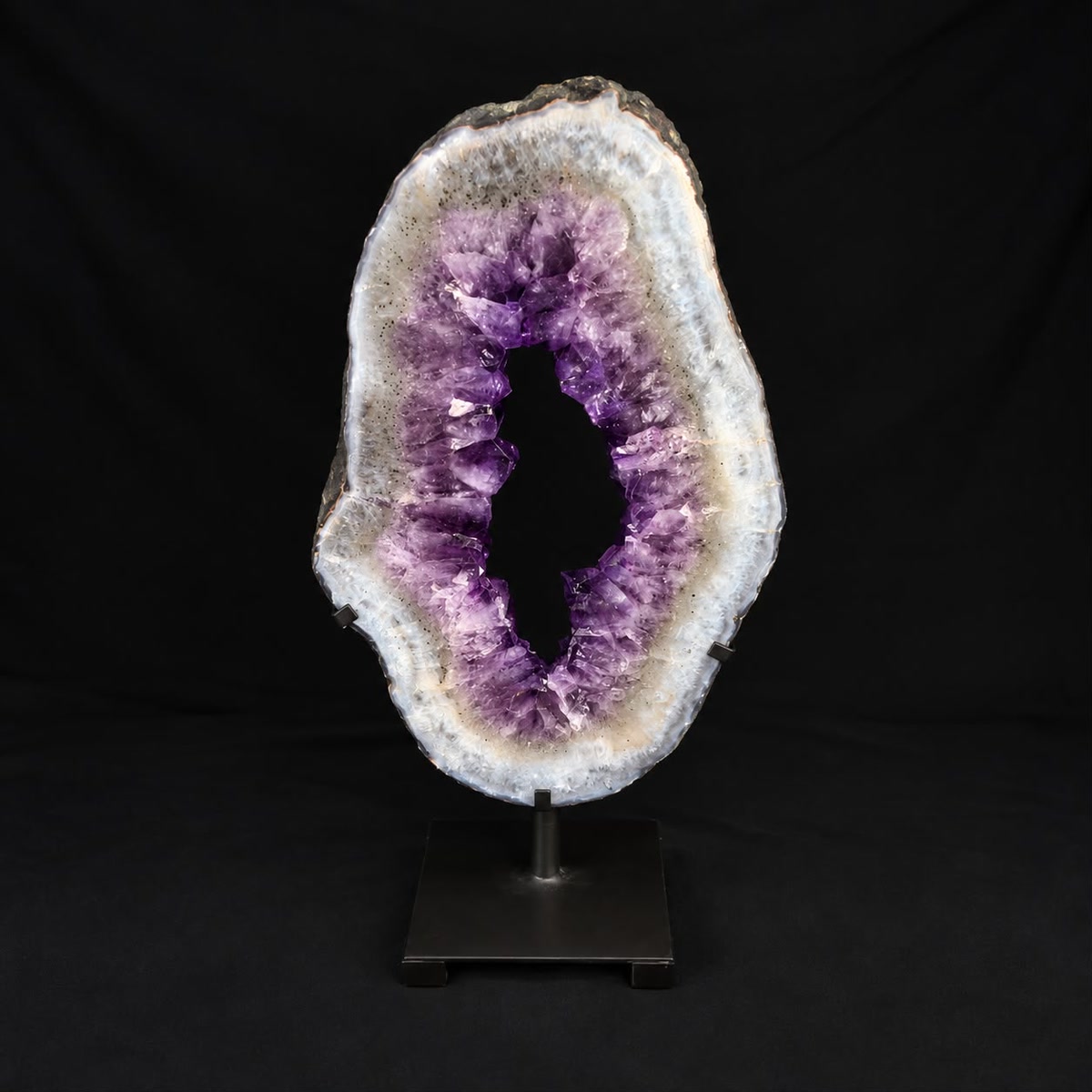
Ethically sourced crystals is a term commonly used for minerals purchased with attention to origin, labor practices, environmental impacts, and honest product disclosure. The evidence available for these factors varies from supplier to supplier. There is no single global certification that covers every crystal, so “ethical” is a set of practices and questions rather than a label. Wholesale buyers can improve their due diligence by asking specific questions in writing and evaluating the evidence provided, regardless of supplier location.
By the CS Minerals Wholesale Team · Last updated
This matters because your customers are asking. Shoppers want to know if the amethyst on your shelf was mined responsibly, and journalists have written about poor conditions in some mining regions. You cannot personally inspect every mine, but you can choose suppliers who are open about what they know and honest about what they do not.
What Does “Ethically Sourced Crystals” Actually Mean?
The phrase is used loosely in marketing, which makes it easy to overpromise. A useful working definition covers four areas, and buyers should ask suppliers what they can substantiate in each area.
- Origin: the country, and ideally the region, where the stone was mined.
- Labor conditions: whether mining and processing are done legally, without child or forced labor, and with basic safety.
- Environmental impact: whether mining follows local rules on land use, water and rehabilitation.
- Honest disclosure: whether treatments such as dyeing, heating or coating are stated clearly.
What it does not mean
It does not mean every stone comes with a mine-to-shop certificate. For most crystals, that level of documentation does not exist. It also does not mean “handmade” or “small batch”, which describe scale, not conditions. Be careful with any supplier, including us, who promises more than the chain can prove.
How Do Crystal Supply Chains Work?
Understanding the path from mine to shelf explains why traceability is hard. Most crystals pass through several hands, and each step can blur the origin.
The typical chain
- Mining: stones are extracted by artisanal miners, small cooperatives or larger operations.
- Local trading: rough is sold to buyers in mining towns or regional trading centers.
- Processing: material is cleaned, cut, polished or carved, sometimes in the same country and sometimes abroad.
- Export: wholesalers pack and ship to importers or directly to retailers.
- Distribution: importers sell to smaller wholesalers or retailers in the destination country.
- Retail: the stone reaches your shop and your customer.
Each extra step between the mine and you adds another place where origin information can be lost. A stone mined in Brazil, carved in Asia and sold through a distributor in Europe may arrive with no origin on the label at all. That is why many buyers who care about ethics try to shorten the chain.
Artisanal and small-scale mining
A large share of crystals worldwide comes from artisanal and small-scale mining, where individuals, families or small groups dig by hand or with basic machinery. In Brazil, these miners are known as garimpeiros. Artisanal mining supports many rural livelihoods, but conditions vary widely, from well organized and legal operations to informal ones with real safety and environmental problems.
Avoiding artisanal material entirely is neither realistic nor necessarily fair, since it would cut income for communities that depend on it. The better approach is to favor suppliers who buy from legal, known sources and can describe them.
Why Buying Close to the Origin Helps Traceability
Working with a supplier in a mineral-producing region can make origin questions easier to investigate, but proximity alone does not guarantee traceability or responsible mining practices. Ask for lot-specific information where available.
What to ask a source-region supplier
- The country and region of origin, where documented.
- Whether the material was processed locally or elsewhere, if known.
- Whether the stone is natural, dyed, heated or coated, based on available product information.
- How the material was selected and graded, when that information is available.
In Brazil, for example, amethyst and agate from Rio Grande do Sul are mined, traded and processed in the same region, around towns such as Ametista do Sul and Soledade. For an overview of which stones come from which states, see our guide to crystals found in Brazil.
Honest limits
Even a supplier near the mine cannot always name the exact pit for every piece. Rough is often bought in mixed lots from traders who themselves bought from several miners. A trustworthy supplier will say “this is from the Rio Grande do Sul amethyst region” rather than invent a precise story.
Questions to Ask Your Crystal Supplier
These questions work for any wholesaler, in any country. Ask them in writing and keep the answers on file. The way a supplier answers tells you as much as the answer itself.
Origin and chain of custody
- Where was this stone mined? Country and region, please.
- Do you buy directly from miners, from local traders or from other wholesalers?
- Where was it cut, polished or carved?
- How long have you worked with the sources for this material?
Legality and labor
- Is the material mined and exported legally under the rules of the country of origin?
- What do you know about working conditions at the mines or workshops you buy from?
- Do you have a written policy on child labor and forced labor?
Treatment and disclosure
- Is this stone natural, or has it been heated, dyed, coated, stabilized or reconstituted?
- Will the treatment be stated on the invoice?
- For citrine specifically, is it natural or heat-treated amethyst?
Documentation
- Does the commercial invoice state the country of origin?
- Which export documents come with the shipment?
- Can you share photos or videos of the lot before it ships?
For a broader set of supplier criteria, including quality, packing and service, use the scorecard in our guide to the best wholesale crystal suppliers.
Red Flags and Good Signs When Judging Ethically Sourced Crystals
You will rarely get perfect answers, but patterns emerge quickly. Use the table below to judge responses.
| Topic | Good sign | Red flag |
|---|---|---|
| Origin | Names country and region, admits when unsure | Vague “natural earth stone” or refuses to say |
| Chain | Explains who they buy from and for how long | No idea where stock comes from |
| Treatments | Discloses dyeing, heating and coating in writing | Calls dyed or heated stones “100% natural” |
| Claims | Modest, specific and consistent | Promises “fully certified ethical” with no proof |
| Documents | Provides accurate product and shipment documentation | Unclear descriptions or missing paperwork |
| Transparency | Shows the real lot by photo, video or live | Only stock photos, no real images |
Why modest claims are a good sign
A supplier who says “we know the region and the traders, but we cannot certify every mine” is being honest about the industry. A supplier who claims total certification for common crystals is either using a narrow program for a few items or overpromising. Ask for details in both cases.
How to Talk About Sourcing with Your Customers
Your customers need clear, honest information, not marketing slogans. Overstating your sourcing can backfire and may breach consumer protection rules on misleading claims in the US, UK, EU and Australia.
Practical labeling
- Show the country of origin on tags when you know it: “Amethyst, Brazil”.
- Disclose treatments: “Heat-treated amethyst (sold as citrine)”, “Dyed agate”.
- Use careful language: “sourced from a supplier in the mining region” rather than “100% ethical”.
- Keep metaphysical notes in the “traditionally associated with” style, never as health claims.
Tell the story you can prove
If your amethyst came from a wholesaler in Rio Grande do Sul who buys from local miners, say that. It is a real and interesting story. Customers respond well to specifics, and they respect honesty when you say you do not know something.
Train your staff
Make sure everyone on the shop floor knows what to say when a customer asks “is this ethically sourced?”. A short, consistent answer based on what you know builds more trust than an enthusiastic guess.
Ethical Considerations Beyond the Mine
Sourcing is not only about mining. Other parts of the chain matter too, and some of them are within your direct control.
Processing and workshops
Cutting and polishing involve dust, water and machinery. Ask whether processing is done in formal workshops and whether workers use basic protection. Buying from a region where mining and processing happen together can make these questions easier to answer.
Shipping and packing
Good packing reduces breakage, which reduces waste. Consolidating orders into fewer, larger shipments can also lower the freight footprint per piece compared with many small parcels.
Local economies
Buying from businesses in mining regions can support local trading and processing economies, although the distribution of economic benefits varies. Trading towns such as Soledade in Brazil have built entire local economies around cutting, polishing and selling stones.
Writing a Simple Sourcing Policy for Your Shop
A short written policy turns good intentions into habits. It also gives you a ready answer when a customer, journalist or wholesale partner asks how you buy.
What to include
- Your minimum standard: for example, “we only buy from suppliers who state the country of origin and disclose treatments in writing”.
- Your preferred channels: such as buying close to the mining region where possible.
- How you label: origin and treatment on every tag where known.
- What you will not claim: no “100% ethical” or “certified” language without proof.
- How you review suppliers: once a year, check whether answers and documents are still consistent.
Keep it to one page and post a customer-friendly version on your website. A modest, specific policy that you actually follow is worth far more than an ambitious one that nobody checks. Update it as you learn more about your suppliers and as your customers’ questions change.
If you are building your shop’s values from the ground up, our guide on how to start a crystal business covers how sourcing decisions fit into your wider brand.
Frequently Asked Questions
What are ethically sourced crystals?
Ethically sourced crystals are stones whose supplier can explain where they were mined, how they moved through the supply chain and whether they were treated. Ideally they are mined and processed legally, with fair labor and responsible environmental practices. There is no single global certificate, so it depends on the supplier’s transparency.
Is there a certification for ethical crystals?
There is no universal certification that covers all crystals and minerals. Some programs exist for specific gemstones or metals, but common crystals like amethyst and quartz usually lack mine-level certification. Ask suppliers what documentation they can provide and treat broad “fully certified” claims with caution.
How can I tell if my crystals are ethically sourced?
Ask your supplier where each stone was mined, who they buy from and whether it has been treated. Look for specific, consistent answers and any available origin documentation. Buying closer to the mining region may make questions easier to investigate, but documentation and supplier practices matter more than distance alone.
More Questions
Are Brazilian crystals ethically sourced?
Brazil has a regulated mining sector and a long tradition of artisanal mining, and conditions vary from operation to operation. Many Brazilian wholesalers in regions like Rio Grande do Sul and Minas Gerais buy from local miners they know well. As with any country, ask your supplier specific questions rather than assuming.
Should I avoid crystals from artisanal mining?
Not necessarily. Artisanal mining supports many rural communities, and cutting it out entirely can harm them. The better approach is to favor suppliers who buy from legal, known sources and can describe how they work.
Can I say my crystals are ethically sourced in my marketing?
Only say what you can support with information from your supplier. Specific statements such as “mined in Brazil, bought from a wholesaler in the mining region” are safer and more convincing than broad “100% ethical” claims. Consumer protection regulators in many countries act against misleading environmental and ethical claims.
Buy Closer to the Origin
CS Minerals is based in Soledade, Rio Grande do Sul, an important Brazilian mineral trading and processing center. We offer Brazilian amethyst, agate, quartz and other minerals, alongside selected material from other origins. Our team can discuss available product information and show actual pieces during Instagram live sales or personalized video calls. Specific origin, treatment, and documentation details should be confirmed for each product or shipment; we do not claim that every item is mine-level traceable or independently certified as ethically sourced.
For wholesale inquiries, contact us on Instagram @csminerals or WhatsApp +55 54 99315-5902. See how to order wholesale crystals, or learn more about who we are.